Skip to content
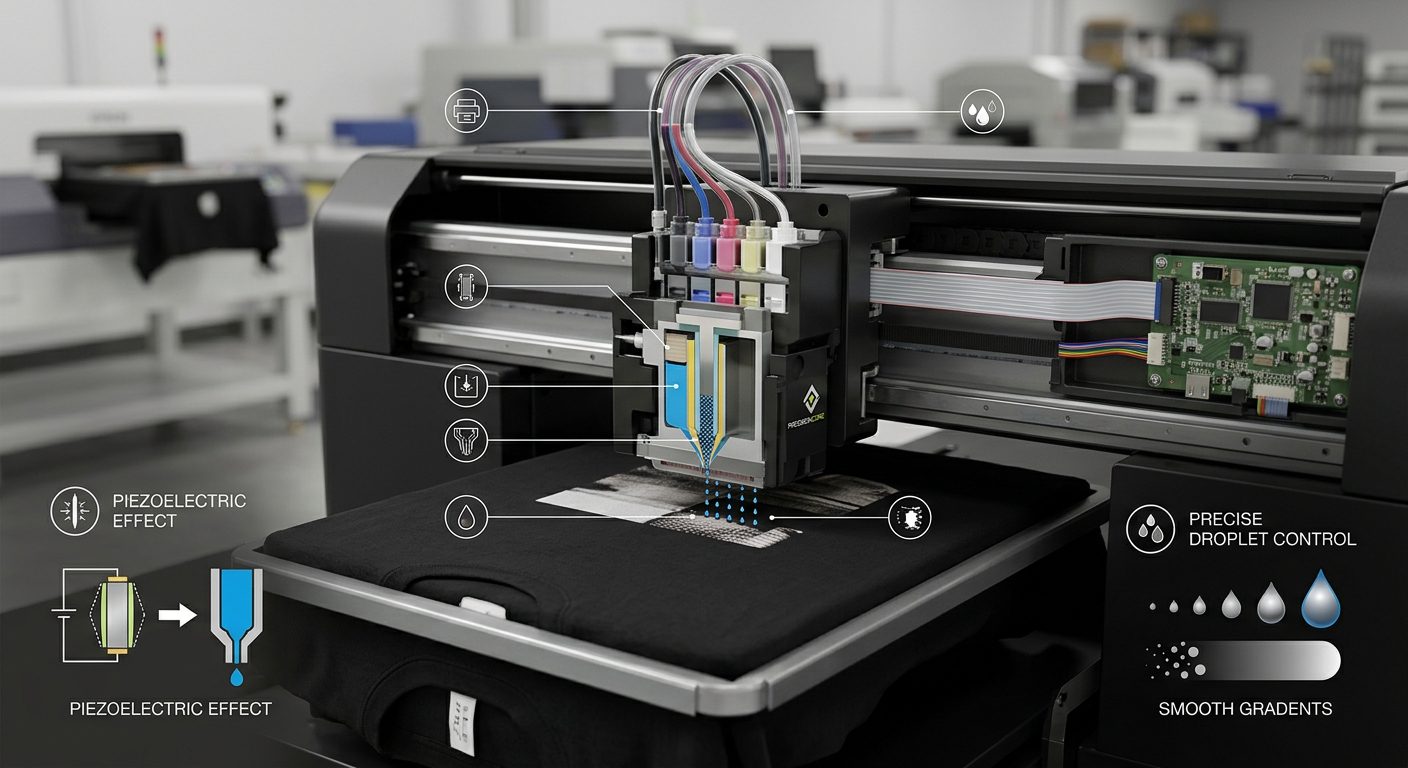
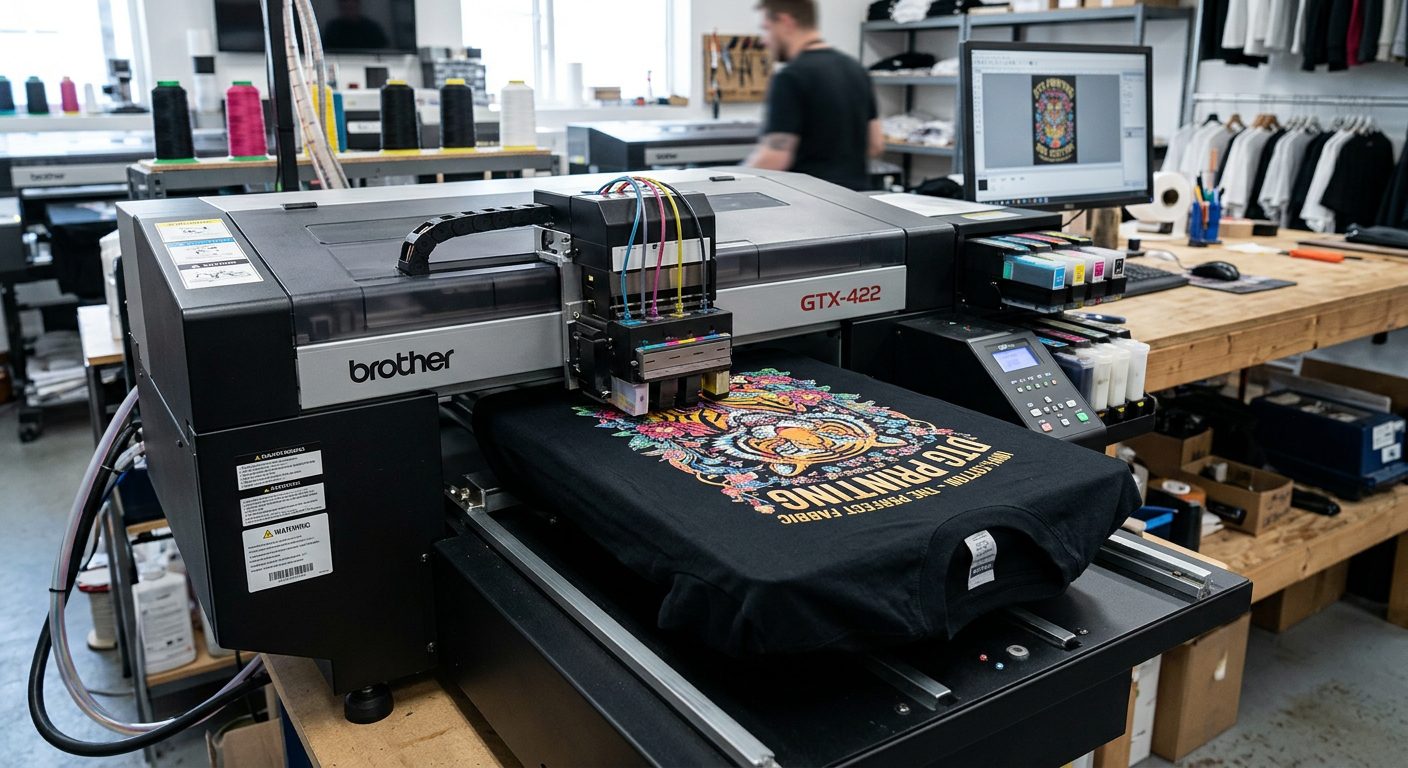
A direct to garment printer transforms textile customization. It prints high-resolution designs straight onto t-shirts, hoodies, and fabric items. Printing on dark fabrics requires a solid white underbase layer. White ink contains titanium dioxide pigments to build opacity. However, these dense particles naturally settle over time.
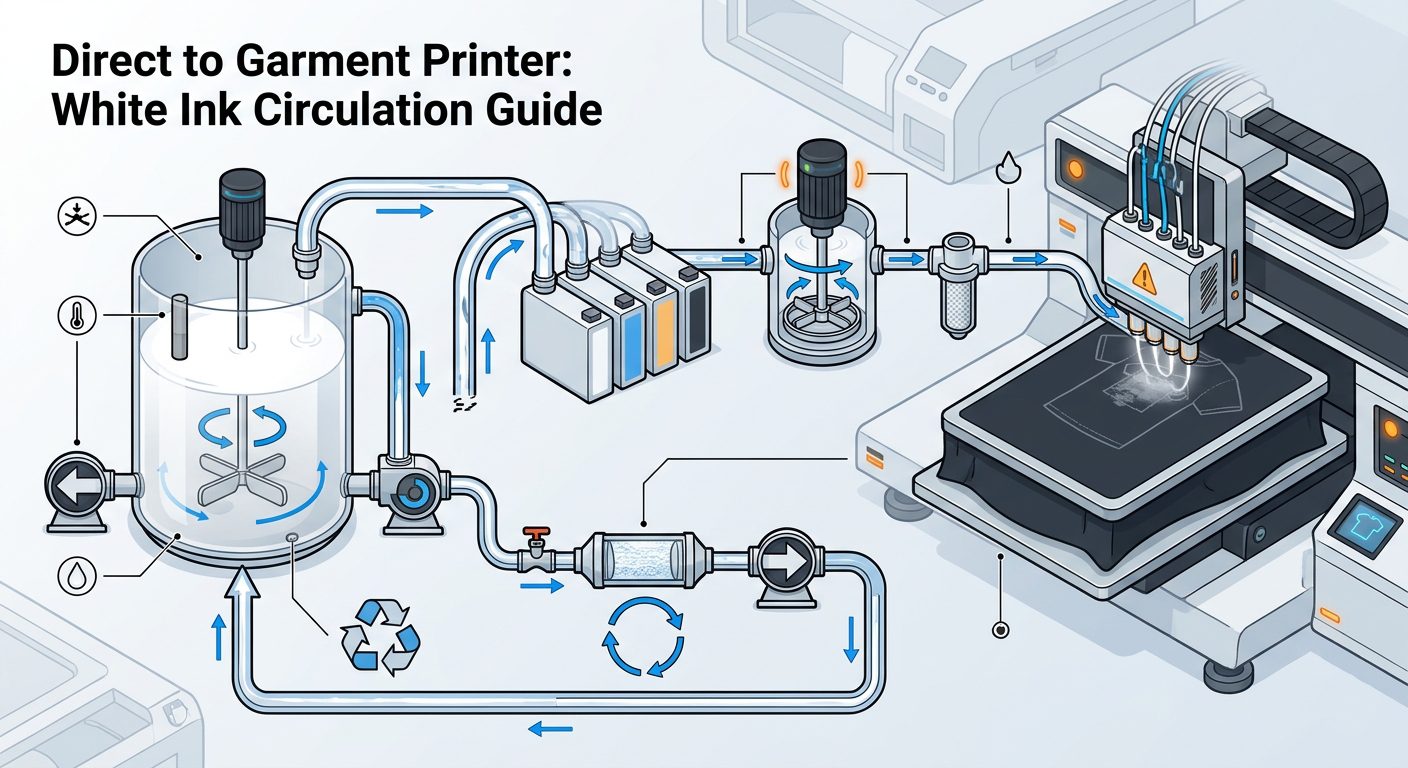
Settled pigment clogs printhead nozzles and damages liquid pathways. A direct to garment printer solves this problem through automated white ink circulation systems. This mechanism continuously mixes and moves fluid to maintain print consistency. Continuous circulation extends equipment lifespan and guarantees vibrant colors.
Why Is White Ink Circulation Necessary?
White digital textile ink relies on heavy mineral components like titanium dioxide. In contrast, CMYK colors use lightweight soluble dyes. Heavier white particles separate quickly from carrier liquids. Without continuous movement, ink separates inside fluid lines and tanks.
Separated ink creates severe operational issues:
- Printhead Clogging: Heavy sediment blocks fine nozzle channels.
- Uneven Opacity: Settled ink prints thin, patchy underbases.
- Poor Color Accuracy: Faded white bases alter top CMYK colors.
- Component Damage: Hardened pigment damages pumps and dampers.
A continuous loop keeps pigments evenly suspended throughout the day. A modern direct to garment printer uses automated circulation to protect delicate internal components.
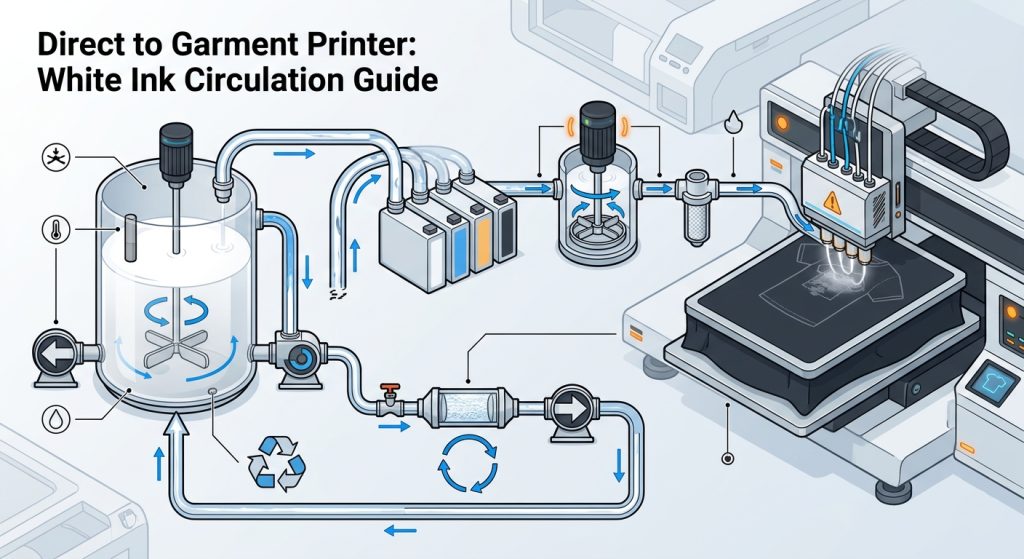
Core Components of the White Ink System
Several interconnected parts move fluid safely through a direct to garment printer. Each component maintains pressure and keeps pigments suspended.
| Component | Primary Function | Maintenance Benefit |
| Agitation Motor | Stirs bulk ink in the reservoir | Prevents bottom sludge formation |
| Circulation Pump | Pushes fluid through closed lines | Maintains continuous fluid velocity |
| Inline Filters | Traps micro-clumps and debris | Protects delicate printhead nozzles |
| Recirculating Dampers | Regulates pressure near printheads | Prevents starvation and ink leaks |
Step-by-Step Mechanical Circulation Process
The circulation process operates in a closed loop. This path moves fluid from storage bottles to printheads and back.
┌───────────────────────────────────────────┐
│              Main Ink Tank                │
│    (Motor agitator stirs pigment daily)   │
└─────────────────────┬─────────────────────┘
                      │
                      ▼
┌───────────────────────────────────────────┐
│            Peristaltic Pump               │
│      (Pushes fluid through lines)         │
└─────────────────────┬─────────────────────┘
                      │
                      ▼
┌───────────────────────────────────────────┐
│               Inline Filter               │
│     (Traps sediment & particle clumps)    │
└─────────────────────┬─────────────────────┘
                      │
                      ▼
┌───────────────────────────────────────────┐
│      Printhead Sub-Tank / Damper          │
│   (Delivers ink to nozzles for printing)  │
└─────────────────────┬─────────────────────┘
                      │
                      ▼
┌───────────────────────────────────────────┐
│             Return Line                   │
│   (Bypasses nozzles back to Main Tank)    │
└───────────────────────────────────────────┘
1. Reservoir Agitation
The main bottle holds the primary white ink supply. Motorized paddles stir the fluid automatically at timed intervals. This mechanical mixing keeps titanium dioxide suspended.
2. Peristaltic Pumping
A specialized peristaltic pump drives fluid through flexible tubes. Rollers compress the tubing to create positive pressure. Peristaltic pumps move liquid smoothly without introducing damaging air bubbles.
3. Inline Filtration
Fluid passes through fine inline filters before reaching printheads. Filters catch micro-clumps, dried bits, and stray debris. Clean ink flows safely toward microscopic nozzle channels.
4. Damper-Level Delivery and Bypass
Fluid reaches dampers positioned directly above printheads. Dampers equalize hydraulic pressure during active printing. Excess ink bypasses nozzles entirely through a return manifold.
5. Closed-Loop Return
Unused ink flows back along return lines into main reservoirs. This return loop completes the continuous motion cycle. Continuous loop movement prevents pigment from settling in tubing bends.
Advanced White Ink Management Technologies
Modern printing technology features smart controls for fluid management. Equipment manufacturers integrate automated timers into modern controllers. Modern systems run low-power circulation cycles even while standby modes remain active.
Sub-tank recirculation systems keep ink moving right above print nozzles. Micro-pumps maintain fluid motion during long production gaps. Smart sensors detect pressure changes and alert operators to filter blockages.
Production facilities rely on diverse commercial equipment alongside direct garment systems:
- Sticker printing machine: Uses solvent or UV inks for outdoor vinyl decals.
- UV printing machine: Instantly cures specialty inks on rigid and flexible substrates.
- Printer for shirts: Specialized film and garment units built for apparel decoration.
- Printer for t shirts: Versatile textile systems engineered for direct fabric application.
Signage operations often run a specialized uv printing machine for rigid graphics alongside a dedicated printer for shirts. Mixing multiple technologies expands commercial production lines.
Preventative Maintenance Practices for Operators
Automated systems handle routine circulation, but manual care remains vital. Proper daily habits protect expensive components from unexpected failures.
Operators should follow established maintenance routines:
- Perform Daily Shaking: Gently shake white ink bottles before starting shifts.
- Run Daily Nozzle Checks: Print test patterns to verify active nozzle flow.
- Replace Inline Filters: Change filters every three to six months to maintain pressure.
- Clean Capping Stations: Wipe capping tops and wipers to preserve air seals.
- Maintain Room Climate: Keep humidity between 45% and 60% to stop ink drying.
A printer for t shirts needs clean fluid lines to produce opaque designs. Neglecting manual care forces pigment accumulation inside inactive lines.
Expert Printing Solutions with Aura Sign Advertising
Aura Sign Advertising is a dynamic and progressive company specializing in trading, servicing, and support of advanced digital printing and cutting technologies. With a strong foothold in the UAE market, we bring comprehensive solutions to meet the needs of print service providers, signage companies, and industrial marking sectors.
Our portfolio includes world-renowned machines and supplies of brands like Mimaki, Roland, Epson, KingJet, MTuTech, and Zhongliqi, backed by dedicated after-sales services and annual maintenance contracts (AMCs) that ensure uninterrupted performance for our clients.
Choosing a high-performance direct to garment printer requires proper technical support and regular maintenance plans. Aura Sign Advertising delivers industry-leading equipment and ongoing guidance. For reliable promotional production services and custom corporate printing, explore regional industry partners like Izra UAE.
Conclusion
A direct to garment printer relies on white ink circulation to maintain consistent print quality. Agitation motors, pumps, and return lines move dense titanium dioxide pigments continuously. This continuous movement prevents clogging, reduces maintenance costs, and delivers bright white layers on dark fabrics. Integrating automated technology with disciplined daily care keeps modern garment printers performing reliably for years.