Skip to content
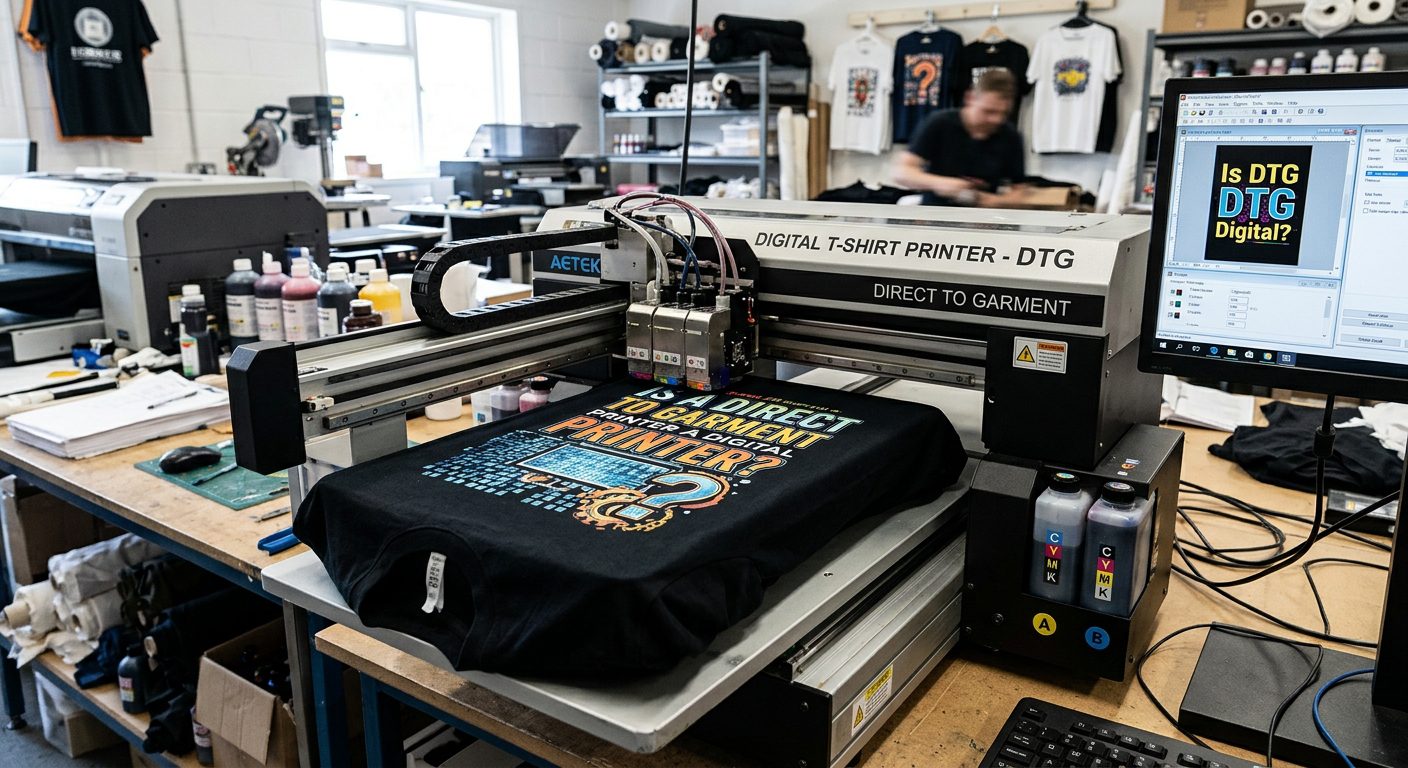
Yes, a direct to garment printer can print directly on 100% cotton fabrics. Cotton is actually the best material for this digital process. Its natural fibers absorb water-based textile ink very effectively. This process creates bright colors, sharp details, and a soft texture.
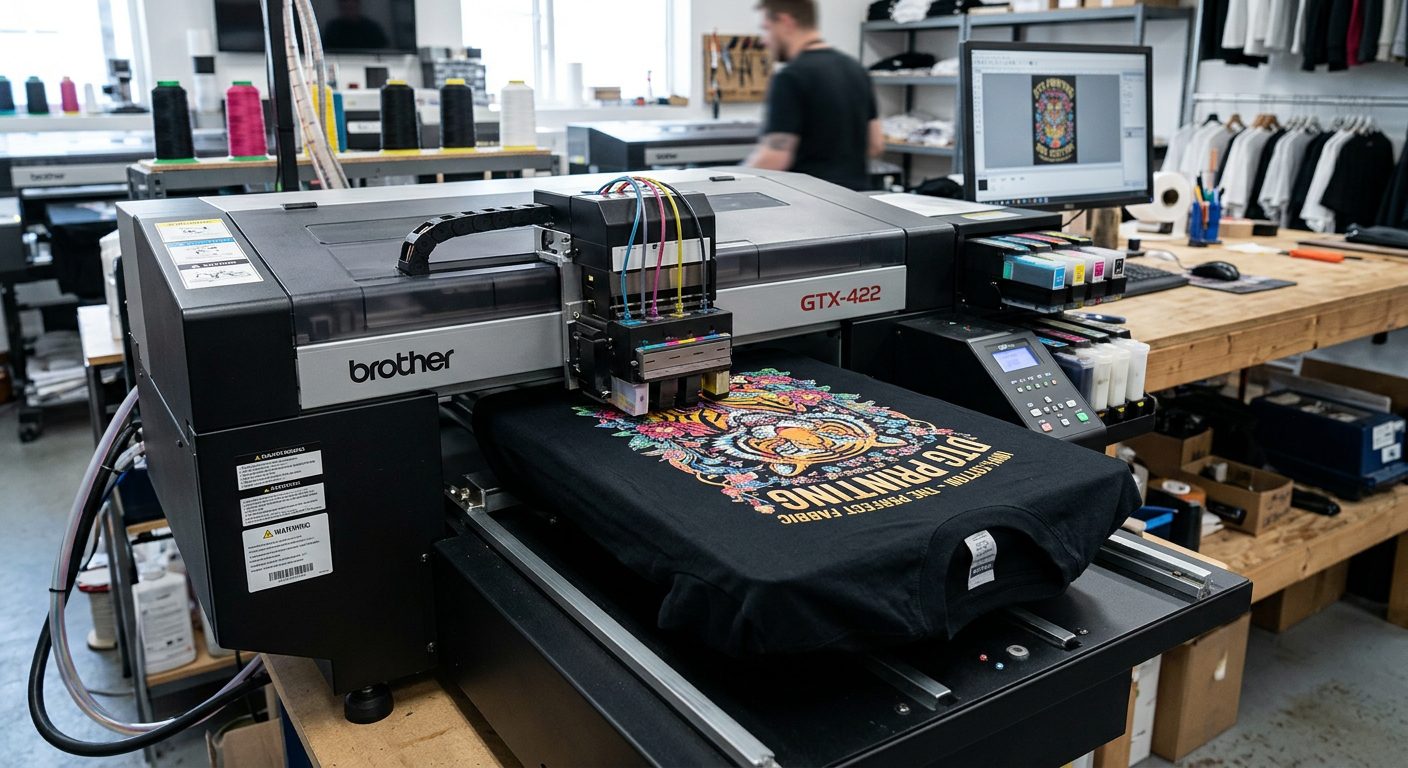
A modern direct to garment printer sprays ink straight onto prepared garments. The process is clean, fast, and highly accurate. It differs from traditional screen printing methods. It also differs from digital machines built for rigid materials.
Choosing the right machine matters for custom apparel businesses. A direct to garment printer produces complex artwork without physical screens. This flexibility makes it ideal for custom apparel, short runs, and personalized orders.
Aura Sign Advertising supports digital printing technologies across the UAE. We serve print service providers, signage companies, and industrial marking businesses. Our team provides reliable equipment, machine servicing, and technical support.
Direct to Garment Printer Compatibility with Cotton
Yes, a direct to garment printer works perfectly on 100% cotton garments. Natural cotton fibers absorb water-based inks naturally. This penetration allows the ink to settle deep into the fabric weave.
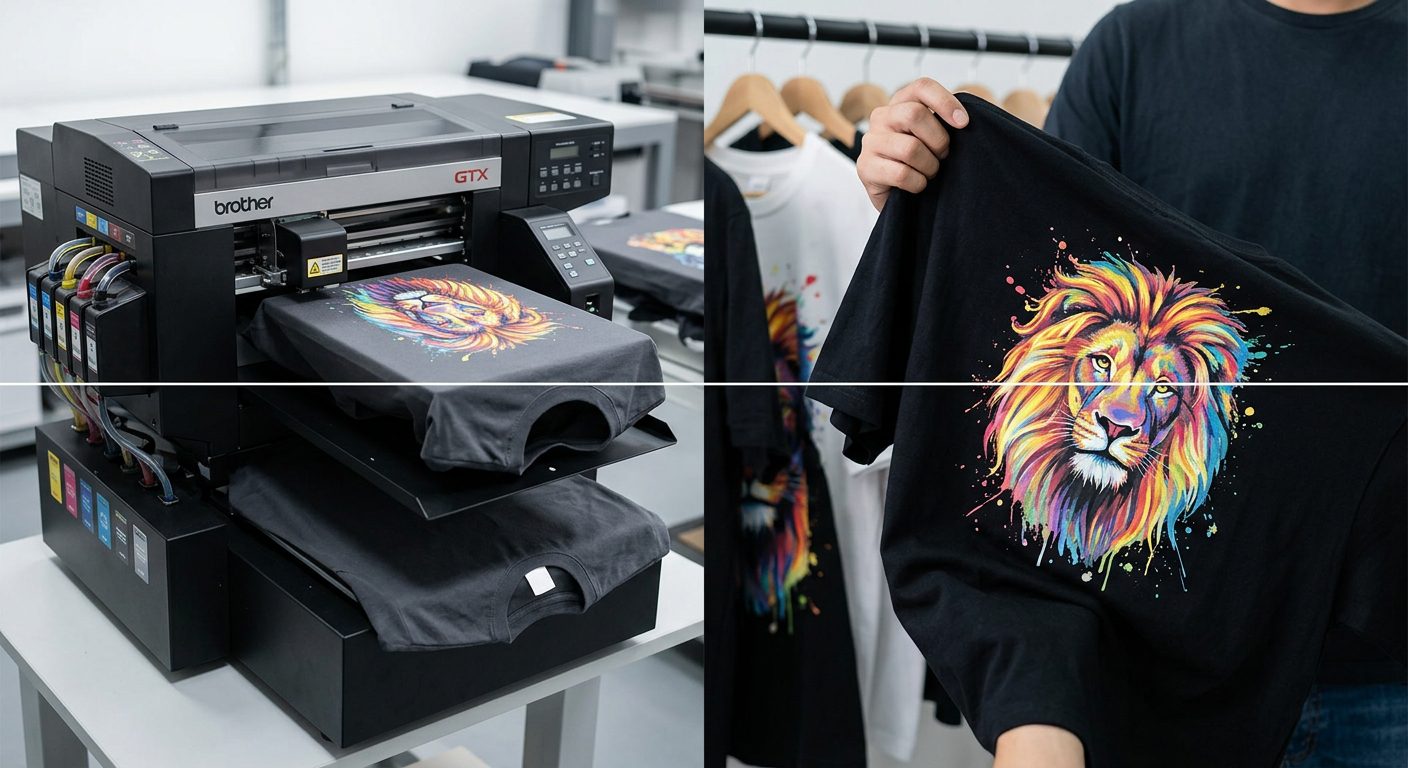
The resulting print feels smooth, light, and comfortable on the skin. You can achieve fine lines, sharp text, and strong color contrast.
However, dark cotton garments require proper pretreatment before printing. Pretreatment creates a smooth foundation for white ink layers. Without it, dark fabric absorbs the white ink completely.
Operators must also select appropriate print settings. Ink limits depend on the fabric weight, garment color, and machine model. Cotton provides great compatibility, but proper preparation yields the best final results.
Why Cotton Fits a Direct to Garment Printer
Cotton fibers attract and hold water-based inks easily. This natural characteristic makes cotton ideal for direct digital printing.
A direct to garment printer places tiny ink droplets directly onto the garment. The ink then bonds with the cotton surface during the heat-curing step.
Cotton offers a flat, uniform surface for high-resolution graphics. Smooth cotton shirts yield sharper details and cleaner lines. High-grade cotton yields even better print clarity.
Comfort is another major benefit of this process. DTG prints retain a soft feel compared to thick vinyl transfers. The fabric remains breathable and easy to wear every day.
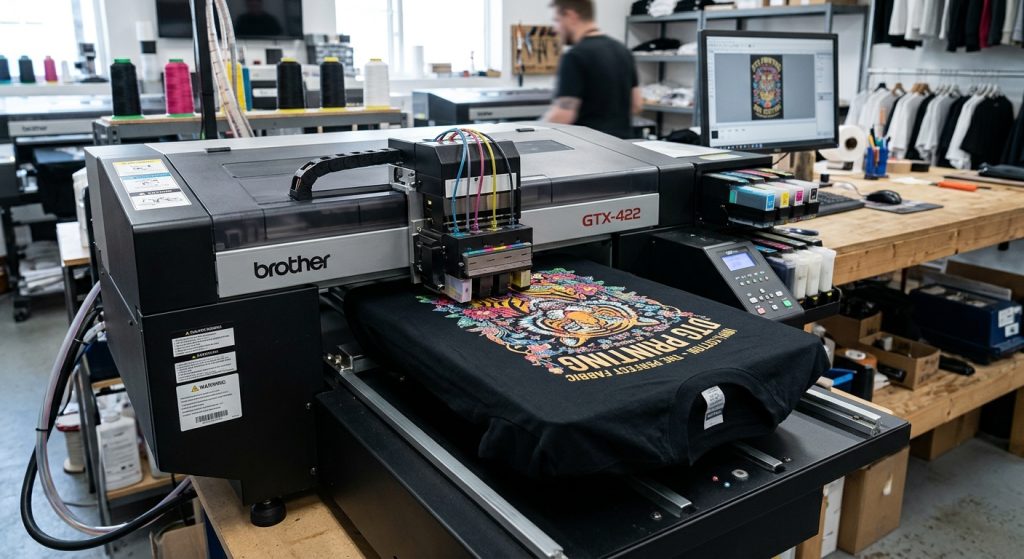
Cotton also supports rich color gradients and detailed photographs. You can print colorful logos, fine text, and complex artwork easily.
How a Direct to Garment Printer Works on Cotton
The process begins with garment preparation and inspection. You must smooth out all wrinkles on the printing surface.
Dark cotton shirts receive an even layer of liquid pretreatment. This step ensures that white base layers stay bright.
Next, you place the shirt flat onto the platen. You then load the platen into the direct to garment printer. The printhead moves quickly across the garment surface. It deposits micro-droplets of textile ink directly onto the fabric.
The machine prints white ink first on dark garments. It then prints the color layer directly on top of the white base.
After printing finishes, you must cure the garment immediately. Heat sets the liquid ink deep into the cotton fibers.
You can use a heat press or a conveyor dryer for curing. Follow recommended temperature and time guidelines closely. Incorrect curing reduces wash durability and weakens colors over time.
Does a Direct to Garment Printer Need Pretreatment?
Pretreatment depends on your garment color and design requirements. White and light cotton shirts usually need very little pretreatment.
Dark cotton shirts always require liquid pretreatment. Pretreatment acts like a primer coat on dark fabrics. It keeps white ink sitting flat on top of the fabric.
You must apply the pretreatment solution evenly across the print area. Too little pretreatment causes dull white layers and weak colors. Too much pretreatment creates stiff textures and visible surface stains.
Always follow the machine manufacturer’s guidelines for spray density. Different inks and fabrics demand specific liquid amounts.
Proper pretreatment guarantees bright colors and strong wash resistance. It is an essential step for high-quality production.
Direct to Garment Printer White Ink on Cotton
A direct to garment printer uses white ink to print dark cotton garments. White ink creates an opaque foundation for colored textile inks.
Without a white base layer, colored inks look dull on dark fabric. The dark cotton fibers absorb and mute the top colors.
The white layer makes red, yellow, and blue shades stand out. Colors look vibrant, accurate, and visually appealing.
Modern printing equipment includes built-in white ink circulation systems. These systems agitate the ink and prevent pigment settling.
Regular maintenance keeps the white ink flowing smoothly through the printhead. White ink contains heavy titanium dioxide particles. These particles require consistent care to avoid system clogs.
Proper daily maintenance protects your print quality and machine health.
Products a Direct to Garment Printer Can Decorate
A direct to garment printer handles many common cotton items.
Popular cotton products include:
- Standard cotton T-shirts
- Cotton polo shirts
- Cotton pullover hoodies
- Cotton fleece sweatshirts
- Heavy cotton tote bags
- Soft cotton baby onesies
- Custom promotional clothing
- Branded cotton workwear
Thick seams, pockets, and zippers can interfere with printhead clearance. You must keep the printing area flat and smooth.
Always select flat areas for your artwork placement. Flat surfaces ensure accurate ink placement and crisp graphics.
Test new garment styles before launching full production runs. A test print highlights potential issues with fabric quality or construction.
Direct to Garment Printer vs Other Printing Equipment
A direct to garment printer focuses specifically on wearable textiles. Other digital printers serve completely different industry needs.
For example, a sticker printing machine prints designs on adhesive vinyl sheets. It produces labels, decals, and outdoor stickers. A sticker printing machine cannot print directly onto finished cotton shirts.
Similarly, a uv printing machine prints on hard, rigid objects. A uv printing machine cures ink instantly using ultraviolet light on acrylic, wood, glass, and metal.
A general printer for shirts may refer to several technologies. Some shops use DTG equipment for direct application. Other shops use direct-to-film, sublimation, or traditional screen printing.
A traditional printer for t shirts often relies on physical screens. Screen printing works well for bulk orders with simple colors. Digital equipment works better for short runs with complex artwork.
Understand these technical differences before buying equipment for your workshop.
Direct to Garment Printer vs Direct-to-Film Methods
DTG and DTF technologies both decorate cotton garments successfully. However, their actual production steps differ significantly.
A direct to garment printer applies ink straight to the fabric surface. DTF printing applies ink onto a clear transfer film first.
The DTF film receives hot-melt adhesive powder next. A heat press then fuses the design onto the garment.
DTG technology excels on 100% cotton garments. It produces breathable prints with an ultra-soft hand feel.
DTF technology offers broad fabric compatibility across synthetic materials. It prints well on polyester, nylon, and blended fabrics.
Choose the best method based on your target fabric, order volume, and desired finish.
Direct to Garment Printer Detail and Precision
High detail resolution is a major advantage of DTG printing technology.
A direct to garment printer reproduces sharp photographs, fine gradients, and tiny text accurately. Digital printheads place microscopic ink droplets with extreme accuracy.
Digital printing eliminates color separations and screen setup steps. You can print complex, multi-color graphics instantly from digital design files.
Small production runs become highly profitable with digital workflows. You can print a single custom T-shirt economically.
This flexibility makes digital equipment perfect for custom gift shops. It also powers web-to-print and print-on-demand business models.
Direct to Garment Printer Wash Durability
DTG prints on cotton offer excellent wash durability when processed correctly.
Print longevity depends on correct pretreatment, printing, and heat curing. Skipping steps or using wrong temperatures weakens the print bond.
Washing habits also affect how long printed designs stay bright. Harsh detergents and high water temperatures fade colors faster over time.
Advise your customers to wash printed garments inside out. Cold water washing protects the print surface from friction.
Avoid high heat settings inside mechanical tumble dryers. Air drying helps preserve detail clarity and color brightness.
High-grade textile inks resist fading and cracking through dozens of wash cycles.
How to Improve Direct to Garment Printer Quality
Following proven operational practices improves your final print output.
First, buy high-grade cotton garments with tight fiber weaves. Smooth ring-spun cotton provides a superior surface for ink drop placement.
Second, apply pretreatment evenly using an automated sprayer. Consistent coverage yields uniform white ink layers.
Third, use original, approved textile inks designed for your printhead. Incompatible inks clog nozzles and cause color inaccuracies.
Fourth, perform routine maintenance tasks on your printing equipment daily. Clean printhead caps, wiper blades, and ink lines regularly.
Fifth, cure every garment using exact temperature and duration settings. Monitor heat press temperature and pressure constantly.
These practical steps ensure consistent output quality from your machinery.
Direct to Garment Printer for Custom Shirt Businesses
A direct to garment printer represents a smart investment for custom shirt operations.
It excels at fulfilling small, multi-color orders quickly. You can print dozens of unique designs in a single morning without extra setup time.
This capability suits personalized gift items, event merchandise, and short-run apparel brands.
However, shop owners must calculate total operational costs carefully. Equipment costs include ink, pretreatment liquids, heat presses, and replacement parts.
Partnering with an experienced equipment supplier reduces technical risks. Reliable supplier support keeps your production running smoothly.
Aura Sign Advertising delivers advanced digital printing technology, service, and support across the UAE. We supply leading industry brands like Mimaki, Roland, Epson, KingJet, MTuTech, and Zhongliqi. Our team provides dedicated after-sales services and annual maintenance contracts (AMCs) to ensure uninterrupted business performance.
For complementary signage solutions, promotional items, and corporate branding products, explore Izra UAE.
Direct to Garment Printer Maintenance Guidelines
Consistent routine maintenance protects your printhead and keeps print quality high.
Clean printheads according to your manufacturer’s daily maintenance schedule. Inspect dampers, capping stations, and ink lines for build-up regularly.
White ink channels require constant attention and daily agitation. Circulate white ink lines to prevent heavy titanium pigments from settling.
Perform manual nozzle checks before starting daily production runs. Clear clogged nozzles immediately using approved cleaning solutions.
Maintain ideal ambient environmental conditions inside your workspace. Standard room temperatures and proper humidity levels prevent ink from drying inside nozzles prematurely.
Good maintenance habits maximize printhead lifespan and eliminate expensive downtime.
Common Errors with a Direct to Garment Printer
Avoiding common operational errors saves time, ink, and ruined garments.
Uneven pretreatment application causes patchy white ink coverage and dull top colors. Always calibrate your automatic pretreatment sprayer regularly.
Incorrect curing temperature or time causes prints to wash out quickly. Use a digital thermometer to verify your heat press plate temperature.
Loading wrinkled or uneven garments leads to printhead strikes and blurred graphics. Smooth out every garment completely before pressing print.
Using cheap, low-grade cotton garments produces rough print surfaces and faded colors. Invest in quality garments built for digital printing.
Neglecting daily machine maintenance causes dried ink clogs and costly component failures. Treat your equipment with consistent daily care.
Proper operator training prevents these common mistakes and keeps production running smoothly.
Conclusion
Yes, a direct to garment printer prints exceptionally well on 100% cotton fabrics. Cotton remains the absolute best material for water-based digital textile inks.
The process yields sharp details, vibrant colors, and comfortable soft-touch prints. It provides the ideal solution for short runs, custom designs, and print-on-demand apparel businesses.
Achieving professional results requires proper pretreatment, correct curing, quality garments, and steady machine care.
Selecting the right printer for shirts or printer for t shirts depends on your specific business goals, fabric requirements, and daily production volume. While a sticker printing machine handles adhesive media and a uv printing machine decorates rigid items, DTG machinery remains the gold standard for high-detail cotton apparel.
Aura Sign Advertising provides full equipment sales, machine servicing, and technical support across the UAE. We help print service providers choose and maintain the ideal digital printing technology for long-term operational success.