Skip to content
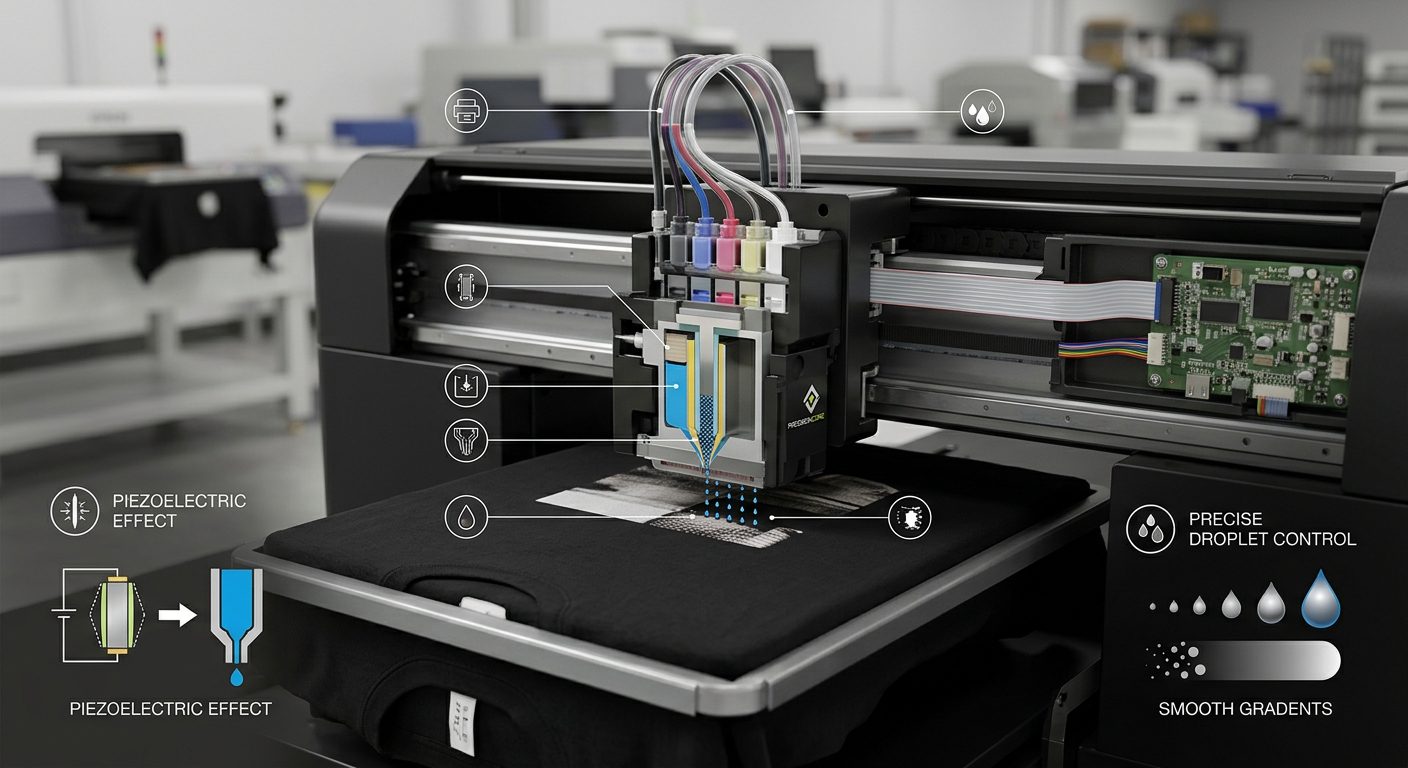
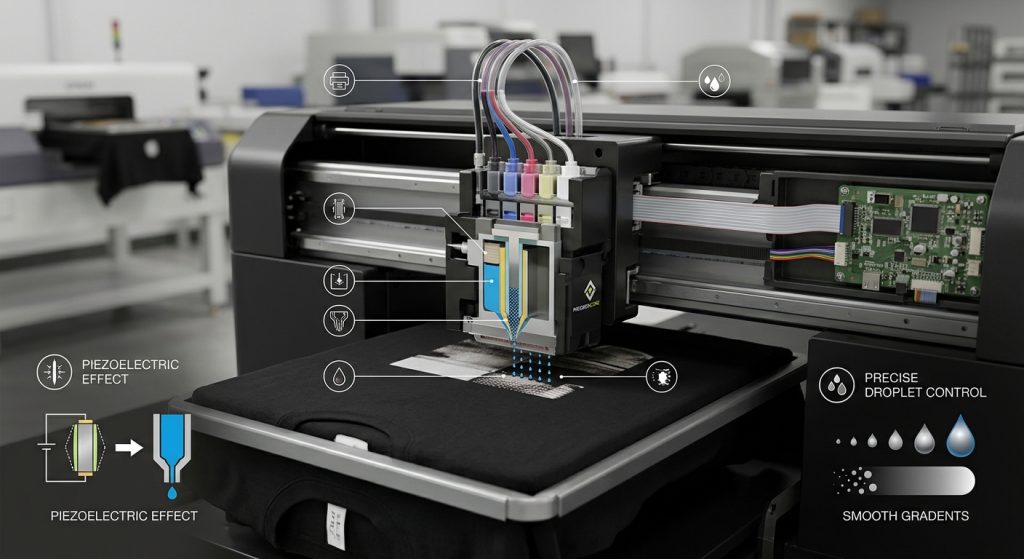
Modern DTG systems are designed for cotton and other compatible fabrics. They commonly use piezoelectric inkjet technology. This technology provides precise control over droplet size and ink placement. A direct to garment printer uses specialized inkjet printheads to apply textile ink directly onto fabric. These printheads control tiny ink droplets with high accuracy. As a result, they can produce detailed graphics, smooth gradients, and vibrant colors on garments.
For businesses, printhead quality matters greatly. It affects image sharpness, color consistency, production speed, and printer reliability. Therefore, choosing the right machine requires more than checking its print size.
Aura Sign Advertising supports advanced digital printing technologies in the UAE. Aura Sign Advertising is a dynamic and progressive company specializing in trading, servicing, and support of advanced digital printing and cutting technologies. With a strong foothold in the UAE market, we bring comprehensive solutions to meet the needs of print service providers, signage companies, and industrial marking sectors. Our portfolio includes world-renowned machines and supplies of brands like Mimaki, Roland, Epson, KingJet, MTuTech, and Zhongliqi, backed by dedicated after-sales services and annual maintenance contracts (AMCs) that ensure uninterrupted performance for our clients.
What Is a Direct to Garment Printer?
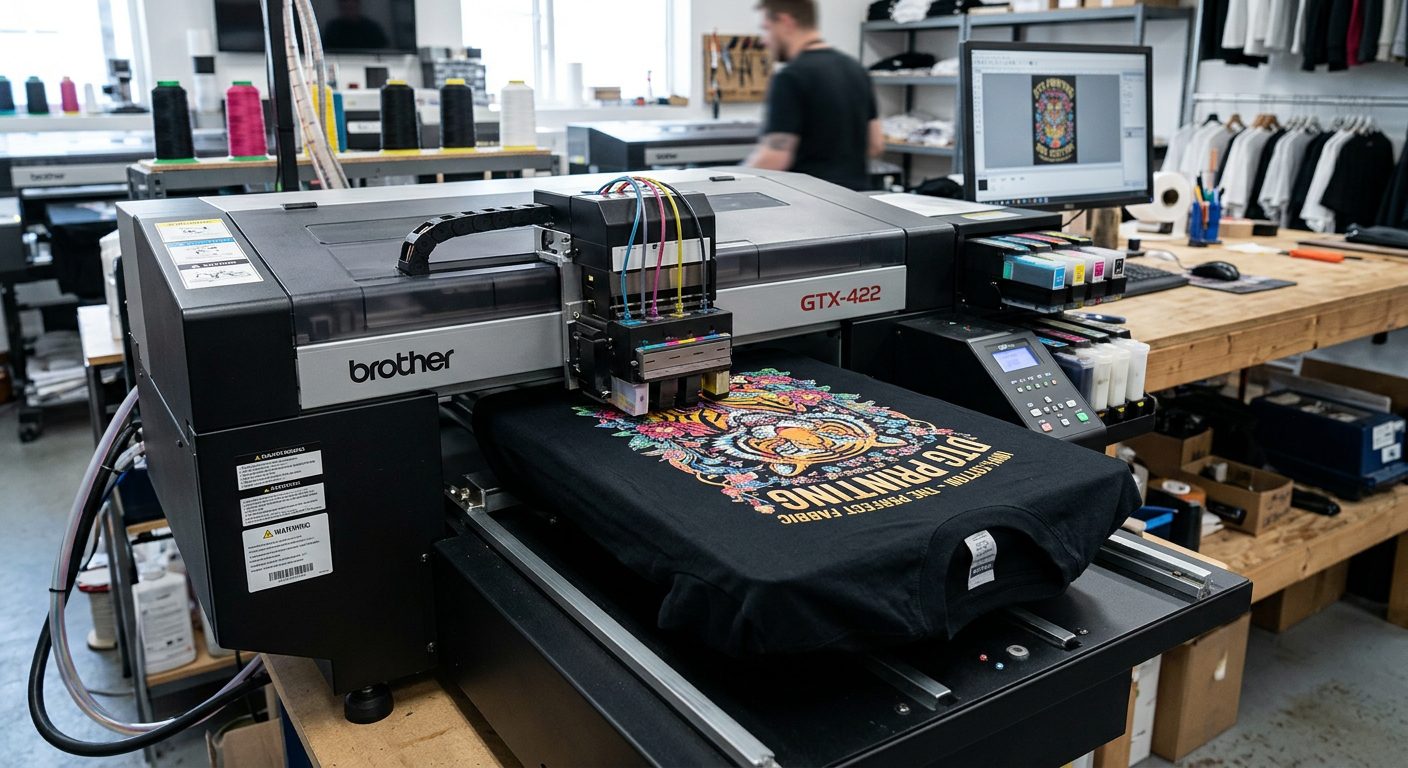
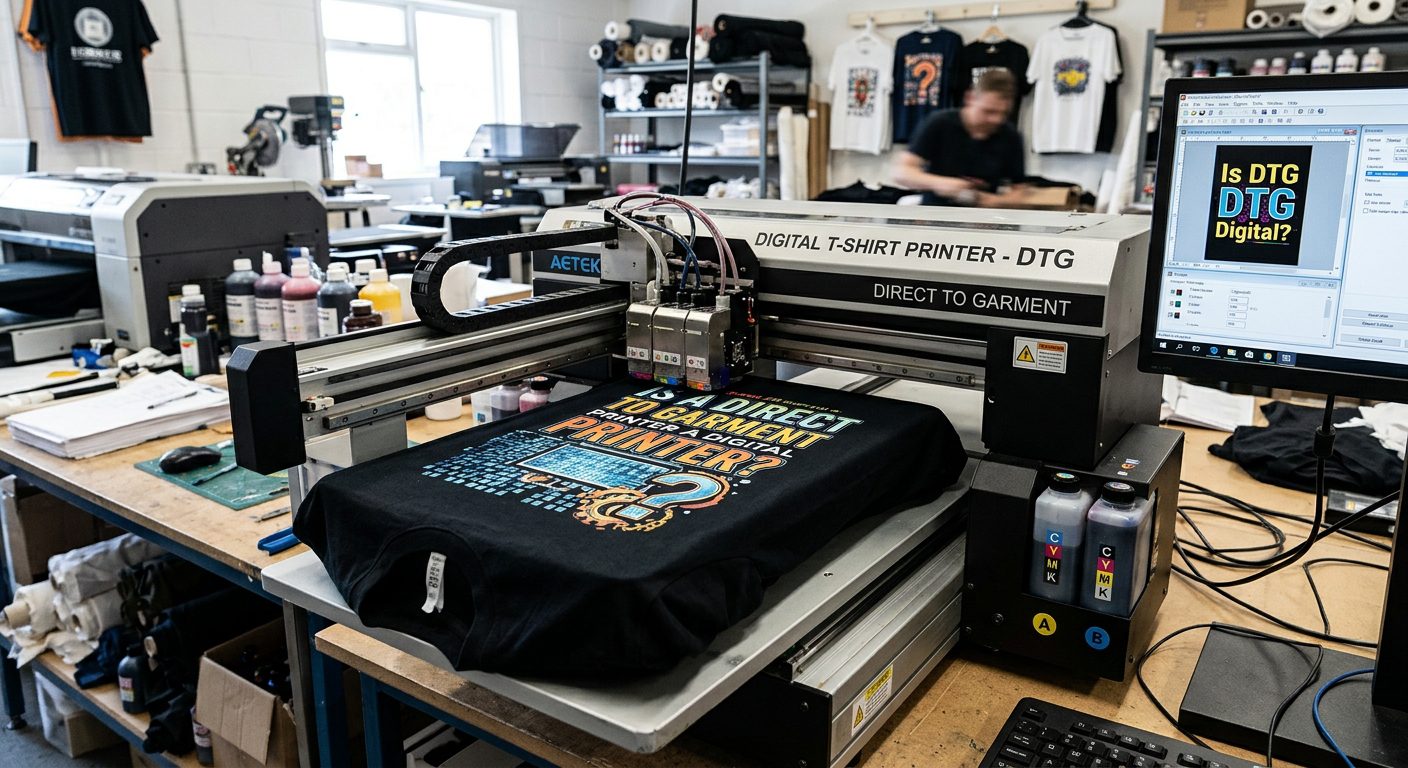
A direct to garment printer is a digital textile printer that prints artwork directly onto garments. The process does not require traditional screens for each color.
Instead, the printer uses digital artwork and specialized textile inks. The printhead moves across the garment and deposits controlled ink droplets.
This process makes DTG printing suitable for custom apparel. It works well for shirts, hoodies, promotional clothing, and small production runs.
A printer for shirts can reproduce complex artwork without extensive setup. Likewise, a printer for t shirts can produce photographs, logos, illustrations, and detailed graphics.
The technology is especially useful when each garment needs different artwork. It also reduces the need for large minimum quantities.
How Does a Direct to Garment Printer Work?
A typical direct to garment printer follows several important steps.
First, the garment is placed on a printing platen. The fabric is positioned carefully to prevent movement.
Next, pretreatment may be applied, especially when white ink is required. The pretreatment helps the ink bond correctly with the fabric.
Afterward, the printhead moves across the garment. It releases very small droplets of ink onto specific areas.
The printer usually applies white ink first when the garment is dark. Color ink is then printed over the white layer.
Finally, the printed garment is cured using heat. This helps the ink become durable and wash resistant.
Each stage affects the final result. Therefore, proper pretreatment, printing, and curing are all important.
What Printhead Technology Does a Direct to Garment Printer Use?
Most modern direct to garment printer systems use piezoelectric drop-on-demand inkjet printheads. This technology is popular because it provides precise control over ink droplets.
Piezoelectric printheads use electrical signals to create controlled pressure. That pressure pushes ink through tiny nozzles.
The printhead can produce droplets in carefully controlled amounts. This allows the printer to create fine details and smooth color transitions.
Unlike thermal inkjet technology, piezoelectric systems do not depend on heating the ink to eject droplets. This makes them suitable for many specialized textile inks.
However, the exact printhead technology depends on the printer manufacturer and model. Different machines can use different printhead configurations.
Why Are Piezoelectric Printheads Important?
Piezoelectric technology offers several advantages for garment printing.
First, it provides accurate droplet placement. This helps produce sharp text and detailed images.
Second, droplet volume can be controlled. Smaller droplets help create fine details. Larger droplets can provide stronger coverage.
Third, the technology works well with different ink formulations. This is important for modern textile printing systems.
Fourth, precise ink placement can reduce unnecessary ink use. As a result, production can become more efficient.
Printhead stability also affects long-term performance. Regular maintenance is needed to keep the nozzles working correctly.
How Does White Ink Affect Printhead Technology?
White ink is one of the biggest challenges in a direct to garment printer. It usually contains titanium dioxide particles. These particles can settle when the printer is not used correctly.
Therefore, white ink systems need strong circulation and maintenance.
A direct to garment printer may use an ink circulation system to keep white ink moving. This helps reduce sedimentation inside the ink system.
The printhead must also be maintained carefully. Blocked nozzles can cause missing lines, uneven coverage, or poor image quality.
Modern machines may include automatic cleaning and circulation features. These features help improve printhead reliability.
Still, operators should follow the manufacturer’s maintenance schedule. Proper care remains essential for consistent production.
Direct to Garment Printer vs. Other Printing Technologies
A direct to garment printer is different from several other digital printing machines.
For example, a sticker printing machine is designed mainly for adhesive media. It uses inks and media designed for sticker production.
A uv printing machine uses ultraviolet light to cure ink on compatible surfaces. It can print on materials such as acrylic, plastic, wood, glass, and other substrates.
By contrast, DTG technology is designed specifically for garments. Its ink system, platen, software, and printhead configuration are optimized for textiles.
This difference is important when choosing equipment. A sticker printing machine or a uv printing machine designed for rigid materials should not automatically be considered suitable for garment printing.
What Makes a Good Printhead for a Printer for Shirts?
A good printhead must provide accuracy and consistency.
For a printer for shirts, nozzle density is important. More controlled nozzles can help create detailed images.
Droplet control is also important. The printer for shirts needs to place different amounts of ink depending on the artwork.
Printhead speed matters as well. Faster movement can increase productivity when image quality remains consistent.
Reliability is another major factor. A printhead that requires frequent replacement can increase operating costs.
Finally, compatibility with textile ink is essential. The printhead and ink system must work together properly.
Can a Printer for T Shirts Print Detailed Images?
Yes. A modern printer for t shirts can produce highly detailed artwork.
Piezoelectric printheads can place tiny ink droplets with considerable precision. This supports sharp edges and smooth gradients.
Photographic images can also be printed when the printer for t shirts and ink system are properly configured.
However, print quality depends on more than the printhead. Artwork resolution, fabric quality, pretreatment, ink, curing, and printer settings all matter.
A high-quality printhead cannot fully compensate for poor preparation.
How Printhead Resolution Affects Image Quality
Printhead resolution influences how precisely the printer can place ink.
Higher effective resolution can help reproduce small details. It can also improve smooth transitions between colors.
However, maximum resolution does not always mean better production. Higher-resolution modes can increase printing time.
Therefore, operators should select settings based on the job.
For simple logos, a standard production mode may be enough. Detailed artwork may require a higher-quality mode.
This balance helps businesses maintain both quality and productivity.
What Causes Printhead Problems in a Direct to Garment Printer?
Several problems can affect printheads.
One common issue is nozzle blockage. Dried ink can prevent individual nozzles from firing correctly.
Another problem is poor ink circulation. This can be especially important with white ink in a direct to garment printer.
Dust and fabric fibers can also affect the printing area. These particles may interfere with printing or maintenance.
Long periods without printing can create additional risks. Ink may dry around nozzles when the system is not maintained.
Incorrect maintenance procedures can also cause damage.
For these reasons, operators should follow the manufacturer’s cleaning instructions. Preventive maintenance is usually better than waiting for print quality to decline.
How Can Printhead Life Be Extended?
Proper maintenance can extend printhead performance.
First, keep the direct to garment printer in a clean working environment. Dust should be minimized around the print area.
Second, use compatible inks and approved consumables. Incorrect ink can affect performance and reliability.
Third, perform scheduled cleaning. Regular maintenance helps prevent dried ink from blocking nozzles.
Fourth, maintain proper white ink circulation when applicable.
Fifth, avoid unnecessary printhead contact with garments or other objects.
Finally, follow the manufacturer’s maintenance procedures. Small maintenance tasks can prevent expensive downtime.
Choosing the Right Direct to Garment Printer
Choosing a direct to garment printer should involve more than checking print speed.
Businesses should consider printhead technology, ink compatibility, maintenance requirements, and production volume.
Print size is another important consideration. A small platen may work for basic shirts, while larger systems can support bigger artwork.
Ink configuration also matters. White ink capability is essential for printing vibrant designs on dark garments.
Businesses should also evaluate technical support. Reliable after-sales service can reduce production interruptions.
Aura Sign Advertising focuses on advanced digital printing and cutting technologies. Its portfolio includes globally recognized brands such as Mimaki, Roland, Epson, KingJet, MTuTech, and Zhongliqi.
The company also provides after-sales support and annual maintenance contracts (AMCs). These services can help businesses maintain reliable equipment performance.
Why Professional Support Matters
Printhead technology is only one part of a successful printing operation.
Correct installation is important. Operators also need suitable software, ink, maintenance products, and technical training.
Professional support can help businesses identify suitable equipment for their production requirements.
It can also reduce downtime when technical problems occur.
For businesses comparing digital printing solutions in the UAE, working with experienced specialists can make equipment selection easier.
Companies can also explore complementary signage and branding solutions through Izra UAE.
Direct to Garment Printer Maintenance Checklist
A simple maintenance routine can protect printhead performance.
- Check print quality regularly.
- Inspect nozzles for missing areas.
- Keep the print area clean.
- Maintain white ink circulation.
- Use compatible textile inks.
- Follow scheduled cleaning cycles.
- Clean approved maintenance areas carefully.
- Keep the printer covered when appropriate.
- Follow manufacturer maintenance instructions.
- Contact technical support when problems continue.
These steps can help reduce unexpected printhead issues.
Is Printhead Technology the Most Important Factor?
Printhead technology is very important, but it is not the only factor.
A reliable direct to garment printer combines several technologies. These include ink delivery, printhead control, platen movement, software, curing, and maintenance systems.
The quality of the garment also matters.
Fabric composition can influence ink absorption and image appearance. Pretreatment can affect white ink coverage and color brightness.
Therefore, the best results come from a complete printing system.
Conclusion
A direct to garment printer commonly uses piezoelectric drop-on-demand inkjet printhead technology. This system provides precise control over ink droplets and supports detailed garment printing.
Printhead performance affects image quality, color accuracy, production speed, and reliability. White ink also requires careful handling because its particles can settle and block nozzles.
For this reason, maintenance should be treated as part of daily production. Proper ink circulation, cleaning, and printhead care can improve consistency.
Businesses should also consider the complete printer system before purchasing equipment. Ink technology, platen size, software, maintenance, technical support, and production requirements all matter.
Aura Sign Advertising provides advanced digital printing and cutting technology solutions in the UAE. Its experienced team supports print service providers, signage companies, and industrial marking businesses with equipment and after-sales services.
Choosing the right technology can help businesses produce better garments while maintaining efficient production.