Skip to content
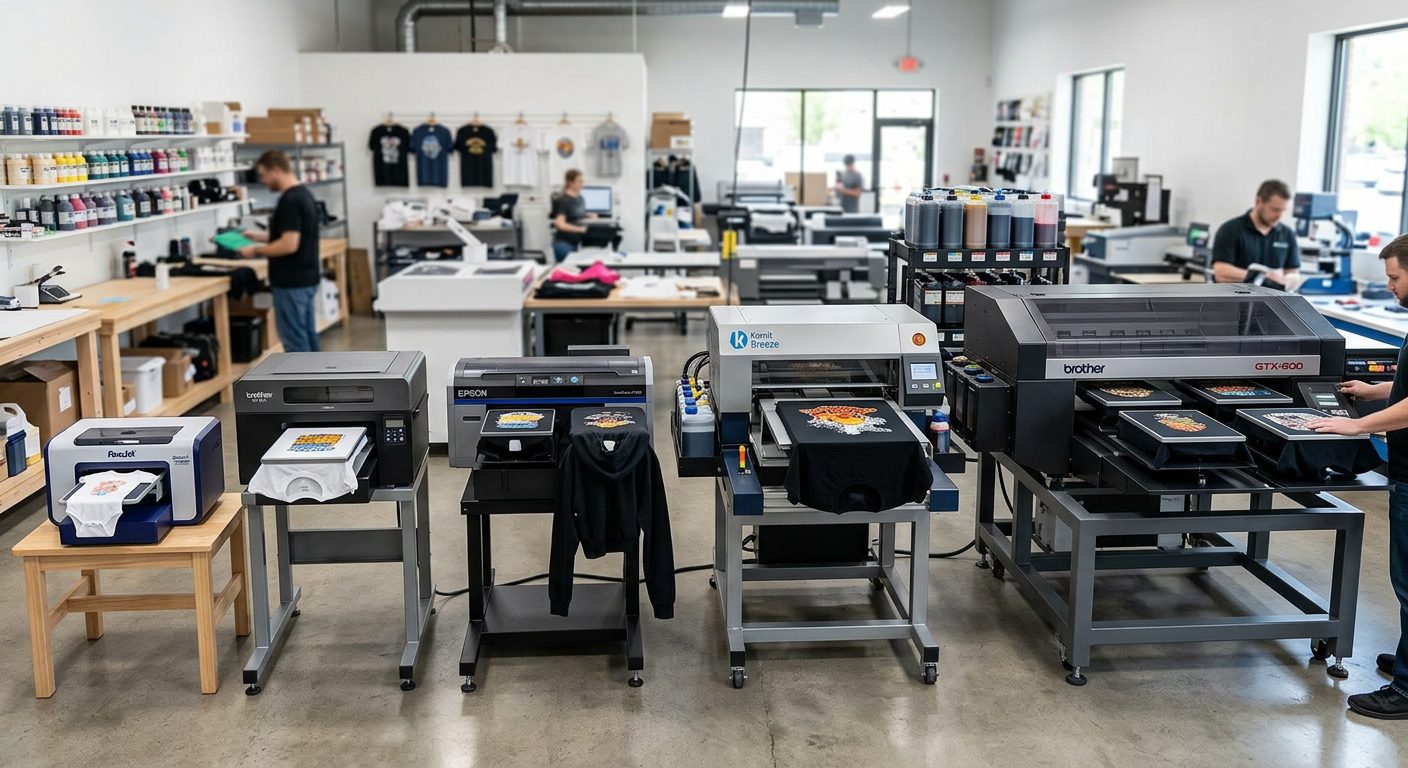
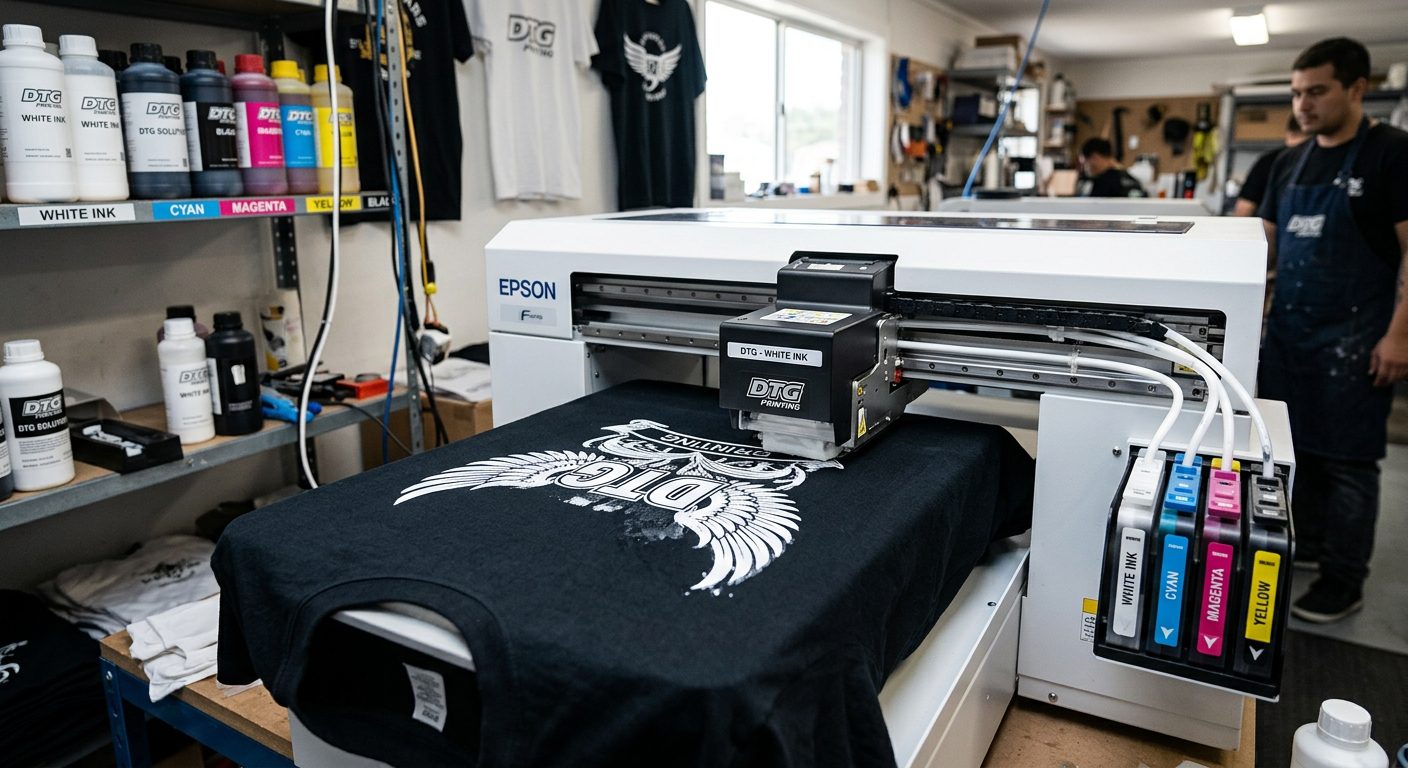
Yes, direct to garment printer models come in various physical sizes and production capacities. Manufacturers build these systems to meet different operational demands, workspace limits, and printing goals. A small print shop requires a very different setup than an industrial textile factory.
Understanding direct to garment printer sizes helps you make a smarter investment for your business. Physical dimensions directly affect your printable area, daily output volume, platen choices, and workflow layout.
Aura Sign Advertising supplies advanced digital printing equipment across the UAE. We help print service providers choose the right direct to garment printer for their unique production needs.
       DIRECT TO GARMENT PRINTER SIZE CATEGORIES
 ┌──────────────────┬──────────────────┬──────────────────┐
 │  Compact Models  │ Medium-Format    │ Industrial       │
 │                  │                  │                  │
 │  • Tabletop      │  • Standalone    │  • Floor System  │
 │  • Low Volume    │  • Mid Volume    │  • High Volume   │
 │  • Standard      │  • Multiple      │  • Multi-Platen  │
 │    Platens       │    Platens       │    Stations      │
 └──────────────────┴──────────────────┴──────────────────┘
Direct to Garment Printer Sizes and Categories
Manufacturers classify every direct to garment printer into three main size categories. Each category serves a distinct market segment and business stage.
+------------------+-----------------------+------------------------+--------------------------+
| Printer Category | Physical Footprint    | Typical Print Area     | Target Production        |
+------------------+-----------------------+------------------------+--------------------------+
| Compact / Entry  | Tabletop (Small)      | 12" x 16" (30x40 cm)   | Startups & Custom Orders |
| Medium-Format    | Mid-Sized Standalone  | 16" x 20" (40x50 cm)   | Growing Print Shops      |
| Industrial       | Large Floor Unit      | 20" x 24"+ (50x60 cm+) | High-Volume Factories    |
+------------------+-----------------------+------------------------+--------------------------+
1. Compact Direct to Garment Printer Models
Compact machines suit home-based businesses, startups, and small retail spaces. These tabletop units fit easily onto sturdy workbenches or dedicated stands.
- Physical Dimensions: They take up minimal floor space and pass through standard doorways easily.
- Production Focus: These models process low-to-moderate daily orders without crowding small rooms.
- Limitations: Compact designs feature smaller print beds and require manual garment swapping.
2. Medium-Format Direct to Garment Printer Systems
Medium-format machines offer an ideal balance between physical footprint and daily output. Growing apparel brands and established print shops usually select this versatile category.
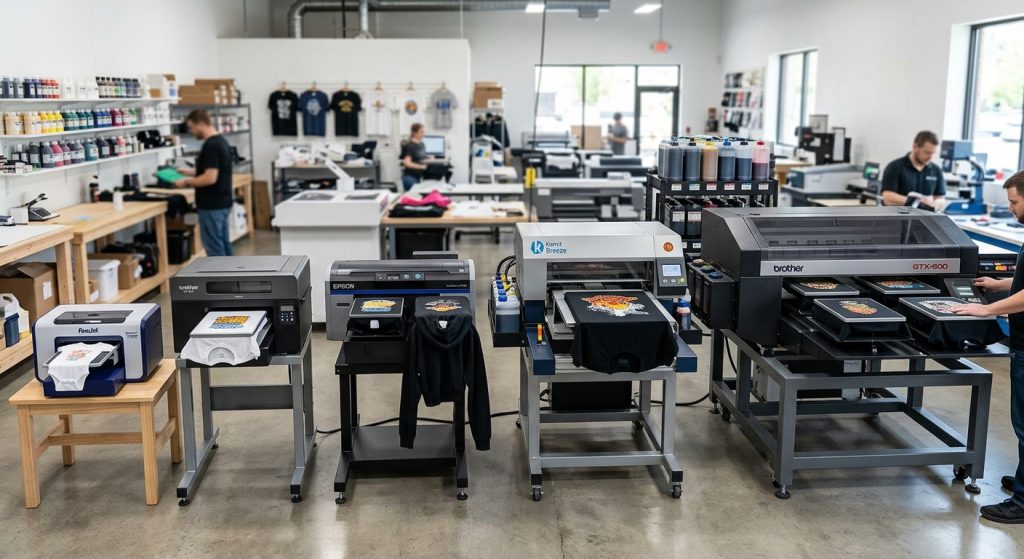
- Physical Dimensions: They sit on custom stands with wheels for easy room repositioning.
- Production Focus: These units process consistent custom orders, small retail runs, and detailed artwork.
- Advantages: Medium machines support interchangeable platens for wider garment variety.
3. Industrial Direct to Garment Printer Equipment
Industrial machinery suits high-volume apparel factories, uniform suppliers, and large print companies. These heavy-duty systems feature wide bases and heavy steel framing.
- Physical Dimensions: They require dedicated floor space, heavy power supply, and controlled climate conditions.
- Production Focus: These systems run continuously across multiple daily shifts.
- Advantages: Industrial models include automated garment loading and multiple printing platens.
How Size Affects Printable Area and Garment Options
The physical frame of a direct to garment printer dictates its maximum printable area. Larger frames accommodate wider motion tracks and bigger platen beds.
           TYPICAL PRINTABLE AREA COMPARISON
 ┌────────────────────────────────────────────────────────┐
 │ Industrial (20" x 24"+) - Oversized & Full-Back Prints│
 │ ┌────────────────────────────────────────────────────┐ │
 │ │ Medium-Format (16" x 20") - Hoodies & Standard L-XL│ │
 │ │ ┌────────────────────────────────────────────────┐ │ │
 │ │ │ Compact (12" x 16") - Standard Chest Prints    │ │ │
 │ │ └────────────────────────────────────────────────┘ │ │
 │ └────────────────────────────────────────────────────┘ │
 └────────────────────────────────────────────────────────┘
A compact machine handles standard chest graphics efficiently. However, it cannot print seam-to-seam patterns or over-sized graphics. Industrial equipment lets operators process massive designs across larger fabric sections.
Your equipment size also determines which garment styles you can process. A flexible direct to garment printer supports interchangeable platens for diverse product lines.
Common apparel items include:
- T-shirts and polo shirts
- Hoodies and sweatshirts
- Baby clothes and onesies
- Tote bags and fabric sleeves
- Sleeveless shirts and promotional items
Direct to Garment Printer vs Other Printing Equipment
Print providers often compare a direct to garment printer with other digital hardware. Choosing the correct machine type ensures smooth factory workflows.
Sticker Printing Machine Technology
A sticker printing machine uses roll-to-roll media feeds for adhesive vinyl. It cannot print directly onto woven textile fibers or bulky clothing items.
UV Printing Machine Technology
A UV printing machine cures ink instantly using ultraviolet light. It targets rigid substrates like acrylic, metal, wood, and glass rather than soft cotton apparel.
Printer for Shirts and Custom Apparel
A dedicated printer for shirts uses specialized textile inks that absorb directly into fabric fibers. This creates soft, comfortable apparel that resists fading during routine washing.
Dedicated Printer for T Shirts
A specialized printer for t shirts focuses strictly on garment platens and textile ink management. It delivers bright colors on dark and light cotton garments alike.
Critical Factors Before Buying a Direct to Garment Printer
Selecting equipment requires analyzing your full operational strategy. You must evaluate physical dimensions alongside technical specs and long-term costs.
               PRE-PURCHASE CHECKLIST
 ┌────────────────────────────────────────────────────┐
 │  [1] Max Print Dimensions vs Graphic Requirements   │
 │  [2] Garment Compatibility (Cotton/Blends)         │
 │  [3] Expected Daily Order Volumes                  │
 │  [4] Available Platen Sizes & Quick-Swaps          │
 │  [5] White Ink Circulation Systems                 │
 │  [6] Daily Cleaning & Routine Maintenance          │
 │  [7] Software Compatibility & RIP Controls         │
 │  [8] Local Service Support & Spare Parts           │
 └────────────────────────────────────────────────────┘
- Maximum Print Area: Verify that your chosen model matches customer artwork requests.
- Fabric Compatibility: Ensure the ink system handles your preferred cotton and blend fabrics.
- Production Volume: Calculate daily orders so you do not under-power your print room.
- Platen Selection: Look for models offering quick-change platen accessories.
- Ink Systems: Choose machines with active white ink agitation to prevent clogging.
- Maintenance Rules: Review automated cleaning cycles to protect expensive printheads.
- RIP Software: Confirm that bundled software processes complex color separations quickly.
- Technical Support: Partner with local suppliers who carry original spare parts.
Workspace Planning for Your Direct to Garment Printer
Physical equipment size represents only one part of workspace planning. You must calculate total operational clearance around the unit.
Operators require clear paths for loading shirts, swapping platens, and executing daily maintenance. You also need space for pre-treatment stations, heat presses, and curing dryers.
               IDEAL WORKSHOP LAYOUT
 ┌──────────────────────────────────────────────────┐
 │  Pre-Treatment Area   ──►  Pre-Heat Press Area   │
 │                                                  │
 │  Direct to Garment Printer  (Central Workspace)  │
 │                                                  │
 │  Curing Heat Press/Tunnel ──► Quality Control    │
 └──────────────────────────────────────────────────┘
Proper ventilation and climate control protect internal electronics from heat and moisture buildup. Clean rooms prevent dust from settling on freshly pre-treated garments.
How Aura Sign Advertising Supports Your Business
Selecting hardware requires clear guidance, reliable delivery, professional setup, and ongoing care. Aura Sign Advertising supports print businesses across the UAE with complete digital solutions.
We trade, service, and support world-renowned printing equipment from leading global manufacturers, including:
- Mimaki
- Roland
- Epson
- KingJet
- MTuTech
- Zhongliqi
Our technical team provides comprehensive installation, operator training, and Annual Maintenance Contracts (AMCs). We ensure your production line stays fully operational without expensive downtime.
For businesses expanding into promotional signage, display stands, or corporate gift branding, Izra UAE provides complementary branding solutions across the Emirates.
Conclusion
Every direct to garment printer size offers specific advantages for different operational scales. Compact models benefit startups with space limits. Medium-format units balance flexible capacity with moderate footprints. Industrial systems power high-volume apparel manufacturing lines.
Evaluating print area, garment mix, daily order volume, and workshop space ensures smart equipment choices. Matching your machinery to realistic demand guarantees smooth growth without unnecessary overhead.