Skip to content
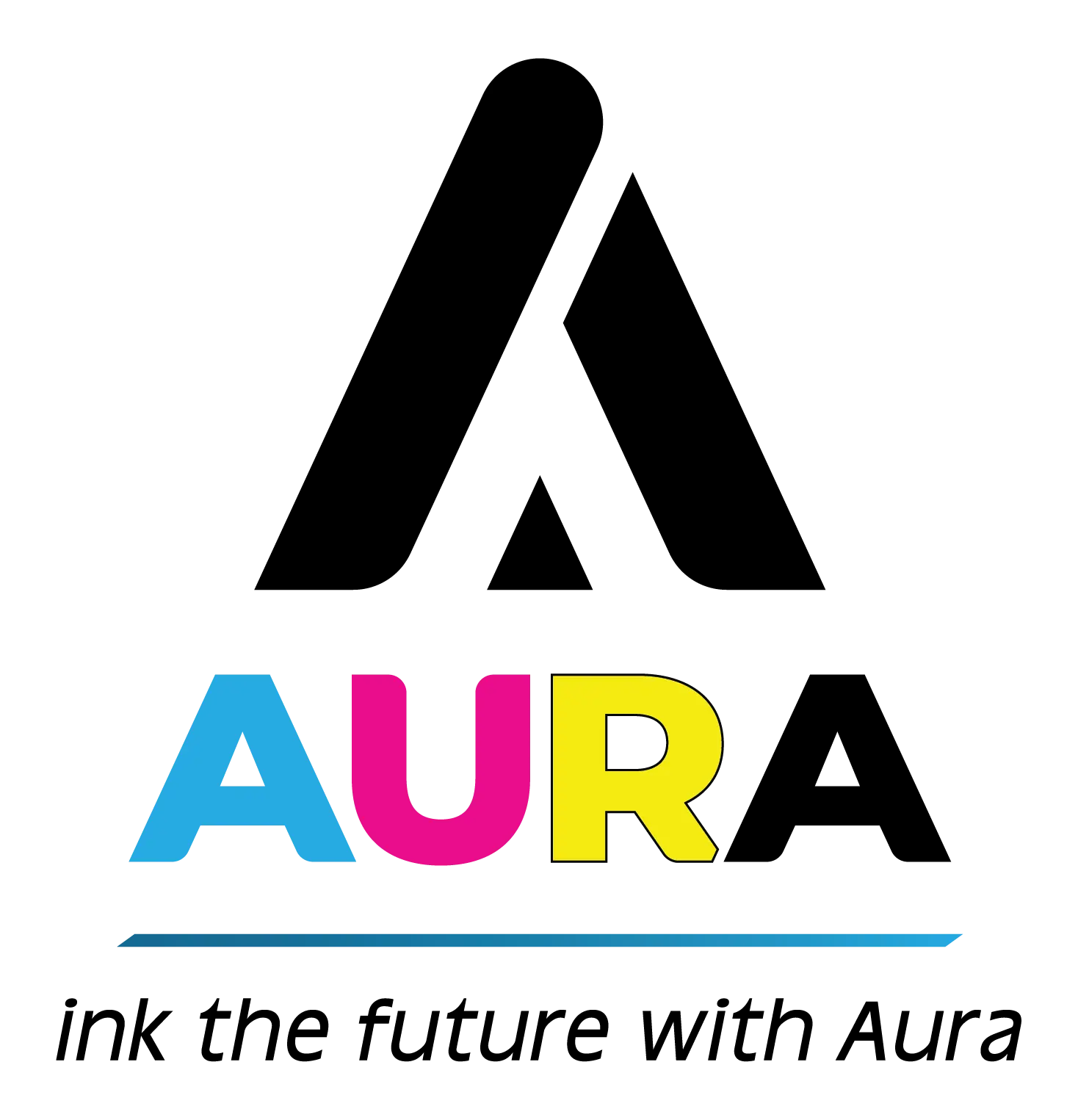
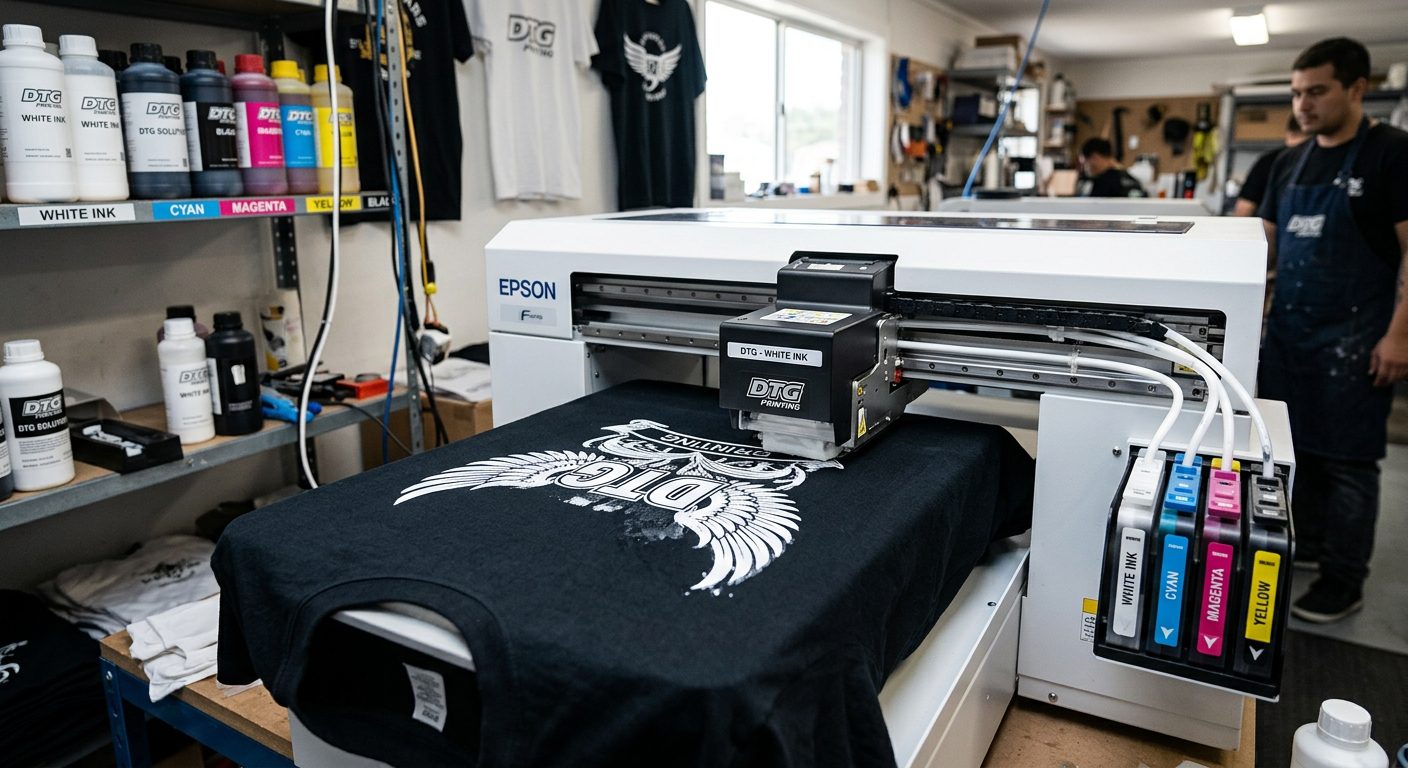
A direct to garment printer can print white ink on garments. White ink plays a critical role in digital textile production. It creates a solid foundation for dark shirts. Without white ink, dark fabrics absorb colored dyes. Colors can look dull on black shirts.
Printing white ink requires proper machine setups. Fabric pretreatment is essential for dark garments. Pretreatment prevents white ink from soaking into cotton fibers. It keeps the white layer crisp on top. Color ink is applied directly over the white layer. This process creates bright and detailed designs.
Modern apparel businesses rely heavily on white ink workflows. White ink allows short-run custom shirt production. Print providers can accept custom orders on dark garments. Understanding white ink helps shops improve print quality. It also reduces operating costs and downtime.
How Does a Direct to Garment Printer Use White Ink?
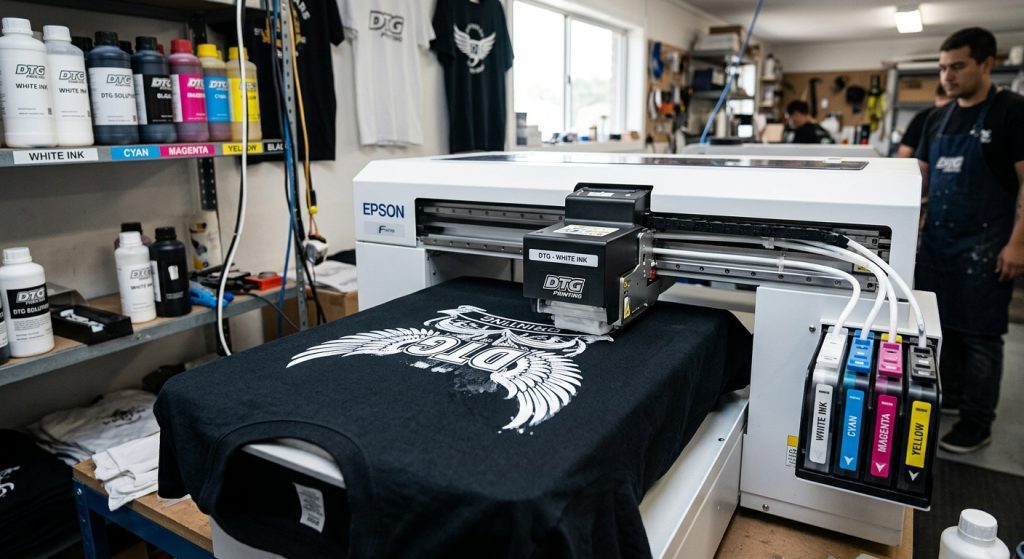
A direct to garment printer uses white ink to build an opaque base. Dark fabrics can overpower light ink colors. Therefore, a white ink layer is printed first.
The process starts with shirt preparation. The shirt is mounted smoothly on the platen. Pretreatment liquid is sprayed on dark cotton garments. Pretreatment binds the white ink to the fabric surface. The garment is heat-pressed to dry the liquid completely.
Next, the direct to garment printer lays down white ink. The printer places white ink precisely under the design area. Colored inks are applied over the white layer instantly. This produces vibrant photographic prints and sharp vector logos.
The thickness of the white layer can be controlled through software. A thick white layer increases color brightness on black cotton. However, excessive ink can make the print feel heavy. Balanced settings protect soft fabric textures.
       [ Dark Fabric ]
              │
              ▼
   [ Pretreatment Application ]
              │
              ▼
    [ White Underbase Layer ]  <── Applied by DTG Printer
              │
              ▼
    [ Color CMYK Printing ]   <── Applied Over White Layer
              │
              ▼
      [ Heat Curing Unit ]
Why Is White Ink Important in DTG Printing?
White ink is essential for black, navy, red, and dark garments. Dark fabrics absorb transparent colored inks completely.
Without a solid white base, yellow ink looks dark green on black shirts. Red ink can appear dark brown or invisible. A direct to garment printer solves this issue with white ink. White ink separates the artwork from the dark fabric color.
White ink expands design options for print shops. Customers are not restricted to white or pastel shirts. Dark garments remain the most popular choice for custom streetwear. White ink enables vibrant artwork across all garment shades.
Proper ink application maintains visual contrast. Bright white accents make graphic logos pop on dark apparel.
Can a Direct to Garment Printer Print White Ink on Black Shirts?
Yes, a direct to garment printer can print white ink on black shirts effectively. Black t-shirts represent the most common application for white textile ink.
The printer applies a dense white underbase on black fabric. Colored inks print directly over the wet white layer. The result depends on fabric type, pretreatment, ink quality, and heat curing.
Cotton fabric yields the best direct to garment printer results. Ringspun cotton creates a smooth printing surface. Smooth fabric allows even white ink distribution.
Pretreatment is vital for black shirts. Inadequate pretreatment leads to dull white coverage. Over-pretreated shirts may display white ink flaking after washing. Operators must apply pretreatment evenly across the shirt surface.
What Is the Difference Between White and Color Ink?
White and color inks serve distinct functions in garment printing. Color inks create the final visible artwork. White ink creates an opaque background layer on dark shirts.
| Ink Type | Primary Function | Formulation & Chemistry | Application Strategy |
| White Ink | Opaque background base | Titanium dioxide pigments | Underbase layer for dark fabrics |
| Color Ink (CMYK) | Visible artwork rendering | Water-based textile dyes | Top layer over fabric or white base |
Color inks are semi-transparent water-based dyes. They rely on light background surfaces to show brightness. White ink contains titanium dioxide particles. Titanium dioxide provides dense visual opacity on dark cotton.
A direct to garment printer adjusts ink usage automatically. White shirts do not require a white underbase. The direct to garment printer skips white ink on light garments. This saves production costs and speeds up printing.
Does White Ink Make DTG Printing More Expensive?
White ink increases production costs for direct to garment printing. Dark garments require extra ink and pretreatment chemicals.
White ink contains heavy titanium dioxide pigments. These pigments can settle inside printhead channels over time. Printers require automated ink circulation to prevent clogging. Maintenance routines consume small amounts of white ink daily.
Total production costs depend on multiple key factors:
- Graphic coverage area and artwork density.
- Pretreatment chemical consumption per garment.
- Automated printer maintenance cycles and ink flushing.
- Garment fabric composition and thickness.
A direct to garment printer remains cost-effective for custom orders. Efficient ink management keeps operating costs manageable.
How Should White Ink Be Maintained?
White ink requires consistent operator attention and daily maintenance. Titanium dioxide pigments settle quickly when the printer stays idle.
Operators must agitate white ink containers daily. Ink circulation systems move white ink through the print lines automatically. Daily nozzle checks identify blocked printhead nozzles early.
Cleaning printheads according to manufacturer guidelines prevents ink buildup. Never leave a direct to garment printer idle for long periods. Follow official shutdown protocols when storing machines for holidays.
Maintaining proper room temperature and humidity protects printhead health. Ideal room humidity prevents white ink from drying inside sensitive nozzles.
Can White Ink Be Used for Detailed Designs?
Yes, modern direct to garment printer technology prints fine white ink details accurately. Modern printheads deliver small ink droplet sizes for high-resolution graphics.
Fine text, thin linework, and photographic gradients render crisp on dark cotton. However, artwork resolution directly influences final print quality.
Digital files require high resolution before printing. Transparent graphic areas must be configured properly in print software. Software RIP engines calculate exact white ink coverage requirements.
Excessive white ink can distort fine graphic details. Balanced RIP settings protect tiny text lines from bleeding together.
Is a Direct to Garment Printer Better Than a Sticker Printing Machine?
A direct to garment printer and a sticker printing machine serve entirely different production needs. Neither machine is universally better than the other.
A direct to garment printer prints water-based ink directly onto cotton fabrics. It targets custom t-shirts, hoodies, tote bags, and apparel lines.
A sticker printing machine prints durable solvent or UV inks onto adhesive vinyl films. It produces product labels, decal graphics, window signs, and packaging stickers.
Print shops often operate both equipment types. Diversified equipment allows shops to serve broader customer markets effectively.
How Does DTG Compare With a UV Printing Machine?
A UV printing machine uses ultraviolet light to cure ink instantly. UV printers print on rigid plastic, wood, glass, acrylic, and metal surfaces.
A direct to garment printer uses water-based textile inks engineered for soft fabrics. DTG prints absorb into cotton fibers, maintaining comfortable garment flexibility.
UV inks dry into a hard film on surfaces. Printing UV ink on t-shirts produces a stiff, uncomfortable texture.
Apparel decoration requires specialized textile equipment. A direct to garment printer remains the standard choice for wearable fabrics.
Can a Direct to Garment Printer Print White Ink on Every Shirt?
No, a direct to garment printer cannot print white ink on every shirt type. Fabric composition determines printing success.
100% ringspun cotton provides ideal printing performance. Cotton fibers absorb pretreatment liquid and anchor white ink particles securely.
Polyester fabrics present printing challenges. High heat causes dye migration on synthetic fibers. Disperse dyes in polyester mix with white ink, causing discoloration.
Blended fabrics require careful testing before production. Specialized low-temp inks and pretreatments help decorated cotton-poly blends.
Can DTG White Ink Crack After Washing?
Improper printing and curing can cause white ink cracking after washing. However, correct production methods deliver durable, long-lasting prints.
Under-cured white ink fails to bond with cotton fibers. Uncured ink washes out or cracks after initial laundering cycles. Heat presses or conveyor dryers must reach correct curing temperatures.
Garment quality impacts wash durability significantly. Low-quality fabrics with loose fibers cause premature print surface cracking.
Providing wash instructions helps end customers. Washing shirts inside-out in cold water prolongs print life.
What Should Businesses Look for in a DTG Printer?
Selecting a direct to garment printer requires evaluating technical capabilities, support options, and production efficiency.
Key hardware considerations include:
- White ink circulation and automated maintenance features.
- Maximum print resolution and variable droplet capabilities.
- Platen sizing options for various garment dimensions.
- RIP software control over white underbase generation.
- Supplier after-sales technical support and maintenance contracts.
Reliable equipment suppliers safeguard shop productivity. Aura Sign Advertising delivers digital printing equipment, technical servicing, and annual maintenance contracts (AMCs) across the UAE market. Their portfolio features trusted industry brands including Mimaki, Roland, Epson, KingJet, MTuTech, and Zhongliqi.
Working with an experienced regional supplier reduces equipment downtime. Professional training helps print operators master white ink workflows quickly.
Is a Direct to Garment Printer Suitable for Small Businesses?
Yes, a direct to garment printer fits small print shop operations well. DTG technology eliminates expensive screen printing setups and mesh screen exposure.
Small businesses can produce single custom shirts profitability. Print-on-demand setups lower inventory risks for new clothing brands.
Common small business DTG applications:
- Custom corporate branded apparel.
- Event merchandise and team t-shirts.
- Artist graphic apparel collections.
- Personalized gift garments.
Accurate pricing models ensure business profitability. Shops must calculate ink, garment, electricity, labor, and maintenance expenses per unit.
Can a Printer for Shirts Use White Ink?
A specialized printer for shirts uses white ink when configured with white textile ink channels. Textile printers feature dedicated printhead lines for white pigment inks.
Not all shirt decoration machines use direct printing. Direct-to-film (DTF) and screen printing transfers use white ink differently.
A direct to garment printer sprays white ink directly onto pretreated fabric. The machine switches ink configurations based on garment background color.
White ink capability expands garment color selection. Print shops can supply dark, light, and heather garment options confidently.
Can a Printer for T Shirts Print White Ink?
Yes, a dedicated printer for t shirts prints white ink easily on dark garments. White underbase capabilities define modern digital t-shirt printing.
Proper printer selection depends on expected daily production volume. Entry-level printers suit low-volume custom shops. Industrial production units handle high-volume commercial garment runs.
Printer maintenance remains vital across all volume levels. Consistent maintenance protects white ink flow and printhead performance.
A quality printer for t shirts produces soft, colorful, high-resolution graphic apparel.
How Can Businesses Improve White Ink Results?
Businesses can improve white ink printing quality by refining daily production steps.
First, select high-quality 100% ringspun cotton garments. Apply pretreatment liquid evenly using automated pretreating equipment. Heat press the garment until completely dry.
Next, calibrate RIP software white underbase settings. Avoid applying excessive white ink on light design areas.
Print the white underbase layer smoothly. Apply CMYK color inks accurately over the white foundation.
Finally, cure the printed shirt at recommended heat press temperatures. Consistent workflows eliminate white ink opacity issues and print peeling.
Why Choose Professional Printing Technology Support?
Operating advanced digital printing equipment requires technical expertise. Proper training prevents expensive printhead damage and material waste.
Partnering with technical experts ensures stable machine performance. Experienced technicians resolve ink flow issues, color calibration problems, and mechanical faults rapidly.
Aura Sign Advertising supports print service providers, signage companies, and industrial printing operations across the UAE. Their dedicated support team provides complete installation, operator training, and ongoing maintenance coverage.
Choosing professional support allows businesses to focus on sales growth while maintaining high print standards.
Conclusion | Direct to Garment Printer: Can It Print White Ink?
A direct to garment printer prints white ink effectively on dark fabrics. White ink creates an opaque foundation that keeps graphic colors vibrant. Achieving great results requires quality cotton garments, proper pretreatment, correct curing, and regular maintenance. Partnering with a reliable regional equipment supplier ensures smooth business operations.