Skip to content
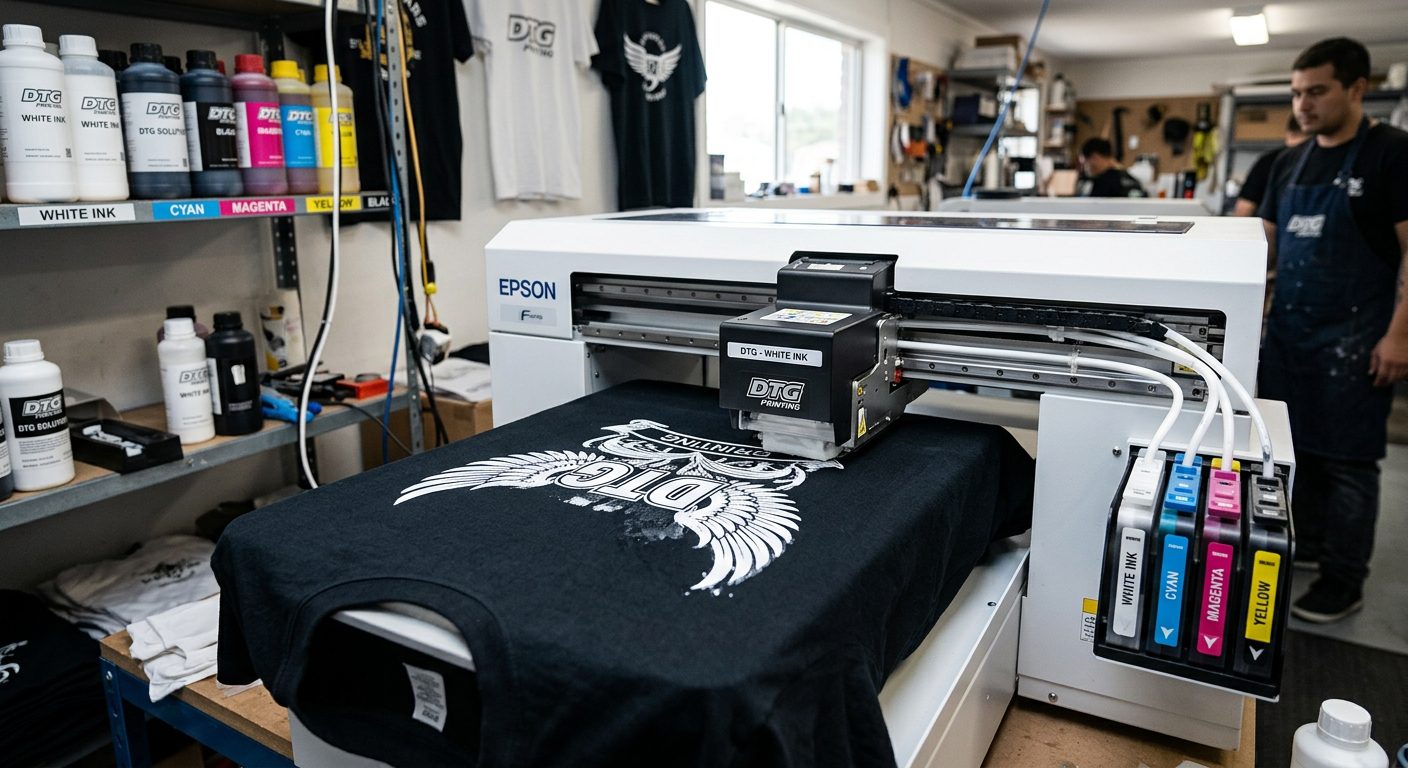
A direct to garment printer is a valuable investment for custom apparel businesses. It prints designs directly onto fabric. Therefore, businesses can produce detailed shirts without traditional screen-printing steps.
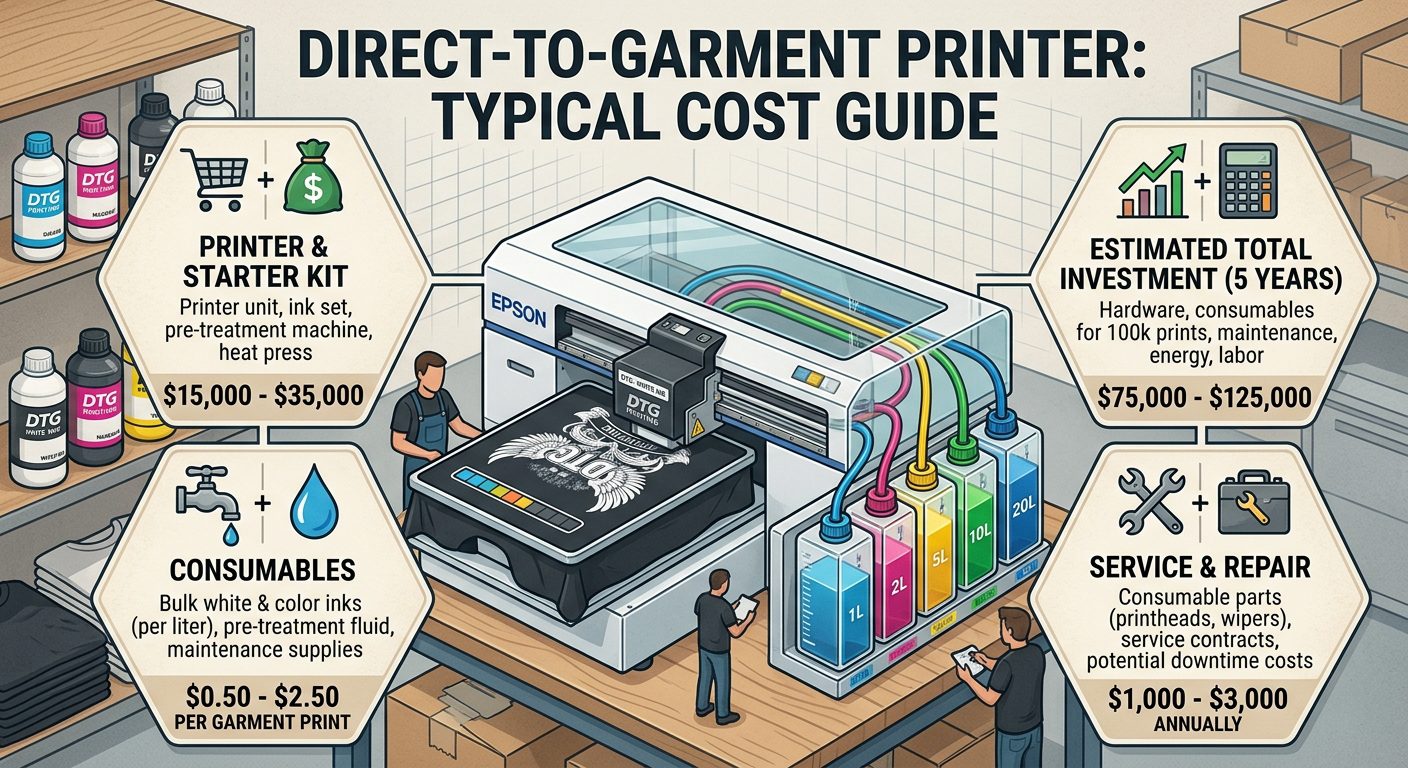
The price can vary widely across different equipment classes. Entry-level machines may cost several thousand dollars. Professional commercial systems can cost tens of thousands of dollars. Industrial equipment can cost even more.
Several factors affect the final purchase price. These factors include print size, ink capacity, print speed, automation, software, and after-sales support.
For UAE businesses, the total investment also depends on local factors. Shipping, installation, training, spare parts, and annual maintenance contracts (AMCs) affect total cost. A machine that looks affordable may cost more after adding these expenses.
This guide explains the typical cost of a direct to garment printer. It also helps buyers make an informed choice for their print shop.
How Much Does a Direct to Garment Printer Cost?
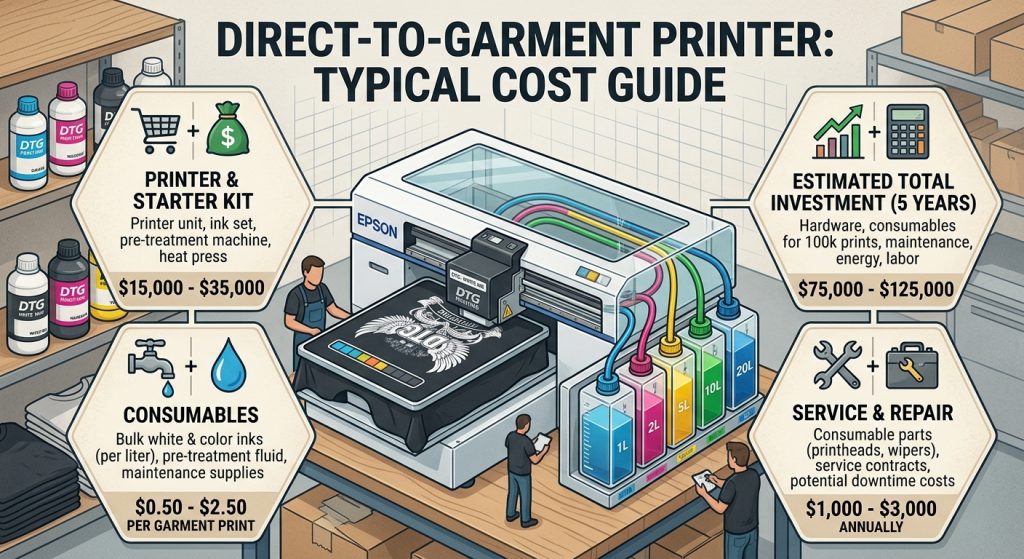
A direct to garment printer can range from $5,000 to over $50,000. The exact price depends on the machine class and its capabilities.
Entry-level equipment targets small custom apparel businesses. These compact machines usually have smaller print areas. They also print at slower production speeds.
Mid-range equipment offers stronger production capacity. It suits growing apparel businesses and print service providers.
Commercial systems provide higher speeds and larger daily workloads. They include automatic maintenance systems and advanced white ink management.
| Printer Type | Typical Price Range |
| Entry-level | $5,000 – $10,000 |
| Small commercial | $10,000 – $25,000 |
| Professional commercial | $25,000 – $50,000+ |
| Industrial production | $50,000+ |
These figures show general market averages. Actual prices differ by brand, configuration, region, and local supplier support.
Direct to Garment Printer Cost by Business Size
Your business size should influence your machine choice. A small startup does not always need an industrial setup.
A small apparel business may begin with an entry-level direct to garment printer. This choice reduces the initial capital requirement.
A growing company may need a faster direct to garment printer. Higher production volume can justify the extra equipment cost.
Large print operations often need multiple heavy-duty systems. They require automatic garment loading and industrial conveyor drying units.
Before buying, estimate your monthly order volume. Then compare that figure with the printer’s recommended monthly workload.
This approach helps prevent over investment in unused capacity. It also reduces the risk of buying equipment that cannot meet order demand.
What Affects Direct to Garment Printer Prices?
Several technical features influence the total price of a direct to garment printer.
Print Speed
Speed is a major cost factor. Faster commercial printers carry higher purchase prices.
However, speed improves overall shop efficiency. A busy print shop recovers the extra investment through higher daily output.
Print Area
A larger print area requires complex heavy-duty hardware. Large-format apparel systems cost more than standard desktop models.
Small graphics work well on compact platens. Large designs require a larger platen and print bed size.
White Ink System
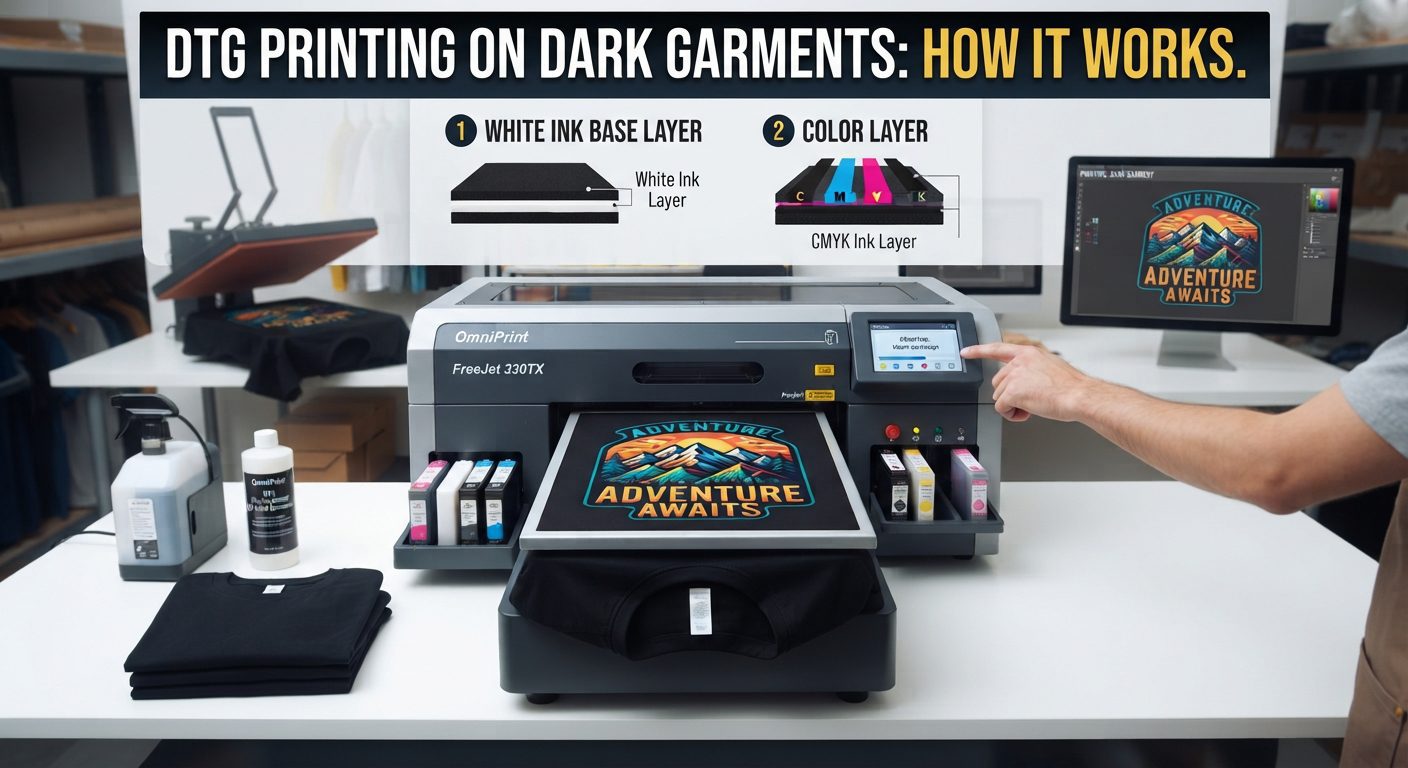
White ink is essential for printing dark cotton garments. It creates an underbase layer beneath colored CMYK inks.
However, white ink requires continuous circulating systems. These systems prevent heavy pigments from settling and clogging delicate print components.
Machines with advanced circulation features cost more initially. Yet, they significantly reduce maintenance downtime over time.
Printhead Technology
Printheads directly affect output resolution and production speed. Advanced industrial printheads raise the overall machine price.
High-end printheads support higher resolution and faster droplet frequency. Print shop owners should evaluate quality alongside purchase cost.
Automation
Automation increases initial machine price while reducing manual labor. Automatic platen height adjustment speeds up garment loading.
Some commercial systems feature automated printhead capping and cleaning. These built-in maintenance features protect your hardware investment.
Direct to Garment Printer Running Costs
The initial purchase price represents only one portion of your investment.
A direct to garment printer requires ongoing operational supplies. Ink remains one of the largest recurring monthly expenses.
Pretreatment solution is another essential cost item. Pretreatment helps textile ink bond properly with dark cotton fibers.
Blank apparel creates a constant inventory expense. Blank shirts vary in price based on fabric weight and manufacturing quality.
Electricity and routine maintenance must be budgeted. Printheads, dampers, wiper blades, and capping stations require scheduled replacement.
Software licensing creates additional expenses. Some printers include full RIP software, while others require separate licenses.
Therefore, calculate the complete total cost of ownership before buying hardware.
Is a Direct to Garment Printer Better Than a Sticker Printing Machine?
A direct to garment printer and a sticker printing machine serve completely different production needs.
A sticker printing machine produces adhesive graphics. It prints vinyl labels, promotional decals, product packaging, and wall graphics.
A direct to garment printer prints water-based ink directly onto fabrics. It is engineered specifically for shirts and textile items.
Therefore, the right choice depends entirely on your primary product line.
If your core product is custom apparel, dedicated textile equipment is necessary. If you focus on promotional stickers and decals, a sticker printing machine fits better.
Many print service providers eventually acquire both equipment types. This combination broadens their promotional product catalog.
How Does a Direct to Garment Printer Compare With a UV Printing Machine?
A UV printing machine uses ultraviolet light to instantly cure special inks. It prints on rigid substrates like acrylic, wood, metal, glass, and plastic items.
A direct to garment printer uses water-based pigmented inks built for soft textiles. Therefore, these two printer types are not direct substitutes.
UV equipment handles rigid promotional products and signage. Apparel equipment specializes in breathable cotton clothing.
Businesses offering general customization services often utilize both technologies. However, each machine requires distinct inks, maintenance, and operator training.
Selecting the correct machine depends on the physical products you plan to sell.
Can a Direct to Garment Printer Be Used as a Printer for Shirts?
Yes, serving as a dedicated printer for shirts is the core purpose of direct-to-garment technology.
The system sprays specialized ink directly into fabric fibers. It reproduces fine artwork, photo gradients, and crisp text easily.
Cotton garments deliver the sharpest print results. Fabric compatibility depends heavily on the ink formulation and garment weave.
Pretreatment solution application is necessary for dark shirts. This process ensures vivid color vibrance and high wash durability.
Businesses should always test blank garments before full production runs. Different fabric blends yield varying color absorption levels.
Is a Direct to Garment Printer Suitable for a Printer for T Shirts Business?
A direct to garment printer provides great flexibility for a printer for t shirts enterprise.
It excels at short-run printing and custom short-run orders. Operators can print single custom graphics without setting up traditional screens.
This flexibility makes the technology ideal for personalized apparel orders. Customers can order multiple varied graphics in a single small run.
The process supports on-demand printing models. Print shops avoid holding large inventories of per-printed graphic stock.
However, production speed requires clear planning. Massive uniform print runs may benefit from hybrid or automated screen equipment.
Additional Equipment You May Need
Purchasing a direct to garment printer requires supporting equipment for full production.
- Pretreatment machine: Ensures automatic, even liquid distribution across dark garments.
- Heat press: Cures the applied pretreatment liquid and sets the final printed inks.
- Conveyor dryer: Provides fast, continuous ink curing for high-volume shops.
- Essential supplies: CMYK inks, white ink, cleaning fluid, alignment platens, and RIP software.
Include these additional machinery costs when preparing your startup budget.
How to Choose a Direct to Garment Printer
Start by defining your target daily production volume.
Next, evaluate your garment material types. 100% cotton garments require different handling than synthetic fabric blends.
Then inspect print quality samples closely. Look for sharp image detail, smooth color gradients, and long wash durability.
Maintenance demands should also be evaluated carefully. Machines requiring tedious manual maintenance increase daily operating costs.
After-sales support is critical for commercial businesses. Fast technical support minimizes costly production downtime.
Aura Sign Advertising supports UAE businesses seeking digital printing and cutting technology. Aura Sign Advertising distributes top brands like Mimaki, Roland, Epson, KingJet, MTuTech, and Zhongliqi.
Aura Sign Advertising delivers dedicated after-sales service and Annual Maintenance Contracts (AMCs). These services ensure continuous uptime for commercial print operations across the UAE.
For broader promotional requirements, businesses can consult Izra UAE for complete advertising and gift solutions.
Should You Buy or Lease a Direct to Garment Printer?
Buying hardware outright provides full equipment ownership. However, it requires a larger initial capital investment.
Leasing reduces initial upfront equipment costs. It allows new print shops to preserve cash capital for operational needs.
However, lease agreements should be examined thoroughly. Interest costs, contract terms, and maintenance obligations affect final expenditure.
Established businesses with steady cash flow often prefer full purchasing. New ventures may choose equipment leasing or financing options.
The ideal financial route depends on your cash reserve and output forecasts.
How to Calculate Your Return on Investment
Calculate expected revenue before finalizing your equipment purchase.
For example, assume a total production cost of $8 per printed shirt. If you sell each finished garment for $25, your gross margin equals $17.
Now analyze production volume targets.
Selling 500 custom shirts monthly produces $8,500 in gross margin. From this amount, subtract rent, labor, electricity, marketing, and shop overhead.
The calculation must also account for machinery depreciation.
A higher-priced commercial system often yields better long-term ROI. It produces garments faster while requiring less manual labor per unit.
Do not compare printing equipment using initial price tag alone.
Common Mistakes When Buying a Direct to Garment Printer
One frequent mistake is choosing the lowest-priced hardware available.
Low purchase costs often hide high recurring operating expenses. Excessive ink consumption and frequent part replacements increase ongoing costs.
Another mistake is ignoring daily production capacity limits.
An entry-level machine will struggle under heavy daily orders. Overworking small equipment leads to premature hardware failure and order delays.
Buyers often fail to verify local technical support availability. Production printers need ready access to replacement parts and certified field engineers.
Finally, buyers forget to budget for secondary production supplies. Inks, pretreatment liquids, cleaning supplies, and replacement wipers add up over the year.
A complete total-cost-of-ownership calculation prevents financial surprises.
Is a Direct to Garment Printer Worth the Investment?
A direct to garment printer represents a strong investment for custom apparel businesses.
It provides flexible production options for short orders. It also handles full-color graphic designs without complex screen setup steps.
The technology suits custom clothing lines, promotional merchandise, personalized gifts, and print-on-demand web stores.
However, your chosen machine must match your actual production scale. Purchasing an industrial system for occasional orders creates unnecessary financial strain.
Likewise, a light-duty desktop model cannot sustain a busy print shop.
Matching equipment capacity to business scale ensures solid profit margins and long-term growth.
Conclusion
The typical cost of a direct to garment printer ranges from $5,000 for entry-level models to over $50,000 for commercial production systems. Industrial solutions cost even more.
However, initial hardware price is only one part of the financial equation. Consumables, routine maintenance, heat curing equipment, and local technical support shape the true investment cost.
Businesses should evaluate complete ownership expenses rather than focusing solely on initial prices. Selecting suitable equipment improves shop output and supports long-term business expansion.
For UAE print operations, choosing experienced local suppliers ensures access to genuine spare parts and expert field service. The right technology allows print service providers to deliver consistent apparel quality efficiently.