Skip to content
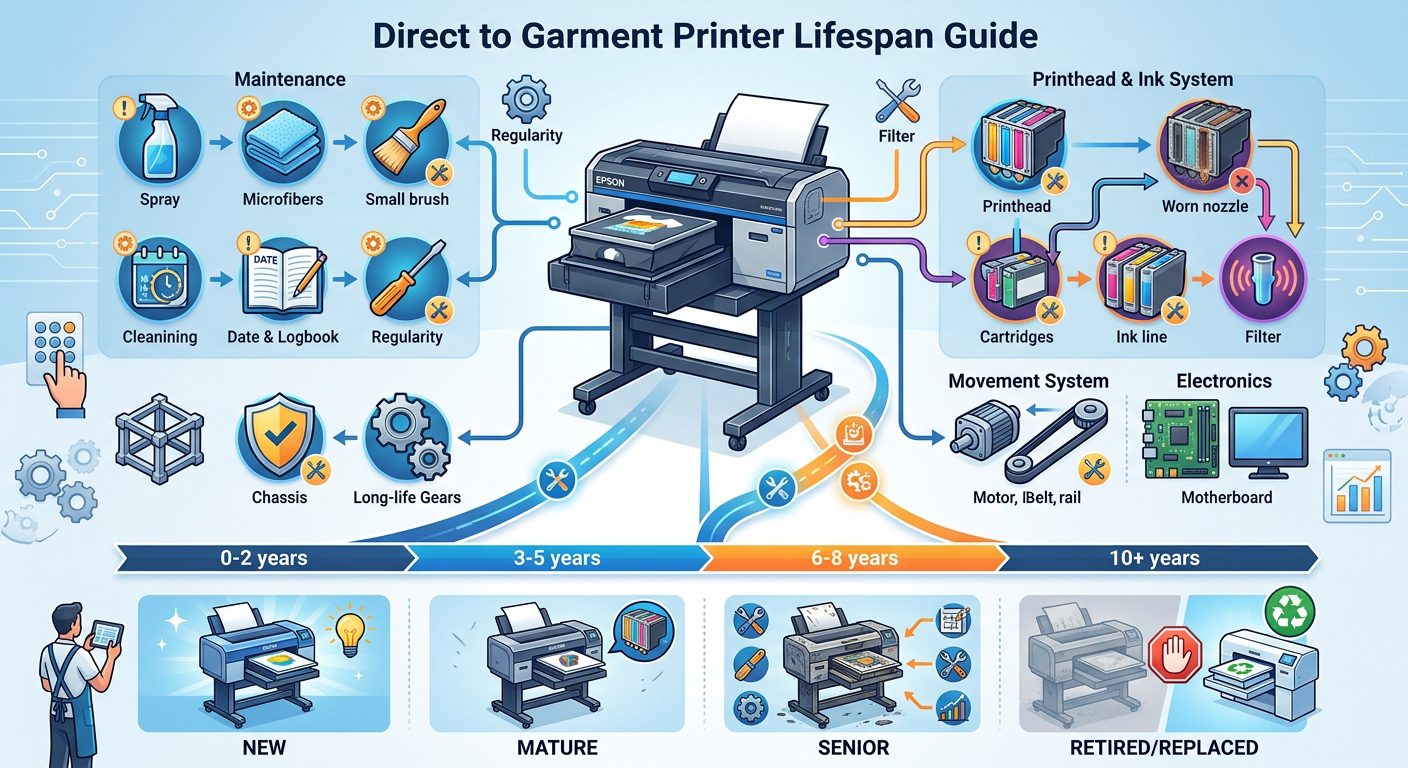
A direct to garment printer is a vital investment for modern apparel businesses. It allows print shops to place intricate, high-quality designs directly onto cotton fabrics and garments. However, most buyers want to know one critical detail before purchasing: What is the true lifespan of a direct to garment printer?
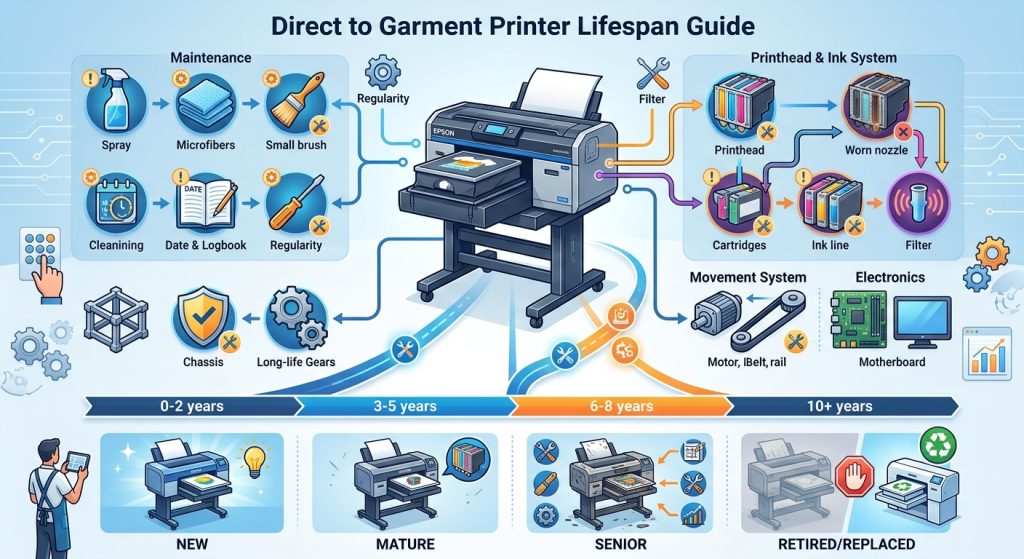
The short answer is that a direct to garment printer usually lasts between three and five years under normal commercial conditions. With excellent maintenance, some heavy-duty units remain reliable for seven years or more.
At Aura Sign Advertising, we provide UAE businesses with top-tier digital printing technologies, including leading brands like Mimaki, Roland, Epson, KingJet, MTuTech, and Zhongliqi. We support print shops across the region with comprehensive after-sales service and annual maintenance contracts (AMCs) to keep their equipment running perfectly.
This detailed guide explains everything you need to know about extending the life of your equipment.
Direct to Garment Printer Lifespan Expectations
Understanding lifespan expectations helps you calculate your total return on investment accurately. Different machine builds and workloads create different results.
+--------------------------+-----------------------+------------------------+
| Printer Category         | Expected Lifespan     | Typical Daily Volume   |
+--------------------------+-----------------------+------------------------+
| Entry-Level / Desktop    | 2 to 3 Years          | 10 - 30 Shirts         |
| Mid-Range Commercial     | 3 to 5 Years          | 30 - 150 Shirts        |
| Industrial Production    | 5 to 7+ Years         | 150+ Shirts            |
+--------------------------+-----------------------+------------------------+
Entry-Level vs. Industrial Machinery
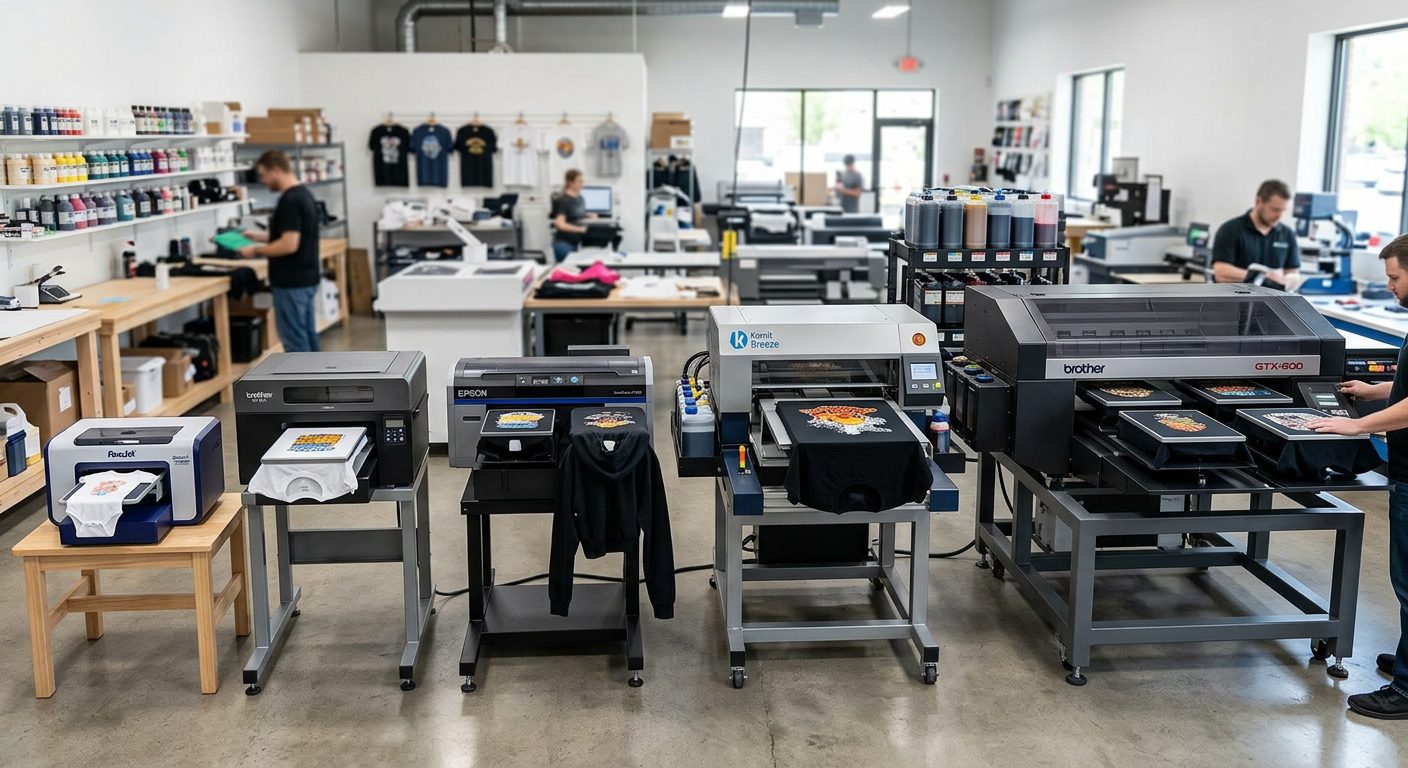
Entry-level printers use lighter frames and smaller ink systems. They work well for small shops, but heavy daily use wears out their internal components faster. Consequently, entry-level models often need major repairs after two or three years.
Industrial models feature heavy-duty steel frames and advanced printhead assemblies. These robust machines handle non-stop production cycles daily. Consequently, an industrial unit can easily surpass five years of daily service when technicians maintain it properly.
Consumables vs. Machine Lifetime
You must distinguish between the overall frame life and consumable parts. Parts like printheads, wiper blades, capping stations, dampers, and ink pumps wear down naturally.
Replacing a worn printhead does not mean the machine is dead. It simply means you are performing routine maintenance. You can keep the core engine running smoothly for years by replacing inexpensive wear-and-tear parts on time.
Factors Affecting Direct to Garment Printer Performance
Several core factors dictate how long your digital textile printer stays in production. Controlling these variables protects your capital investment.
Daily Print Volume
Print volume directly impacts mechanical wear. A machine producing fifty shirts daily experiences less physical stress than one producing five hundred shirts daily.
If your daily volume routinely exceeds your printer’s rated capacity, internal components degrade quickly. Matching your production requirements to the right machine tier is essential for long-term reliability.
Maintenance Discipline
Maintenance is the single most important factor determining equipment longevity. Water-based textile inks contain heavy pigments that settle quickly.
If ink dries inside the printhead nozzles, severe blockages occur. Daily nozzle checks, automated cleanings, and weekly capping-station maintenance prevent costly ink clogs and extend hardware life.
Quality of Inks and Fluids
Never compromise on ink quality to save a small amount of money upfront. Cheap, non-certified inks often contain large particles that damage sensitive printheads.
High-grade OEM or certified third-party inks flow smoothly through print lines. Using approved inks reduces mechanical friction, minimizes clogs, and protects internal dampening systems.
Maintenance Tips for Every Direct to Garment Printer
Creating a strict daily and weekly maintenance schedule keeps your machinery running without unexpected breakdowns.
Daily Care Procedures
- Perform a nozzle check pattern before starting your morning print runs.
- Clean the capping station ring and wiper blade using approved cleaning fluid.
- Gently agitate white ink cartridges or tanks to prevent pigment settling.
- Wipe away excess ink build-up around the printhead carriage frame.
Weekly and Monthly Servicing
- Clean the encoder strip carefully with lint-free swabs and isopropyl alcohol.
- Inspect ink lines and sub-tanks for air bubbles or dried ink deposits.
- Flush waste ink lines to ensure fluid drains out freely.
- Lubricate guide rails and drive gears according to manufacturer guidelines.
Climate Control Matters
Textile inks are extremely sensitive to environmental conditions. You must maintain room temperatures between 20°C and 25°C with humidity levels between 45% and 60%. Dry air causes ink to dry rapidly inside printhead nozzles, while high heat degrades electronic circuitry over time.
Signs Your Direct to Garment Printer Needs Service
Catching minor mechanical problems early prevents catastrophic hardware failures and unexpected downtime. Watch for these common warning signs:
- Persistent Nozzle Drops: If standard head cleanings fail to clear missing nozzles, your printhead or damper needs professional attention.
- Unusual Mechanical Noises: Grinding, clicking, or high-pitched squealing usually signals worn drive belts or dry linear rails.
- Frequent Auto-Cleaning Cycles: When a machine automatically triggers frequent cleaning cycles mid-job, the capping station seal is likely leaking air.
- Inconsistent Print Positioning: Misaligned graphics or blurry edges point toward a dirty encoder strip or worn motor.
Comparing Apparel Equipment to Other Digital Printing Technologies
Print businesses often utilize several types of specialized machinery. Understanding how a direct to garment printer compares to other devices helps you manage your shop’s maintenance routine effectively.
+----------------------------+-----------------------+------------------------+
| Machine Type               | Primary Application   | Typical Ink Type       |
+----------------------------+-----------------------+------------------------+
| Direct to Garment Printer  | Cotton Apparel        | Pigment Water-Based    |
| Sticker Printing Machine   | Vinyl & Labels        | Eco-Solvent / Latex    |
| UV Printing Machine        | Rigid Substrates      | UV-Curable Polymer     |
+----------------------------+-----------------------+------------------------+
Sticker Printing Machine
A sticker printing machine handles adhesive vinyl, labels, and decals using eco-solvent or latex inks. These inks evaporate quickly and require strong ventilation systems. While a sticker printing machine requires regular blade alignment and media tracking checks, its printheads generally face fewer clogs than water-based textile systems.
UV Printing Machine
A uv printing machine utilizes instant ultraviolet light curing to print onto rigid materials like acrylic, wood, glass, and metal. A uv printing machine is extremely durable and versatile. However, operator maintenance must focus heavily on blocking ambient light from reaching the printheads to avoid immediate ink curing inside the nozzles.
Choosing the Right Printer for Shirts
When searching for a printer for shirts, print shop owners often evaluate different direct methods and transfer systems. A dedicated printer for t shirts excels at soft-hand, full-color prints on dark and light garments. Selecting a specialized printer for shirts designed specifically for your target apparel fabrics prevents unnecessary strain on your equipment.
Whether you need a dedicated printer for t shirts, a flexible sticker printing machine, or a heavy-duty uv printing machine, picking the right tool for the job keeps your shop productive.
Maximizing Direct to Garment Printer Lifespan with Aura Sign Advertising
Partnering with an experienced equipment vendor is the best way to secure a long service life for your print machinery. Aura Sign Advertising provides comprehensive support across the UAE.
Premium Machinery Selection
We source high-performance equipment from globally recognized manufacturers, including Mimaki, Roland, Epson, KingJet, MTuTech, and Zhongliqi. These brands engineering standards ensure long-term mechanical reliability under demanding production conditions.
Expert Technician AMCs
Our Annual Maintenance Contracts (AMCs) give business owners total peace of mind. Trained service technicians perform regular preventive checks, calibrate precision optics, replace worn dampers, and tune ink systems before major breakdowns occur.
Complete Business Ecosystem Support
Expanding print businesses require broader branding, signage, and marketing solutions as they grow. For complete corporate branding and signage implementation in the region, businesses frequently trust Izra UAE to deliver top-tier market visibility. Combining world-class production hardware from Aura Sign Advertising with expert regional branding services creates a winning formula for commercial growth.
Evaluating Used Direct to Garment Printer Equipment
Buying preowned machinery offers lower entry costs, but it carries higher operational risks. Consider these steps before purchasing used hardware:
- Inspect Printhead Health: Ask for a live nozzle test print. A damaged printhead can cost thousands of dollars to replace immediately after purchase.
- Review Maintenance Logs: Verify if the previous owner followed official daily cleaning protocols and used genuine inks.
- Examine Internal Lines: Check whether ink lines contain dried pigment chunks or hardened sedimentation.
- Verify Part Availability: Confirm that spare components like pumps, dampers, and motherboards are readily available through local suppliers like Aura Sign Advertising.
Conclusion | Direct to Garment Printer Lifespan Guide
The operational lifespan of a direct to garment printer ranges between three and five years for standard commercial use, but well-maintained industrial models can comfortably reach seven years or longer. Longevity depends directly on print volume, room humidity, ink quality, and maintenance discipline. Routine daily cleanings protect your printheads, while professional servicing prevents minor issues from causing total machine failure.
At Aura Sign Advertising, we provide top digital printing technology from Mimaki, Roland, Epson, KingJet, MTuTech, and Zhongliqi across the UAE. Our dedicated after-sales support and Annual Maintenance Contracts ensure your equipment delivers reliable performance year after year. Invest in the right machine for your workload, maintain your system consistently, and partner with trusted industry experts to maximize your operational success.