Skip to content
Introduction to the Direct to Garment Printer
A direct to garment printer offers a modern way to print custom designs onto clothes. It produces colorful graphics, photographs, and detailed artwork quickly. Therefore, many apparel businesses use this technology for custom orders.
However, every technology has limits. A direct to garment printer is not ideal for every material or order size. Every business owner must evaluate these factors before buying equipment. Aura Sign Advertising helps UAE print shops choose the right machines for their daily operations. This guide explains the key drawbacks of this printing method clearly.
       ┌─────────────────────────────────────────────────────────┐
       │             DIRECT TO GARMENT PRINTER                   │
       └──────────────────────────┬──────────────────────────────┘
                                  │
          ┌───────────────────────┴───────────────────────┐
          ▼                                               ▼
┌───────────────────┐                           ┌───────────────────┐
│     BENEFITS      │                           │    LIMITATIONS    │
├───────────────────┤                           ├───────────────────┤
│ • Detailed prints │                           │ • Cotton-focused  │
│ • No screen setup │                           │ • High ink costs  │
│ • Great for 1-offs│                           │ • Slow bulk runs  │
└───────────────────┘                           └───────────────────┘
What Is a Direct to Garment Printer?
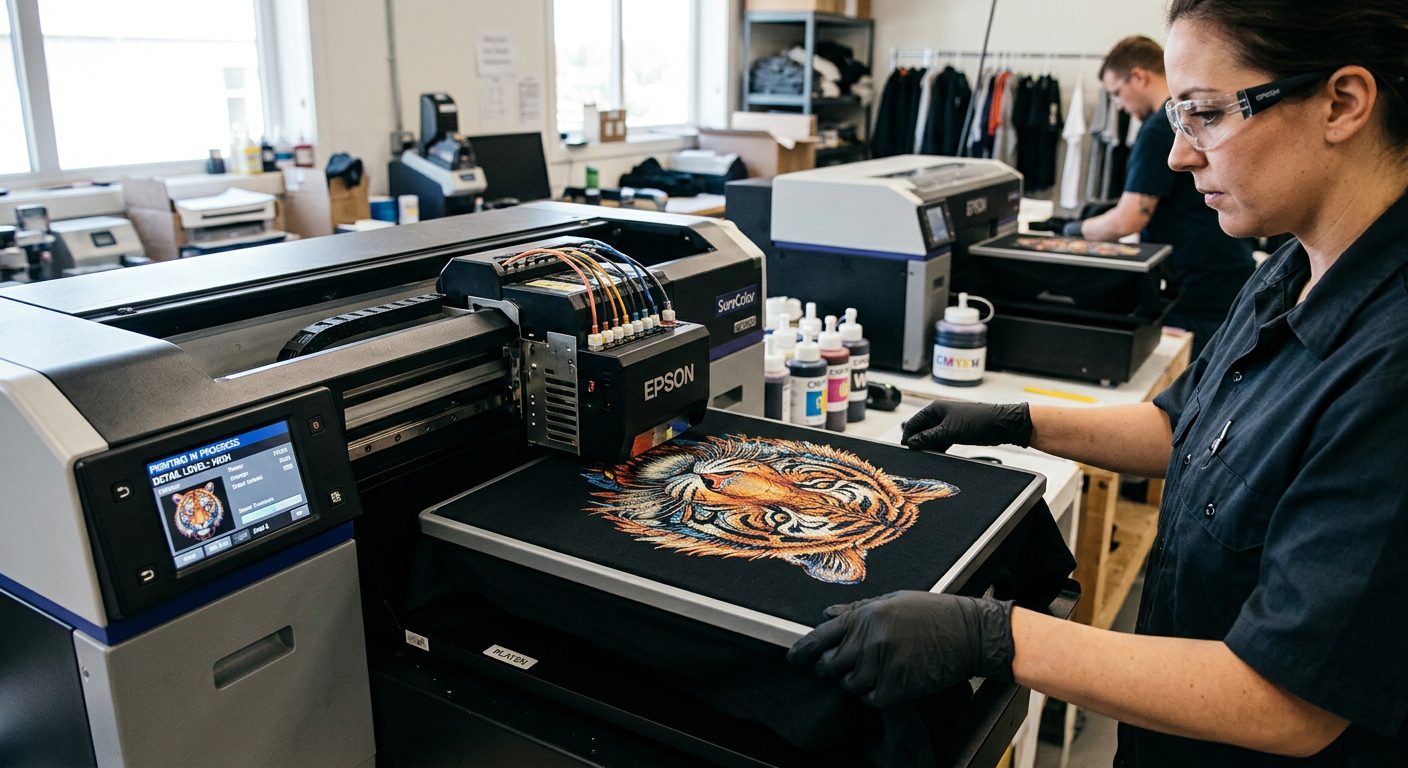
A direct to garment printer applies specialized ink onto clothing surfaces directly. It acts like a regular desk jet machine, but it prints on fabric instead of paper.
┌─────────────────┐      ┌─────────────────┐      ┌─────────────────┐
│ 1. Pretreatment │ ───► │ 2. DTG Printing │ ───► │ 3. Heat Curing  │
│ (Dark Garments) │      │  (Digital Ink)  │      │  (Heat Press)   │
└─────────────────┘      └─────────────────┘      └─────────────────┘
The process uses digital artwork files. It bypasses physical screens entirely. The operator loads the shirt onto a flat platen. After that, the print head deposits microscopic ink drops onto the fibers.
This technique creates soft prints with full colors. Still, fabric type, ink flow, and pretreatment affect your final results.
Fabric Limits of a Direct to Garment Printer
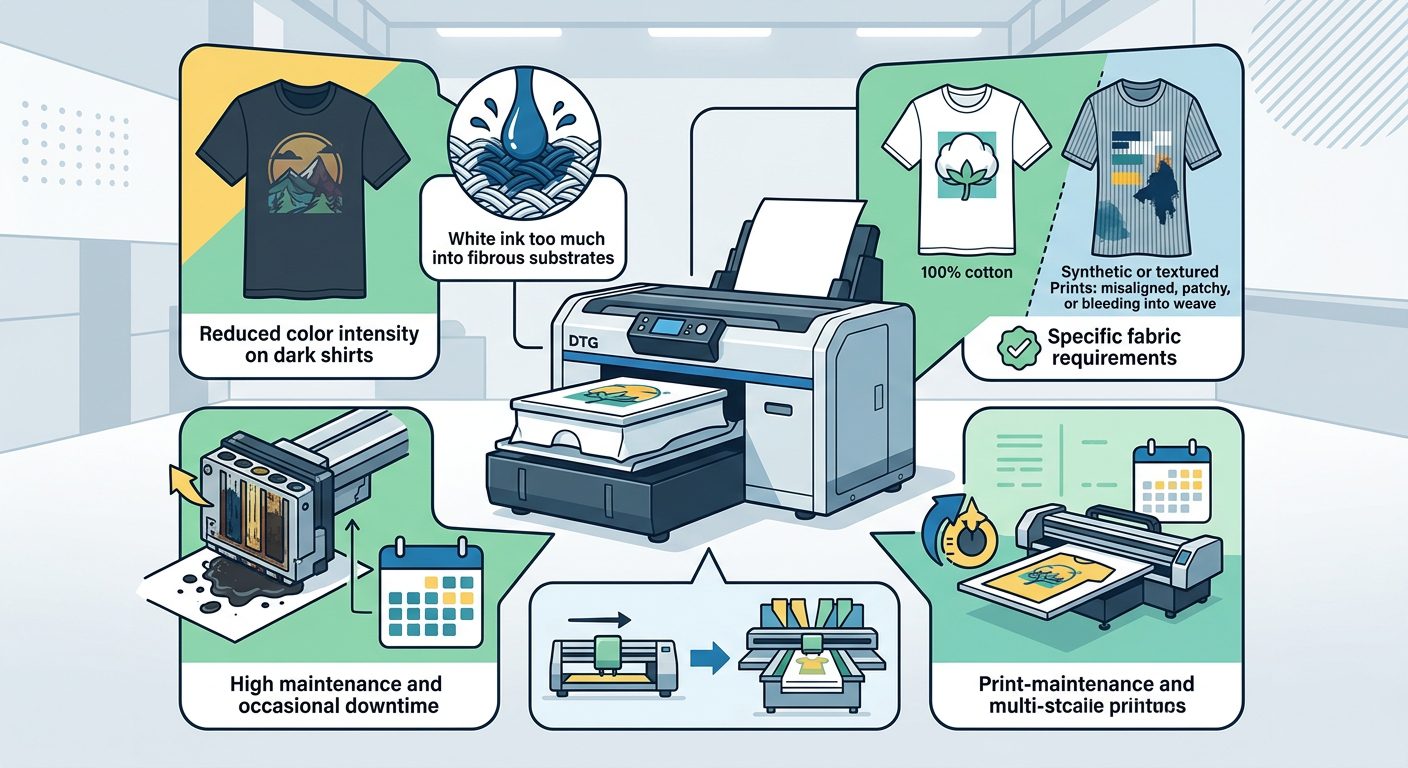
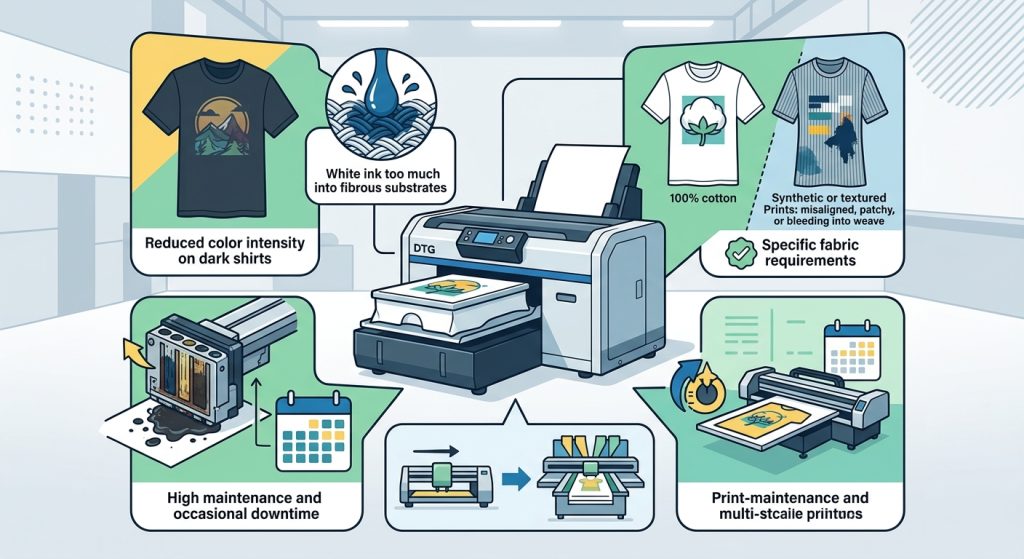
Fabric compatibility remains a significant factor for this technology. A direct to garment printer performs best on 100% cotton garments. Cotton fibers absorb water-based inks naturally and create bright designs.
Synthetic fabrics create unique printing problems. Polyester, nylon, and waterproof coatings repel water-based inks easily. As a result, ink bleeds or washes away during laundry cycles.
┌─────────────────────────────────────────────────────────────────┐
│                       FABRIC COMPATIBILITY                      │
├──────────────────────────┬──────────────────────────────────────┤
│ 100% Ring-Spun Cotton    │ Best Results (Vibrant & Durable)     │
├──────────────────────────┼──────────────────────────────────────┤
│ 80/20 Cotton-Poly Blend  │ Moderate Results (Slight Muting)     │
├──────────────────────────┼──────────────────────────────────────┤
│ 100% Polyester           │ Poor Results (Requires Special Tech) │
└──────────────────────────┴──────────────────────────────────────┘
Rough shirt surfaces also reduce image sharpness. Coarse knits prevent smooth ink placement. Therefore, garment decorators must test items before starting full production runs.
Production Speed and Large Orders
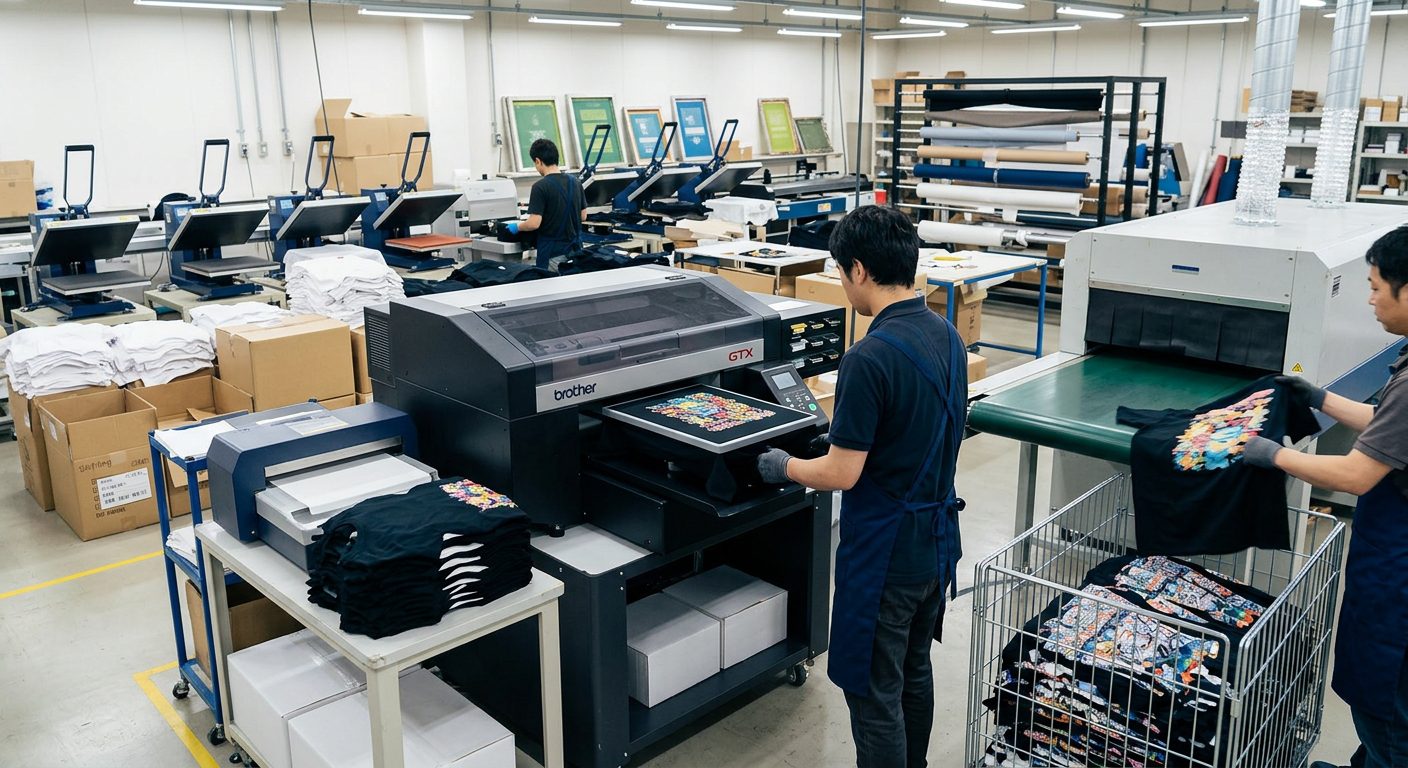
A direct to garment printer excels at short runs and single custom pieces. However, high-volume orders present speed challenges for busy shops.
Each shirt requires manual loading onto a flat platen. Next, the machine prints the image layer by layer. Dark items require pretreatment and heat pressing too. These extra steps slow overall production down.
Screen printing offers better efficiency for thousands of identical items. Once screens are set up, screen equipment prints garments rapidly. A printer for shirts using digital tech stays ideal for short-run customization instead.
High Initial Investment and Startup Costs
Purchasing a direct to garment printer involves significant capital investment. The core machine is only part of your startup expense.
┌─────────────────────────────────────────────────────────────────┐
│                       TOTAL INITIAL COST                        │
├─────────────────────────────────────────────────────────────────┤
│  [ Printer Unit ]  +  [ Pretreatment Machine ]  +  [ Heat Press ]│
│                                                                 │
│  +  [ Textile Inks ]  +  [ Cleaning Fluids ]  +  [ Software ]   │
└─────────────────────────────────────────────────────────────────┘
Complete setups require liquid pretreatment sprayers and heat presses for curing. You must also buy specialized inks, cleaning solutions, software, and extra platens.
These startup costs strain small business budgets initially. However, strong order volumes generate reliable revenue over time. Businesses should calculate expected sales volumes carefully before purchasing new hardware.
Daily Maintenance Requirements
A direct to garment printer requires strict daily care to maintain quality. Water-based textile inks dry quickly inside internal components when left idle.
Print heads clog easily without routine maintenance cycles. Blocked nozzles cause banding and uneven color distribution on garments.
- Perform automated nozzle checks every morning.
- Wipe print head caps with specialized cleaning solution daily.
- Agitate white ink tanks regularly to prevent settling.
- Keep workspace humidity levels between 45% and 60%.
Proper care protects print quality and extends machine lifespans. However, these maintenance tasks consume valuable working time and increase routine labor costs.
High Ink Costs Impact Profit Margins
Textile ink represents a major recurring operating expense for print shops. Ink consumption varies by image size, color saturation, and garment shade.
Dark garments consume significantly more ink than light garments. A heavy white ink base layer must lay down first. After that, color inks print on top of the white base.
Large graphic designs use substantial amounts of ink per unit. Therefore, shop owners must calculate exact ink costs before pricing products for clients. Low pricing models erode overall profit margins quickly.
Pretreatment Adds Extra Steps
Pretreatment adds extra complexity to everyday digital printing workflows. Dark garments need specialized liquid pretreatments before receiving ink.
┌─────────────────────────────────────────────────────────┐
│                   PRETREATMENT PROCESS                  │
├─────────────────────────────────────────────────────────┤
│ 1. Spray Pretreatment Fluid Evenly                      │
│ 2. Heat Press Garment to Dry Fluid Completely           │
│ 3. Print Design with Direct to Garment Printer          │
│ 4. Heat Press Again to Cure Final Ink                   │
└─────────────────────────────────────────────────────────┘
This chemical solution helps white ink bond with cotton fibers directly. It creates a smooth barrier that prevents ink absorption into dark threads.
Applying pretreatment requires absolute consistency across every shirt. Applying too much chemical leaves stiff residues or stains on fabric. Applying too little chemical causes dull prints and poor washability.
The treated garment must dry completely before printing starts. This prep step adds time and labor to daily operations.
Artwork Preparation Demands
A direct to garment printer reproduces fine photographic details accurately. However, your final print quality depends entirely on original file preparation.
Low-resolution images produce blurry or pixelated edges on fabric. Poor color management leads to unexpected final hues.
- Use vector files or high-resolution rasters (300 DPI).
- Design artwork using transparent background layers.
- Adjust color curves to compensate for fabric absorption.
Good design preparation reduces print errors and saves costly ink. Proper artwork setup ensures consistent output across every order batch.
White Ink Operational Challenges
White ink allows a direct to garment printer to output vivid colors on dark fabrics. However, white ink formulas contain titanium dioxide, which settles quickly inside tanks.
Static ink leads to severe print head clogs and uneven opacity. Most modern machines use automatic ink circulation systems to lower risk.
Operators must shake white ink cartridges daily to maintain fluid stability. White ink usage also increases overall job costs substantially.
Factoring white ink costs into garment prices protects profitability on dark garment jobs.
Equipment Comparisons for Modern Print Shops
Choosing the right machine depends entirely on your target product offerings and production targets.
┌───────────────────────┬───────────────────────┬───────────────────────┐
│ Equipment Type        │ Primary Application   │ Ideal Surface         │
├───────────────────────┼───────────────────────┼───────────────────────┤
│ Direct to Garment     │ Custom Apparel        │ Cotton Fabrics        │
│ UV Printing Machine   │ Rigid Goods & Signage │ Glass, Wood, Metal    │
│ Sticker Printer       │ Vinyl Decals          │ Adhesive Media        │
└───────────────────────┴───────────────────────┴───────────────────────┘
Direct to Garment vs. Sticker Printing Machine
A sticker printing machine serves a completely different production purpose. It prints adhesive graphics onto vinyl rolls for signs, labels, and decals. A direct to garment printer decorates soft apparel fabrics directly.
Direct to Garment vs. UV Printing Machine
A uv printing machine uses ultraviolet light to cure ink instantly on hard surfaces. It prints on acrylic, glass, wood, plastic, and metal substrates easily. Fabric printing needs flexible inks instead.
Print shops often combine different machinery to expand their product catalog. Buying a specialized printer for t shirts alongside UV hardware covers soft and hard goods simultaneously.
Is This Technology Right for Small Businesses?
A direct to garment printer offers great opportunities for small businesses. It enables on-demand production without expensive screen setups or high minimum order requirements.
Startups can test new apparel designs without holding excess inventory. You print items only after receiving paid customer orders online.
However, business owners must budget for initial hardware, ink, and routine maintenance supplies. Calculating monthly order volumes ensures the machine pays for itself quickly.
How to Reduce Production Limitations
Businesses can reduce operational issues through smart planning and proper machine choices.
- Standardize Garments: Test and select specific cotton blank brands for consistent results.
- Train Staff: Educate operators on daily cleaning protocols and fluid management.
- Automate Pretreatment: Use dedicated pretreatment machines for uniform liquid application.
- Partner with Experts: Work with trusted equipment suppliers for ongoing service support.
Working with an experienced provider simplifies hardware installation and ongoing technical support. Aura Sign Advertising supports UAE print service providers with advanced digital machinery and maintenance contracts. We distribute leading global brands like Mimaki, Roland, Epson, KingJet, MTuTech, and Zhongliqi across the region.
Businesses seeking broader marketing, branding, or web solutions can explore complementary services through Izra UAE.
When to Choose Alternative Printing Methods
Consider alternative decoration methods when project specifications fall outside typical digital parameters.
- High Volume Orders: Use traditional screen printing for bulk orders over 500 identical items.
- 100% Polyester Sportswear: Use dye-sublimation equipment for synthetic athletic jerseys.
- Hard Merchandise: Use a uv printing machine for phone cases, mugs, or rigid signage.
Evaluating materials, order sizes, and budgets ensures you select the correct equipment for every job.
Summary of Main Limitations
Here is a quick summary of key points to consider:
- Limited compatibility with synthetic fabrics like polyester.
- Slower production speeds on large bulk runs.
- High ink costs on dark garments requiring white ink.
- Daily maintenance required to prevent nozzle clogs.
- Extra labor needed for fabric pretreatment.
Understanding these limits helps you integrate digital decoration tools into your business successfully.
Conclusion
A direct to garment printer offers strong advantages for customized clothing businesses. It prints detailed graphics on demand without traditional setup steps.
However, shop owners must manage fabric limits, maintenance routines, ink expenses, and pretreatment steps carefully. Choosing the right machinery depends on your specific production goals and target market.
Aura Sign Advertising delivers top-tier printing machinery, training, and annual maintenance contracts across the UAE. Contact our expert team today to find the perfect equipment for your print shop.