Skip to content
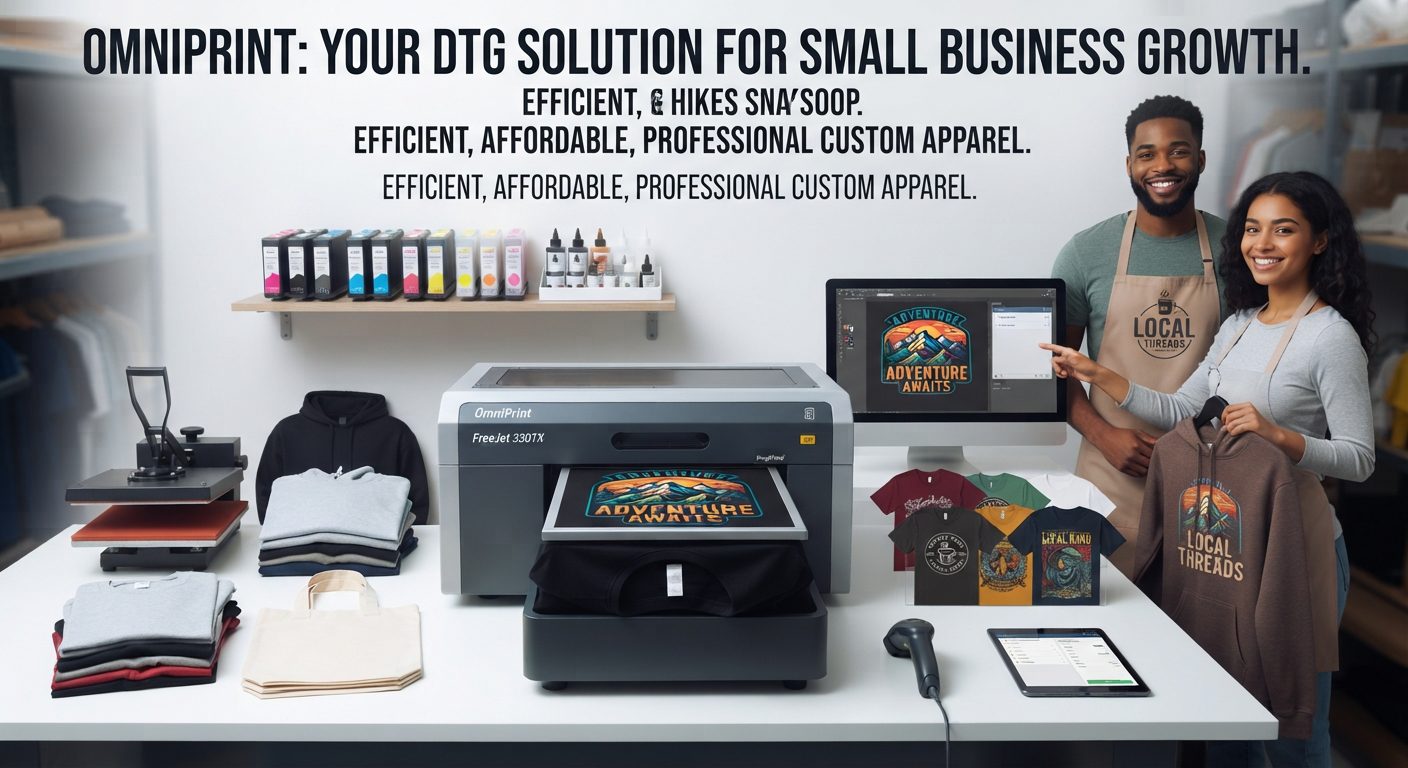
Starting a custom apparel business requires smart choices. Every decision affects your daily workflow and profit margin. A direct to garment printer offers incredible efficiency for custom shop owners.
This modern technology applies ink directly onto fabric. It delivers high quality results on cotton garments and blended textiles. Traditional screen printing demands lengthy setups for every color. However, digital machinery eliminates those complex manual steps entirely.
Small businesses can print detailed graphic designs on demand. You can handle small orders without wasting expensive materials. Yet, buying machinery requires careful financial planning. Owners must consider equipment price, ink costs, space, and maintenance.
This complete guide explores if digital apparel machinery fits your business model. We also compare it with other digital printing methods on the market.
What Is a Direct to Garment Printer?
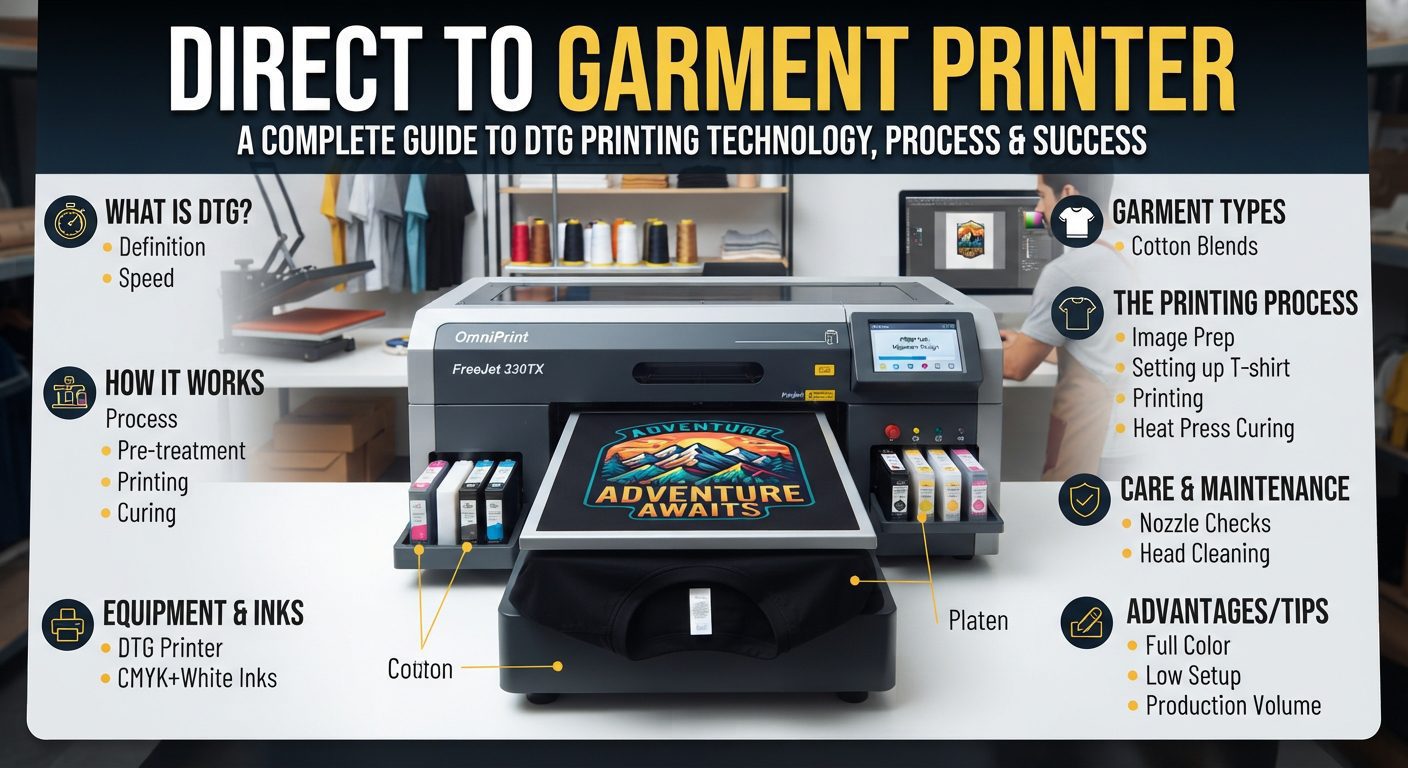
A direct to garment printer transfers digital artwork onto fabric items smoothly. The machine applies specialized textile inks directly to the item.
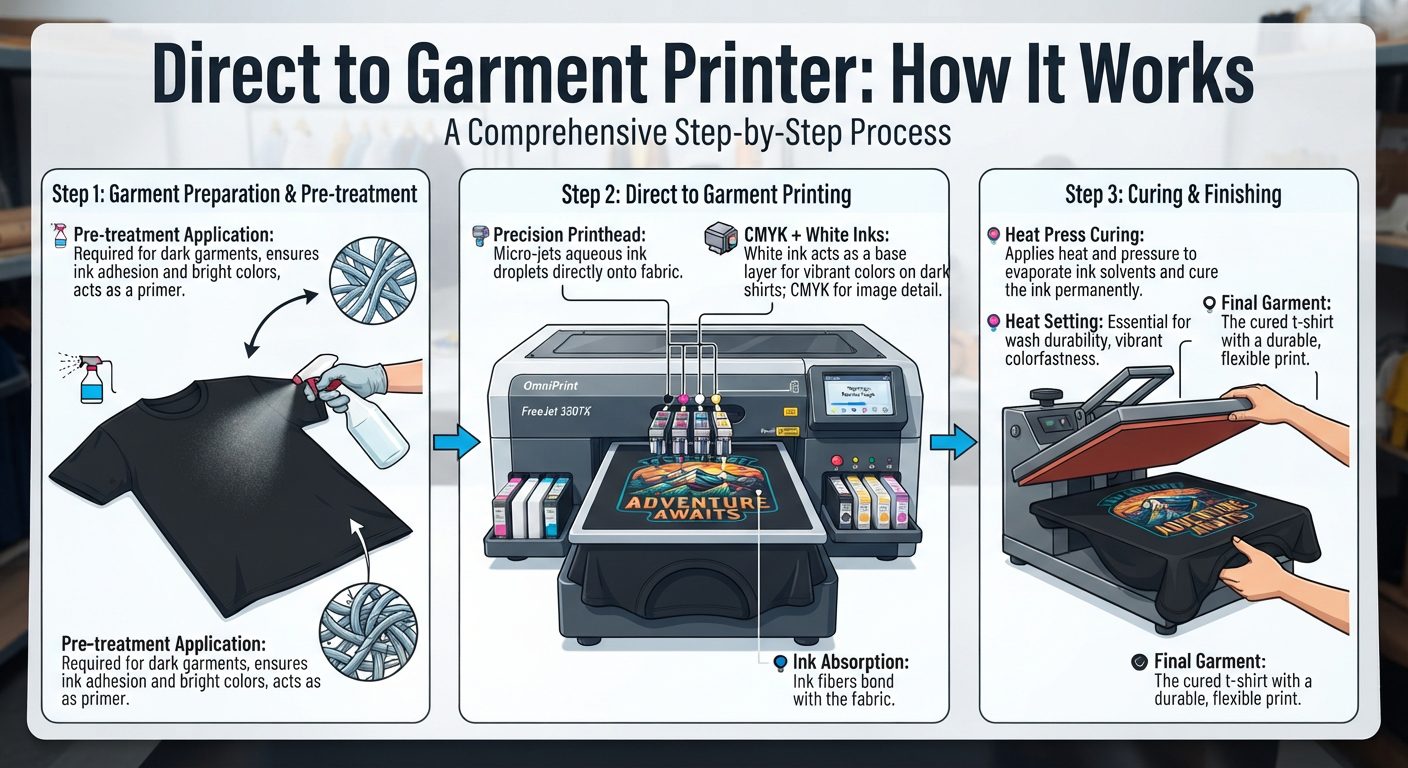
First, the operator places a blank shirt onto the platen smoothly. Next, the print head moves across the garment cleanly. Ink applies directly to the fabric in precise layers. White ink acts as an underbase on dark fabrics. Colored inks print immediately over the white layer.
┌─────────────────────────────────────────────────────────┐
│              DIGITAL APPAREL PRINT WORKFLOW             │
└─────────────────────────────────────────────────────────┘
   [Artwork Design] ──► [Platen Setup] ──► [Direct Printing]
                                                   │
   [Delivered Product] ◄── [Heat Curing] ◄─────────┘
The process creates high-resolution photos and smooth color gradients easily. Small shops gain massive flexibility through this digital technology. You can complete custom shirt orders without burning separate screens.
How Does a Direct to Garment Printer Work?
The digital printing workflow remains simple and direct. First, you prepare the artwork using design software on your computer. Next, you load the shirt onto the printing platen smoothly.
The machine applies white ink underbase on dark fabrics carefully. Color ink layers follow according to the digital file immediately. After printing, the fresh garment needs heat curing. Heat presses or conveyor dryers bond ink to fabric fibers permanently.
This simple workflow helps you fulfill custom orders faster. It allows small shops to accept varied designs every single day.
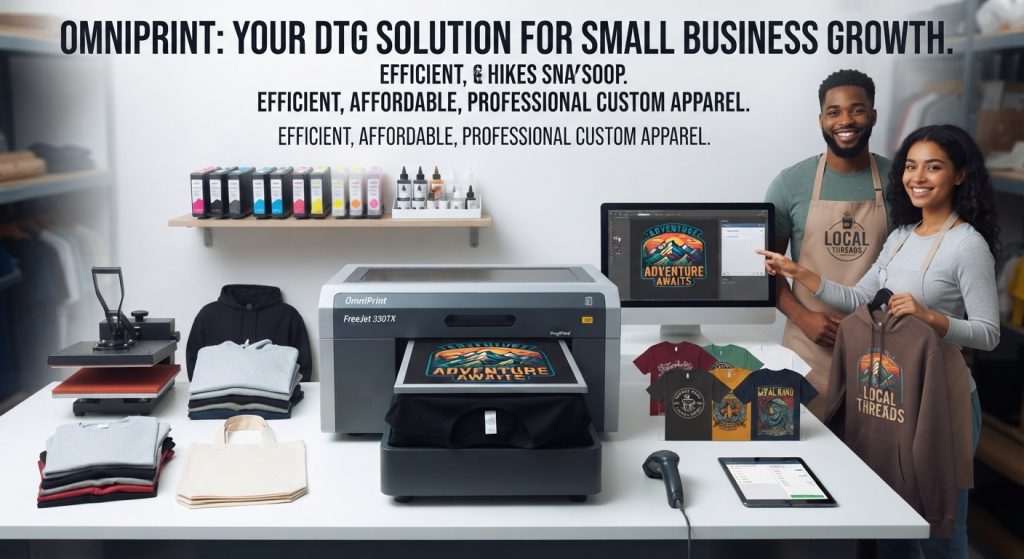
Why Choose a Direct to Garment Printer?
Small print shops frequently handle small customer orders. Many customers want distinct graphics on very few items. A direct to garment printer satisfies this market need perfectly.
You can print one shirt easily without extra setup fees. Design flexibility remains another giant benefit for growing businesses. Customers can request complex photographs without expensive preparation work.
Unique items sell at much higher margins in today’s market. Custom names, event graphics, and logos boost total product value. Therefore, this technology empowers small custom apparel businesses to grow.
Is a Direct to Garment Printer Cost-Effective?
Equipment cost remains a major concern for new business owners. The initial machinery investment requires solid capital investment upfront. However, long-term returns depend heavily on overall print volume.
Owners must evaluate expenses beyond the original hardware purchase price. Ink bottles, pre-treatment liquid, cleaning supplies, and power add to costs.
For steady shirt orders, digital machinery builds excellent long-term profits. Calculate your exact production expenses before buying equipment. You can track profits easily:
$$\text{Monthly Profit} = \text{Total Revenue} – \text{Total Production Cost}$$
If your monthly sales projections cover expenses, the unit pays for itself.
Products You Can Create Easily
A versatile printer for shirts opens exciting product possibilities. Small businesses can design and manufacture diverse items daily:
- Custom promotional T-shirts
- Branded corporate uniforms
- Event souvenirs and sports apparel
- Personalized gifts and school wear
- Limited-edition fashion collections
This technology supports print-on-demand fulfillment models seamlessly. Customers submit custom artwork through your online storefront. You print items immediately without storing mass inventory. This streamlined strategy reduces unsold stock risks significantly.
Direct to Garment Printer vs Other Printing Machines
Modern print service providers use different machines for distinct production needs. Let us compare key options currently available on the market.
| Feature / Technology | Direct to Garment Printer | UV Printing Machine | Sticker Printing Machine |
| Primary Material | Cotton, Garments, Fabrics | Wood, Acrylic, Glass, Rigid | Vinyl, Adhesive Paper |
| Ideal Products | T-Shirts, Hoodies, Tote Bags | Signage, Phone Cases, Gifts | Labels, Packaging, Decals |
| Setup Time | Fast (Digital) | Fast (Digital) | Fast (Digital) |
Direct to Garment Printer vs Sticker Printing Machine
A sticker printing machine produces adhesive labels and vinyl decals. It prints on adhesive vinyl rather than soft apparel textiles. A direct to garment printer specializes strictly in apparel and fabric goods.
A sticker printing machine creates product packaging, labels, and promotional decals. Print shops offering apparel and packaging often utilize both equipment types.
Direct to Garment Printer vs UV Printing Machine
A uv printing machine uses ultraviolet light rays to cure ink instantly. It prints on rigid surfaces like acrylic, wood, glass, and metal smoothly. A uv printing machine creates signage, promotional items, and hard phone cases easily.
Meanwhile, fabric printing equipment remains specialized for wearable apparel items. Choose equipment based on your primary core offerings.
Can You Start With One Machine?
Yes, a small company can launch successfully with one single unit. Starting with one printer for t shirts reduces initial setup risks. You can test market demand before buying extra machinery.
A single system simplifies operator training significantly. Staff members master daily operation and maintenance routines faster.
As customer orders increase, you can scale operations with extra equipment. Ensure your first unit offers sufficient daily output capacity. Buying an underpowered unit creates severe production delays during peak seasons.
Which Businesses Benefit Most?
Not every printing shop requires direct fabric printing units. It suits custom apparel shops and online clothing brands best.
E-commerce stores benefit greatly from fast print-on-demand fulfillment models. Gift shops manufacture personalized presents for retail customers easily. Event planners produce custom merchandise on short deadlines smoothly.
Marketing agencies print branded corporate wear for promotional campaigns fast. Sports suppliers create customized team apparel on demand effortlessly. Artists produce detailed merchandise collections without massive upfront risk.
Fabric Requirements and Compatibility
Fabric selection impacts final output quality directly. Pure cotton provides optimal ink absorption and vibrant color output. Many modern units handle cotton-rich blends successfully as well.
Always check manufacturer fabric guidelines before starting production runs. Proper pre-treatment application guarantees smooth ink bonding on dark items. Poorly prepared garments yield dull colors and washed-out graphic details.
Reliable equipment suppliers guide owners on proper fabric preparation methods.
Daily Equipment Maintenance Needs
Regular maintenance guarantees consistent print quality over time. Print heads block quickly if operators neglect daily cleaning protocols. Ink delivery lines need routine checks and steady fluid movement.
Daily maintenance routines prevent costly hardware failures down the road. Operators should follow official maintenance instructions carefully.
Equipment downtime costs small print shops severe revenue loss. Delayed orders harm your brand reputation with valuable retail customers. Therefore, dependable supplier service remains critical for long-term production success.
Why Technical Support Matters
Purchasing machinery represents just the first step of your journey. Small businesses require comprehensive hands-on training and ongoing technical assistance.
Experienced distributors assist with initial machinery installation and color calibration. Proper training helps operators avoid costly mistakes during live production. Reliable technical assistance keeps production lines running smoothly as sales grow.
Aura Sign Advertising supplies and services advanced digital printing equipment across the UAE. Their premium portfolio includes leading brands like Mimaki, Roland, Epson, KingJet, MTuTech, and Zhongliqi. Dedicated after-sales service and annual maintenance contracts guarantee continuous machine uptime for clients.
For broader branding, outdoor signage, and display needs, companies can explore Izra UAE for complete industry solutions.
Reducing Unsold Inventory Risks
Digital apparel equipment supports efficient on-demand production schedules. You print items only after receiving customer orders and payments.
This smart strategy eliminates large warehouses filled with unsold garments. For instance, online stores stock simple blank shirts in basic sizes. You print custom designs instantly when customers buy online.
This lean approach minimizes financial risks with untested garment designs. You can test creative design concepts without purchasing bulk screen print runs.
Production Speed and Output Expectations
Output speed depends on graphic size, color mode, and print resolution settings. Simple dark logos print faster than full-coverage photo graphics.
White ink underbases require extra print head passes on dark garments. Therefore, do not evaluate daily output capacity on printer speed alone.
Curing times, pre-treatment steps, and operator efficiency affect your total turnaround time. For short custom orders, digital workflow remains significantly faster than traditional methods.
Key Factors Before Buying Equipment
Consider these crucial operational factors before buying new digital equipment:
- Monthly Volume: Estimate projected monthly orders to select appropriate equipment capacity.
- Total Investment: Budget for hardware, curing units, pre-treatment machines, ink, and training.
- Floor Space: Measure your shop floor area for efficient workflow movement.
- Fabric Range: Match machine textile requirements with planned product lines.
- Technical Service: Partner with suppliers providing responsive local repair services.
- Operating Costs: Calculate ink and power consumption to price finished shirts profitably.
- Future Growth: Select scalable equipment that handles expanding order volumes seamlessly.
Common Buying Mistakes to Avoid
Small business owners often focus exclusively on low equipment purchase prices. Cheap hardware frequently leads to high maintenance costs later on.
Underestimating recurring ink, cleaning fluid, and spare part costs hurts cash flow. Skipping complete operator training leads to wasted blank garments and poor print quality.
Buying machinery without checking fabric compatibility creates production bottlenecks immediately. Finally, working without dedicated supplier technical support endangers your business reputation. A low-cost printer becomes expensive when unexpected mechanical repairs stall production.
Is It Good for a Startup Business?
Digital fabric printing equipment benefits startup businesses with steady sales pipelines. It enables flexible custom manufacturing with low setup requirements.
However, business model validation remains critical before purchasing expensive hardware. Startups printing very few shirts monthly struggle to recover equipment costs quickly. Startups with steady corporate or online orders achieve fast profitability.
Calculate realistic monthly revenue projections before making major financial commitments.
Alternative Printing Methods to Consider
Certain business models require alternative digital printing equipment choices. High-volume single-design runs fit traditional screen printing workflows better.
Businesses decorating hard promotional goods need a uv printing machine. Custom packaging and label producers need a sticker printing machine.
$$\text{Equipment Selection} = \mathbf{f}(\text{Material Type}, \text{Order Volume}, \text{Target Budget})$$
Many successful print shops expand by combining multiple digital technologies under one roof over time.
Tips for High Quality Results
Always start with clean, high-resolution source graphics for crisp output. Use premium cotton garments and manufacturer-approved textile ink sets.
Calibrate your pre-treatment machine to apply liquid evenly across garments. Maintain clean print heads through disciplined daily operator maintenance schedules.
Test new garment brands before fulfilling massive commercial customer orders. Track accurate consumable costs per print to keep sales prices profitable.
Professional Industry Support
Digital equipment creates profitable business opportunities for custom print shops. However, achieving long-term profitability requires reliable technical support and quality supplies.
Comprehensive operator training and original replacement parts ensure steady machine performance. Aura Sign Advertising supports UAE print service providers with trusted equipment brands, ongoing technical servicing, and structured annual maintenance contracts.
Partnering with experienced equipment suppliers protects your initial investment. Responsive service keeps your shop productive as customer demand expands.
Conclusion | Direct to Garment Printer: Small Business Guide
Is a direct to garment printer suitable for small businesses? Yes, it represents an excellent investment for shops producing custom apparel and short-run orders.
The digital process provides unmatched design flexibility while reducing inventory storage risks. However, owners must analyze expected sales, ink expenses, maintenance schedules, and technical support access carefully.
Evaluating options based on long-term reliability creates sustainable success. With proper equipment and expert distributor support, small businesses build highly profitable custom printing operations.