Skip to content
A direct to garment printer can handle mass production effectively. However, your success depends on workflow planning and equipment choice. Modern DTG technology prints detailed artwork straight onto fabric. It creates vibrant images without requiring traditional screen-printing plates.
For growing print businesses, a direct to garment printer provides flexibility. It helps you manage custom apparel orders easily. You can switch between designs without long setup delays.
Mass production does not always mean printing thousands of identical items. It also includes producing hundreds of customized garments efficiently. Therefore, digital print technology fits many modern apparel businesses.
Companies often expand their services using complementary digital equipment. For instance, a sticker printing machine supports custom packaging needs. Meanwhile, a uv printing machine prints rigid promotional products. Together, these tools create a complete custom production line.
Can a Direct to Garment Printer Handle Large Orders?
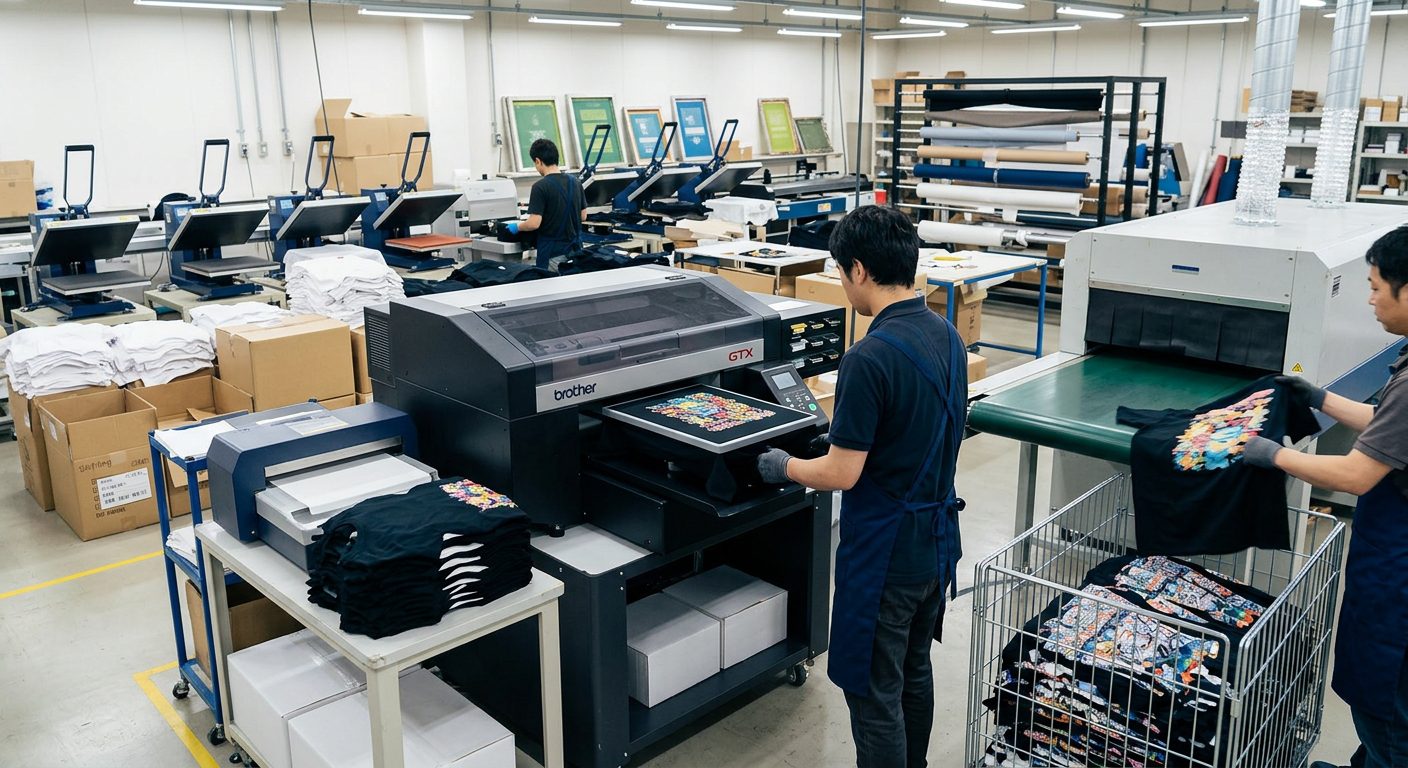
Yes, a direct to garment printer can handle large orders with a well-planned system. Production speed varies significantly across different equipment models.
Some entry-level machines serve smaller print shops. High-capacity industrial units handle larger order volumes. Choosing equipment solely on purchase price can limit growth.
Large production runs require more than basic printing speed. Operators must prepare, load, print, cure, inspect, and package garments.
A streamlined workflow reduces wasted time during busy shifts. Adding multiple printers helps businesses expand production capacity smoothly.
For example, a shop might start with one unit. As demand grows, managers add a second machine. This strategy increases output without changing the basic workflow.
How Does a Direct to Garment Printer Work?
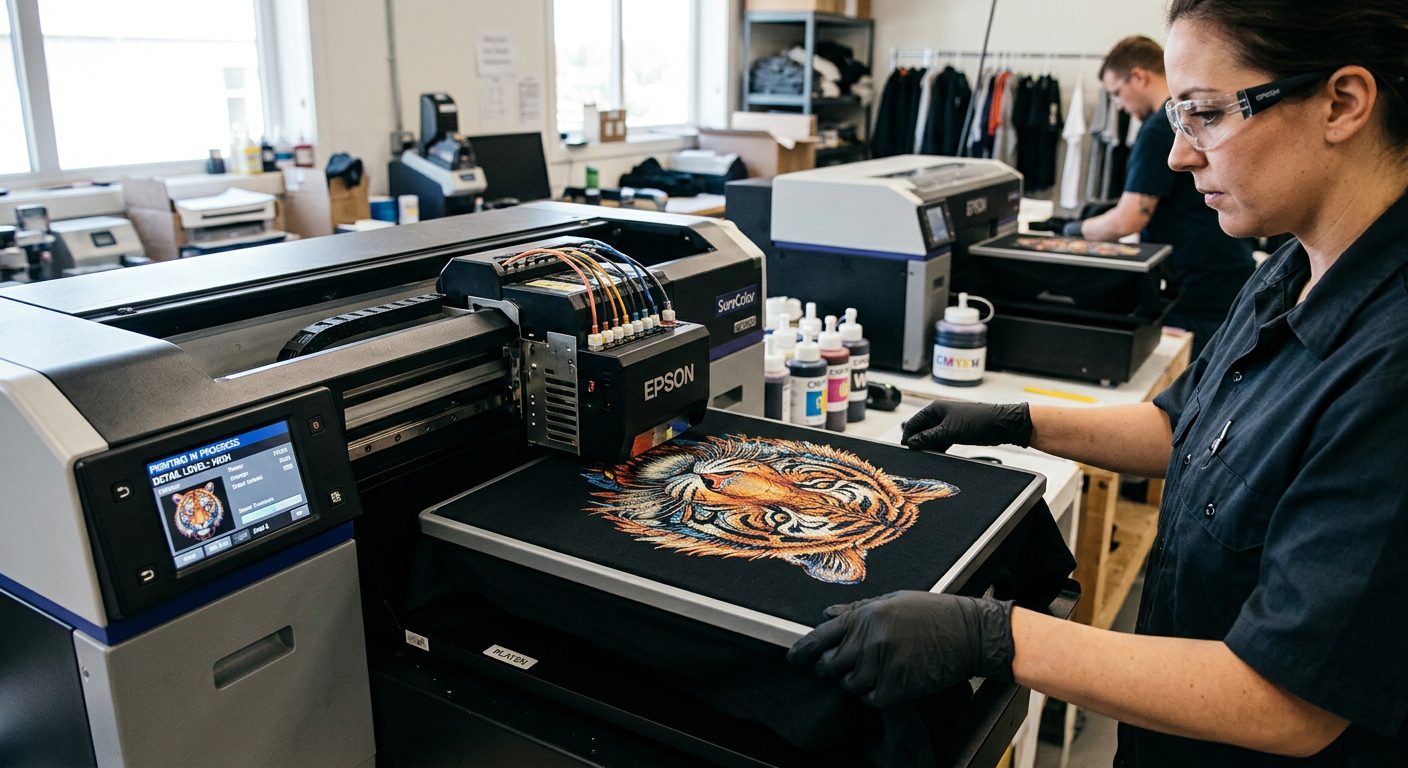
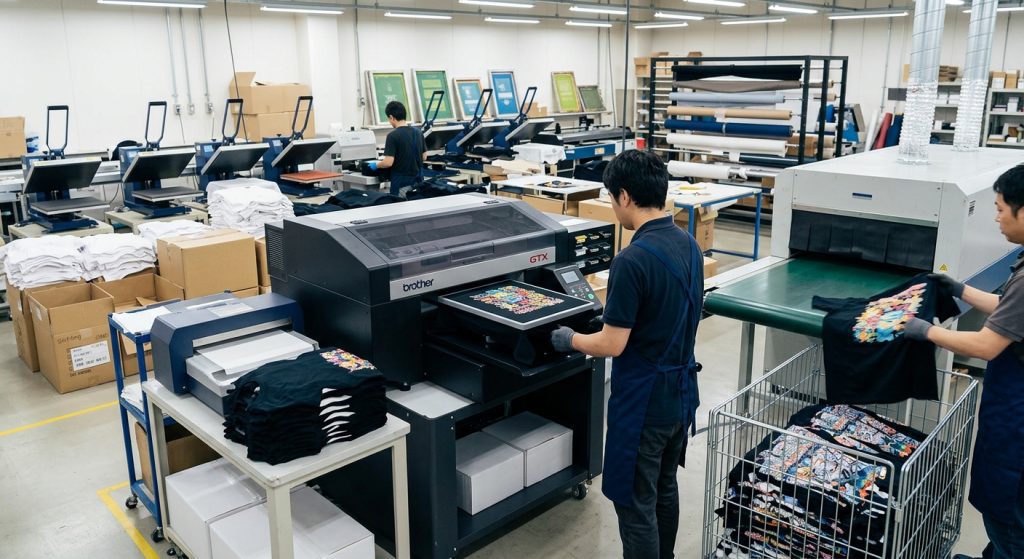
A direct to garment printer sprays specialized textile ink onto fabric. Print heads deposit micro-droplets of ink to build complex images.
The operator places the shirt flat on a platen. The platen holds the garment steady during the print cycle. The machine then follows digital artwork instructions accurately.
White ink serves as a base on dark garments. This bright underbase ensures colored top layers look vibrant.
After printing, heat presses or tunnel dryers cure the ink. Proper curing guarantees strong wash durability over time.
Because the workflow is digital, operators update files instantly. This instant file setup gives digital printing a huge advantage.
Why Choose a Direct to Garment Printer for Mass Production?
A direct to garment printer offers great advantages for varied orders.
First, you do not need physical screens for every design. You send digital files straight from a computer to print.
Second, you can print different graphics in one run. This capability benefits fashion brands and online print-on-demand stores.
Third, digital heads reproduce fine details and complex gradients effortlessly. Photographs and colorful artwork print with sharp clarity.
Fourth, quick file loading reduces job setup times significantly. Operators transition between short runs without manual restacking.
This adaptability helps shops manage small custom requests alongside bulk runs.
What Orders Suit a Direct to Garment Printer?
A direct to garment printer suits various custom apparel jobs.
Custom T-shirts represent a common primary application. Businesses produce branded apparel for events, corporate clients, and clubs.
Fashion labels use digital printing for limited collections. Brands release unique graphic lines without holding excess stock inventory.
Personalized gifts offer another profitable production avenue. Customers request custom names, photos, or text options easily.
E-commerce stores rely heavily on digital apparel systems. Online buyers order different sizes and artwork constantly.
A high-performance printer for shirts supports versatile manufacturing demands.
Can You Print Hundreds of Shirts Daily?
Yes, you can print hundreds of garments daily with proper planning.
A single small printer for t shirts may struggle with huge deadlines. You must match equipment capacity to target daily volume.
Calculate your daily garment targets beforehand. Compare those targets against real-world machine output speeds.
Remember to factor in loading, pretreating, and curing times. Printing represents only one stage of the complete line.
Using multiple machines side by side keeps output moving continuously. One operator loads fabric while another machine finishes printing.
Proper staging reduces idle time and keeps production steady.
Direct to Garment Printer vs. Screen Printing
Screen printing remains popular for simple, massive order runs. It offers fast output when printing identical garments repeatedly.
However, screen setup requires significant labor and chemical preparation. Frequent graphic changes slow down overall factory output.
A direct to garment printer offers superior operational flexibility. It processes distinct designs without screen preparation delays.
Digital output excels at multicolor graphics and photographic prints. Fine artwork details print clearly without extra color screens.
Your ideal equipment choice depends on order structure. Simple single-color bulk orders suit screen setups. Complex multi-design catalog jobs suit digital systems better.
How to Boost Direct to Garment Printer Speed
You can boost production speed through better workshop management.
First, sort incoming apparel by color and size beforehand. Batching similar items streamlines job prep time.
Second, organize digital artwork files before production starts. Pre-flighting files prevents unexpected machine pauses.
Third, inspect raw garments before loading platens. Checking quality early prevents wasted ink and machine time.
Fourth, ensure curing dryers match printer output capacity. Slow curing hardware creates unwanted production bottlenecks.
Fifth, add extra printing units as order volume increases. Scaling horizontally protects workflow consistency.
Regular system maintenance keeps print heads running reliably.
Aura Sign Advertising delivers advanced digital printing solutions across the UAE. We provide sales, service, and support for leading brands including Mimaki, Roland, Epson, KingJet, MTuTech, and Zhongliqi. Our dedicated after-sales services and annual maintenance contracts (AMCs) ensure uninterrupted performance for busy production floors.
Suitable Garments for Direct to Garment Printing
A direct to garment printer works best on natural fibers. 100% cotton fabrics allow textile inks to bond securely.
Standard t-shirts represent the primary production item. However, suitable equipment prints hoodies, tote bags, and sweatshirts too.
A dedicated printer for t shirts creates promotional gear and custom uniforms effortlessly.
Always check fabric composition before starting big jobs. Blends and synthetics require custom pretreatment steps and lower temperature settings.
Test new garment brands before launching mass production. Careful testing guarantees consistent print quality across all batches.
The Role of Pretreatment in DTG Printing
Pretreatment is crucial when using a direct to garment printer on dark fabrics.
The liquid coating keeps white ink sitting on top of fabric fibers. You apply the solution, dry the shirt, and begin printing.
Inconsistent pretreatment causes dull colors and poor wash durability. Too much liquid creates stiff fabric surfaces or visible stains.
Automated pretreatment machines ensure consistent application across hundreds of shirts. Consistency protects your end product quality.
Always follow ink manufacturer guidelines for pretreatment application levels.
Combining DTG with Other Digital Printers
Print shops often pair a direct to garment printer with other digital systems.
A sticker printing machine creates custom labels, decals, and packaging inserts. These items enhance product unboxing experiences.
An uv printing machine prints hard goods like phone cases, mugs, and promotional items. This extends your product offerings beyond apparel.
Using a direct to garment printer alongside UV and sticker systems creates a complete print business.
For broad promotional branding, signage, and custom printing strategies, explore Izra UAE to expand your business reach.
Maintenance for Mass Production Printing
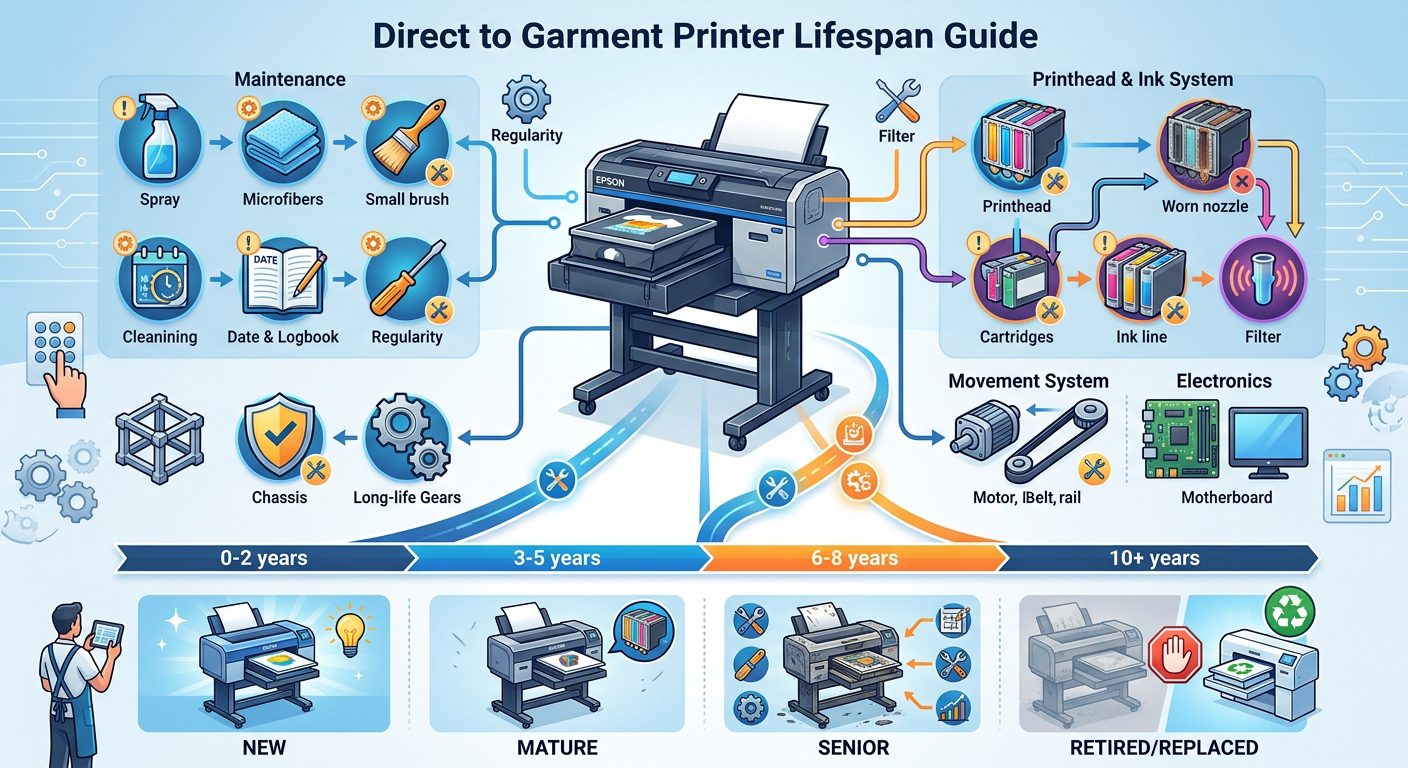
Daily maintenance becomes vital when running a direct to garment printer continuously.
Long production hours require frequent cap-top and wiper cleaning. Clean ink channels prevent clogged nozzles during long jobs.
Print heads suffer damage if regular maintenance gets ignored. Replacing print heads creates costly emergency downtime.
Scheduled daily checks keep print quality high. Annual maintenance contracts provide professional technician support when problems arise.
Aura Sign Advertising offers complete maintenance support to keep your digital printing equipment running efficiently.
Is DTG Right for Your Growing Business?
A direct to garment printer helps custom apparel businesses grow rapidly.
It eliminates massive inventory holding costs for unsold designs. You print items as customers order them online.
Small shops start with manageable capital investment. They scale output by optimizing floor space and adding extra print units.
Plan your growth steps carefully before expanding. Account for machine speeds, labor costs, ink usage, pretreatment, and curing space.
How to Select Your DTG Setup
Estimate your target daily production volume before buying hardware. Determine average order sizes and design variation counts.
Choose garment types early in your planning phase. Select specialized inks matched to your preferred fabric blends.
Evaluate print speed against required resolution settings. Higher DPI modes produce finer details but reduce hourly print speeds.
Partner with an experienced equipment vendor for ongoing service. Expert local technical support protects your operational investment over time.
Conclusion
A direct to garment printer is an excellent choice for modern mass production. It provides unmatched flexibility, fast setup, and vibrant print quality for customized apparel orders. By optimizing your pretreatment, curing, and maintenance workflows, your business can scale production efficiently.