Skip to content
A direct to garment printer can print on dark garments with great results. However, dark fabrics require a specific process to keep colors bright.
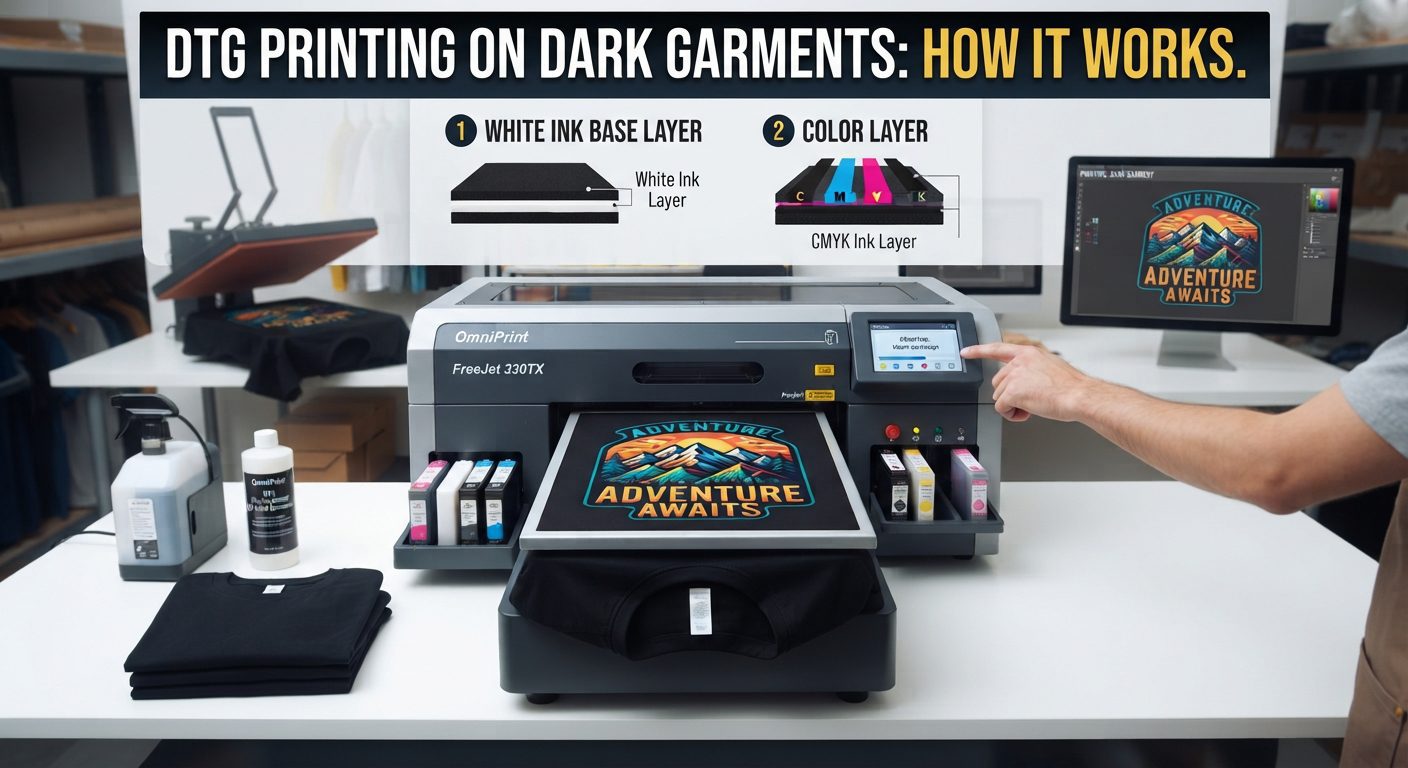
Printed designs need white ink underneath the color layers. Without white ink, dark fabric absorbs the artwork, leaving colors dull and dark.
Aura Sign Advertising delivers high-end printing solutions across the UAE. We support businesses with top brands like Mimaki, Roland, Epson, KingJet, MTuTech, and Zhongliqi. Our team offers dedicated after-sales services and annual maintenance contracts to protect your equipment investment.
Can a Direct to Garment Printer Work on Dark Fabric?
Yes, a direct to garment printer works on dark fabrics. The printing process uses white ink to preserve design quality.
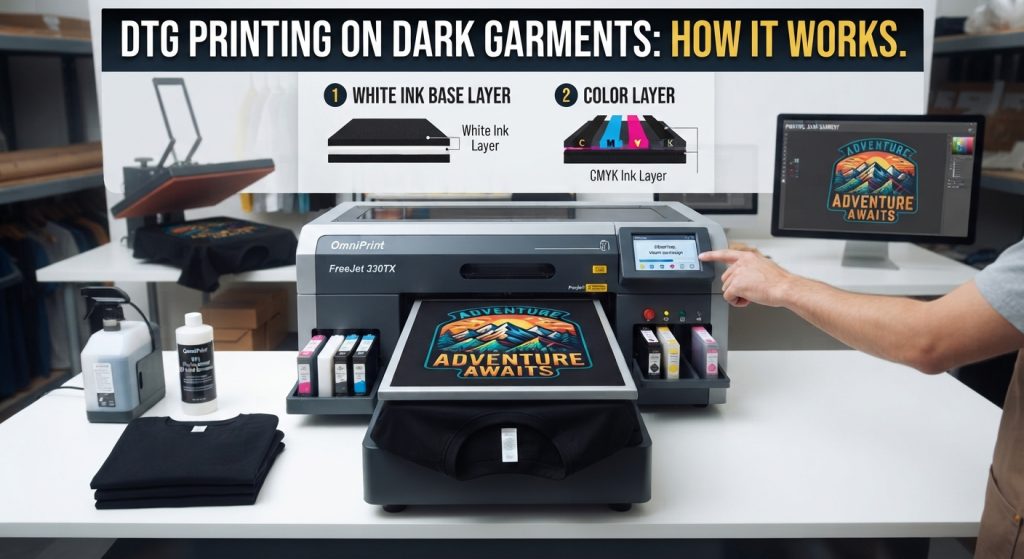
The printer sprays ink directly onto your fabric. First, you place the item on a specialized platen. Next, the machine prints a solid white base layer. Finally, the printer applies colored inks directly over that base.
This process ensures your colors stay vibrant on black, navy, and maroon fabrics. Dark clothing remains a top choice for custom apparel businesses.
How Does a Direct to Garment Printer Handle Dark Shirts?
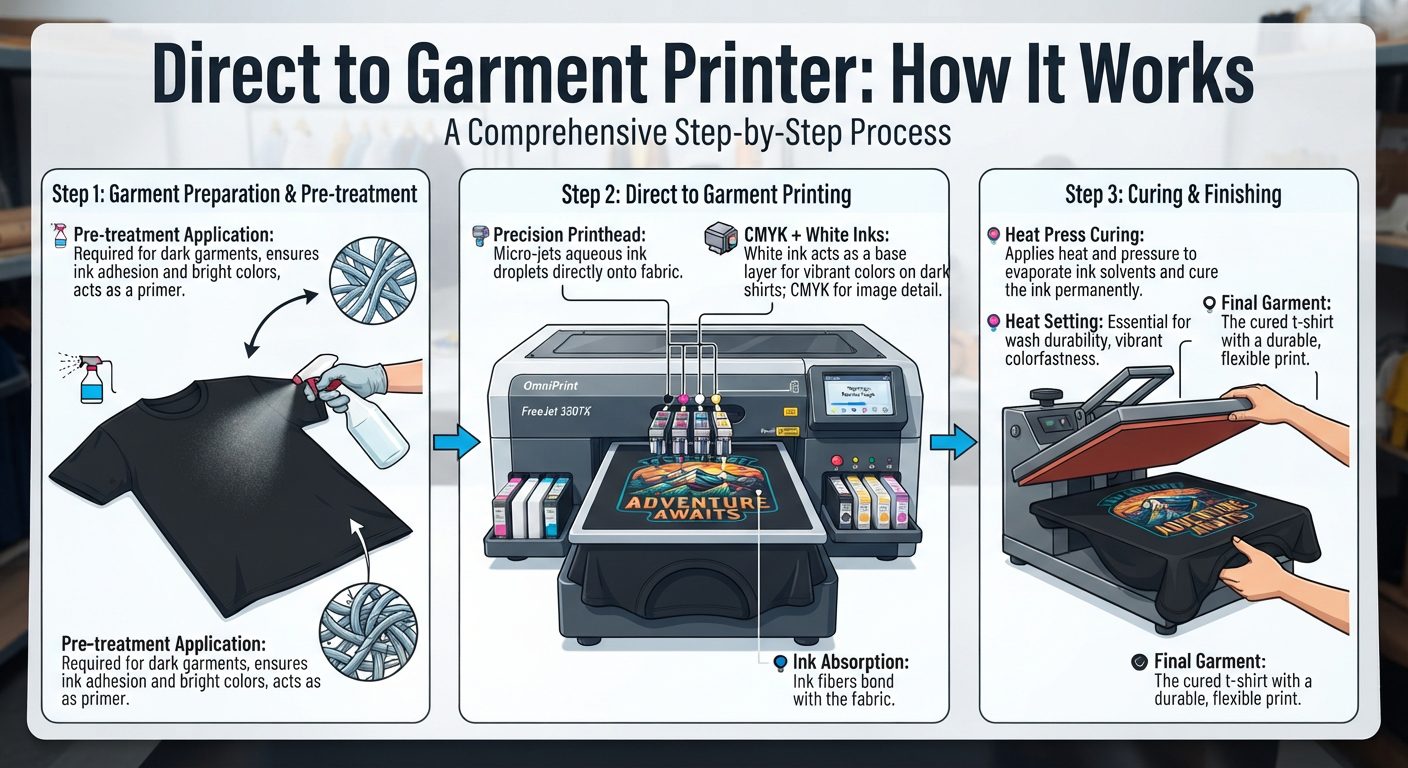
Printing on dark shirts requires several key steps. Each step plays a critical role in the final print quality.
1. Garment Preparation
First, smooth the fabric over the platen. You must remove all wrinkles before printing starts. Correct placement ensures your design prints straight every time.
2. Pretreatment
Dark shirts need liquid pretreatment before receiving ink. This step helps white ink stick to the fabric fibers.
Apply the liquid evenly across the print zone. Then, dry the garment using a heat press. Poor pretreatment causes dull colors and poor wash durability.
3. White Ink Base
The direct to garment printer lays down white ink first. This white layer creates a clean foundation on dark cloth.
Adjusting white ink density changes how bright colors appear. However, using too much ink makes the fabric feel heavy.
4. Color Printing
Once the white base sets, the machine prints colored ink. Cyan, magenta, yellow, and black inks form the complete picture.
These colors sit directly on the white base. Therefore, your design stays bright against dark fabric.
5. Curing the Print
Finally, you must heat-cure the printed shirt. A heat press seals the ink deep into the fibers. Proper curing prevents fading and cracking after multiple washes.
Why Is White Ink Vital for Dark Garments?
White ink acts as a protective barrier on dark fabric. If you apply yellow ink directly to a black shirt, the dark fabric shows through. The yellow color turns muddy and dark.
White ink eliminates this issue completely. It creates a neutral canvas for your primary colors. As a result, red stays vibrant red, and blue stays vivid blue.
White ink also keeps fine details sharp. It allows print shops to produce detailed logos, photorealistic artwork, and complex graphics on dark apparel.
Direct to Garment Printer: What Types of Dark Garments Can You Print?
A direct to garment printer handles various fabric types. Cotton fabric offers the best results for DTG ink absorption.
Common dark products include:
- Black and navy T-shirts
- Dark hoodies and sweatshirts
- Cotton polo shirts
- Dark tote bags
- Custom workwear and uniforms
Always check your fabric composition before printing. Testing sample fabrics prevents unexpected ink absorption issues during production runs.
Comparing Garment Printers to Other Printing Machines
Print shops use different equipment for different applications. Understanding these machines helps you choose the right production path.
| Technology | Best Application | Material Compatibility |
| Direct to garment printer | Detailed artwork on apparel | Cotton, cotton blends, fabrics |
| Sticker printing machine | Adhesive labels and graphics | Vinyl, paper, film substrates |
| UV printing machine | Rigid items and promo goods | Acrylic, wood, glass, hard plastic |
Direct to Garment Printer
A direct to garment printer specializes in soft fabrics. It handles short runs, complex artwork, and personalized apparel without setup delays.
Sticker Printing Machine
A sticker printing machine produces adhesive graphics and labels. While excellent for packaging and promo stickers, a sticker printing machine cannot print directly onto apparel.
UV Printing Machine
A UV printing machine uses ultraviolet light to cure ink instantly. A UV printing machine excels on rigid surfaces like acrylic or promo items, whereas DTG systems focus exclusively on textiles.
Can You Print Photos on Black Shirts?
Yes, a direct to garment printer prints detailed photographs on black shirts easily.
Digital printers reproduce millions of colors with high accuracy. The white ink layer provides the background needed for photo prints.
High-resolution artwork yields the best final results. Low-resolution images can appear blurry or pixelated after printing. Using proper color management profiles also improves color matching significantly.
Advantages of DTG Printing on Dark Clothes
DTG technology offers major advantages for garment decoration businesses.
- Vibrant Details: White ink keeps intricate artwork bright and clear.
- Easy Customization: You can print individual names and unique graphics effortlessly.
- Small Order Friendly: DTG requires no minimum order quantities, making short runs profitable.
- No Screen Setups: Digital files eliminate the need for costly screen creation.
- Quick Turnaround: You can switch designs instantly between jobs.
Is DTG Suitable for Small Businesses?
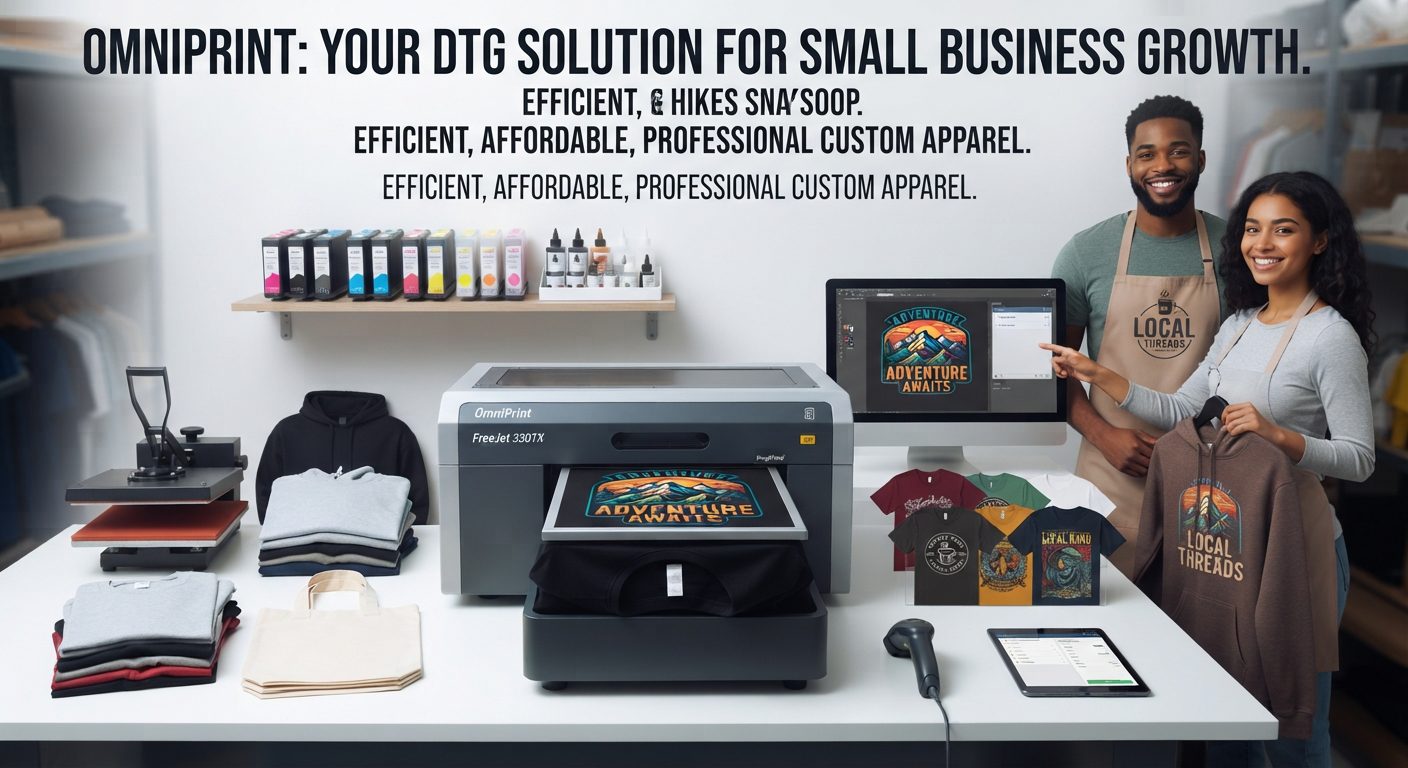
A direct to garment printer fits small businesses and print-on-demand brands well.
Custom apparel shops use DTG to launch short-run clothing lines. Event management firms order custom staff shirts with quick turnarounds.
Before purchasing, evaluate your production volume, equipment footprint, ink expenses, and maintenance needs. Proper operator training ensures consistent print quality and smooth operations.
Direct to Garment Printer: How to Improve Dark Garment Print Quality
Quality preparation drives superior printing results. Follow these best practices for optimal outputs:
- Choose high-quality 100% cotton garments for predictable ink absorption.
- Apply pretreatment solution evenly across the print surface.
- Adjust your white ink density settings based on design requirements.
- Clean your printheads regularly to prevent ink buildup and clogging.
- Cure every shirt according to the ink manufacturer’s exact temperature guidelines.
Can a Printer for Shirts Handle Dark Apparel?
A printer for shirts handles dark garments easily if it supports white ink capabilities.
Not all shirt printers carry white ink systems. Check machine specifications carefully before buying equipment. Look for reliable white ink circulation, steady temperature control, and accurate color software.
A dedicated printer for t shirts with white ink support expands your product offering. You can print bold white text or full-color artwork on dark garments effortless. Using a specialized printer for t shirts helps your business meet diverse customer requests.
Important Factors Before Buying Equipment
Purchasing printing machinery requires clear business planning. Consider these operational points:
- Expected Volume: Match machine speed with your daily order volume.
- Garment Selection: Ensure your target fabrics match the ink chemistry.
- Maintenance Costs: White ink requires automated circulation to prevent settling.
- Workspace Setup: Allocate space for heat presses, pretreatment sprayers, and printers.
- Technical Support: Partner with reliable equipment suppliers for maintenance and parts.
UAE print providers can find top-tier equipment and expert technical guidance at Izra UAE.
Maintenance Tips for White Ink Systems
White ink contains heavy titanium dioxide pigments. These pigments settle quickly if the ink remains still.
Run daily automatic maintenance cycles on your direct to garment printer. Perform nozzle checks every morning to identify clogs early.
Maintain stable room temperature and humidity levels in your print shop. Consistent environmental control prevents printhead nozzles from drying out.
Common Challenges When Printing Dark Shirts
Operators occasionally face production issues on dark fabric. Here is how to address them:
- Dull Colors: Increase white ink volume or check pretreatment application.
- Patchy Coverage: Clean printhead nozzles and ensure smooth pretreatment coverage.
- Fading After Washing: Increase heat press curing time or adjust temperature settings.
- Heavy Print Feel: Reduce white ink layer thickness in your printer settings.
DTG vs Screen Printing for Dark Fabrics
Screen printing suits high-volume orders with simple color counts. Setup takes time, but unit costs drop on large production runs.
DTG printing excels at low-volume orders and complex, full-color artwork. You avoid screen preparation costs completely, making custom orders instantly profitable.
How Aura Sign Advertising Supports Your Business
Aura Sign Advertising brings complete printing solutions to the UAE market. We support print service providers, signage companies, and industrial mark operations.
Our product portfolio includes industry-leading machinery from Mimaki, Roland, Epson, KingJet, MTuTech, and Zhongliqi. We back our hardware with reliable after-sales services and annual maintenance contracts (AMCs) to ensure uninterrupted production for your business.
Conclusion | Direct to Garment Printer: Printing on Dark Garments
A direct to garment printer delivers outstanding print results on dark garments. By combining proper pretreatment, white ink foundations, and accurate heat curing, your shop can produce durable, bright apparel prints efficiently.
Whether you print custom T-shirts, hoodies, or corporate wear, investing in quality equipment and proper maintenance keeps your business competitive. Partner with experienced printing specialists to select the right machinery for your production goals.